
 Written by
Used Car Inspection Checklist: What to Check Before You Buy (Gas, Diesel, Hybrid and EV)
Buying used is the smartest way to save money on a car, and the easiest way to inherit someone else’s problem. This checklist walks you through everything to check before you hand over cash: the paperwork, the walkaround, the test drive, and the extra checks that matter for gas, diesel, hybrid and electric cars.
Buyer’s Guide · Used Cars
Updated October 2026 · 15 min read
Why a Checklist Matters
Cars are older and pricier than ever, and that makes a bad used buy hurt more. A few numbers that show why it’s worth an hour of checking:
Unfixed recalls 1 in 4 Used vehicles searched on CARFAX Canada in 2025
Rolled-back odometers 2.45 million Suspected on US roads (CARFAX, 2025)
Flood-damaged cars 482,000 Already on US roads at the start of 2025
Average vehicle age 12.8 years A record high in the US
Average check engine repair $554 Up 33% in 2025 (CarMD)
Pre-purchase inspection $100–$250 The cheapest insurance you’ll ever buy
01 · Before you go
Check the Paperwork Before You See the Car
The best time to rule out a bad car is before you drive across town to see it. Ask the seller for the VIN (the 17-character vehicle identification number). An honest seller will give it to you right away. If they won’t, that tells you something too.
Step 1
Vehicle history report
CARFAX Canada Carfax or AutoCheck (US)
A history report shows reported accidents, insurance claims, registration in other provinces or states, branded titles (salvage, rebuilt, flood) and odometer readings over time. A gap or a sudden drop in kilometres is a big warning sign.
Step 2
Open recalls
Free to check Fixed at no cost
One in four used vehicles searched on CARFAX Canada in 2025 had at least one unfixed recall, often for airbags, fuel pumps or brakes. Check the VIN on Transport Canada’s recall database or NHTSA’s in the US, and get it fixed by a dealer before or right after you buy.
Step 3
Stolen or owing money
CPIC search Lien check
In Canada, the police CPIC website lets you check a VIN against stolen-vehicle records for free. Also check for liens through your provincial personal property registry. If the seller still owes money on the car, it could be repossessed even after you’ve paid for it.
Step 4
Is the seller really the owner?
ID matches registration Watch for curbsiders
Ask to see the registration and the seller’s ID, and make sure the names match. “Curbsiders” are unlicensed dealers posing as private sellers, often selling write-offs or cars with tampered odometers. Several cars for sale, a car registered to someone else and a too-good price are classic signs.
Step 5
Service records
Oil changes Big jobs done
A folder of receipts is worth real money. Look for regular oil changes and the big-ticket items: timing belt, transmission fluid, brakes and tires. No records at all doesn’t mean walk away, but price it as if nothing was ever done.
Ontario buyers
Get the UVIP
Required for private sales Lien and ownership info
In Ontario, private sellers have to give buyers a Used Vehicle Information Package. It lists the registration history and any liens, plus the car’s wholesale and retail value. Other provinces have their own lien searches, so look yours up before you buy.
Ask the seller not to start the car before you arrive. A cold engine tells you a lot: rough starts, smoke and noises often disappear once it warms up. If the hood is already warm when you get there, ask why.
02 · The walkaround
The Walkaround: Body, Rust, Tires and Interior
Do this in daylight, on dry ground, and take your time. Rain and dark parking garages hide a lot. Start at one corner and work your way around.
- Body and paintSigns of an accidentLook down the sides for ripples, paint that doesn’t quite match between panels, overspray on rubber trim and uneven gaps around the doors, hood and trunk. Any of these can mean bodywork, which should match what the history report says.
- RustThe big one in CanadaRoad salt eats cars. Check the rocker panels under the doors, the wheel arches, the bottoms of the doors and the trunk lid. Lie down and look underneath with a flashlight: surface rust is normal, but flaking metal, holes and rusty brake lines are not. On trucks, check the frame carefully.
- TiresTread and ageUneven wear can mean alignment or suspension problems. Most experts suggest new tires at 4/32 in. (about 3 mm) of tread. Check the date too: the last four digits of the DOT code are the week and year it was made, so “2319” means week 23 of 2019.
- Glass and lightsCracks and foggingCheck for windshield chips and cracks, and make sure every light works. Fogging or water inside headlights and taillights can be a flood sign.
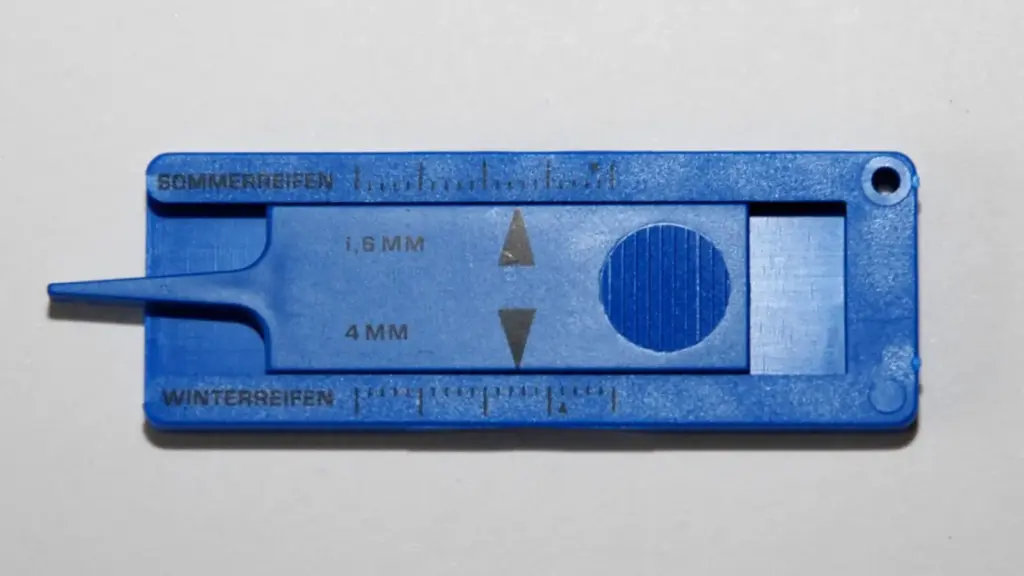
A tread depth gauge costs a few dollars and settles any tire argument.
Inside the car
The interior is where you check the story. A car showing 60,000 km shouldn’t have a shiny, worn-smooth steering wheel, a sagging driver’s seat or pedals worn down to the metal. CARFAX estimated 2.45 million cars on US roads have rolled-back odometers, and digital odometers have made it easier, not harder. Wear that doesn’t match the kilometres is a reason to dig deeper.
- SmellMusty or heavy air freshener can hide mould
- CarpetsDamp, mismatched or new
- WearMatches the kilometres?
- VINSame on dash, door and papers
Flood car warning signs: a musty smell, silt or mud under the seats or in the glove box, rust on seat rails, pedals or under the dash, and brittle wiring. CARFAX counted 482,000 water-damaged vehicles on US roads at the start of 2025, and they get cleaned up and moved to other states and provinces to be sold.
03 · Under the hood
Under the Hood: The Cold Start and a $30 Scan Tool
You don’t need to be a mechanic to spot the obvious stuff. With the engine off, look for oil or coolant leaks, cracked or shiny belts, and corrosion on the battery terminals. Pull the oil dipstick: it should be somewhere between the marks and not milky (milky oil can mean a head gasket problem).
Then watch and listen while the seller starts it cold. Every dash light should come on briefly and then go out. If the check engine light never lights up at all, someone may have disabled it. Listen for ticking, knocking or a long crank before it fires, and look at the exhaust: a little steam on a cold day is normal, but blue smoke means it’s burning oil.
Bring an OBD-II scanner. Every car sold in Canada and the US since the late 1990s has the same diagnostic port under the dash, and a basic Bluetooth scanner costs about $30. Plug it in and check two things: stored trouble codes, and the “readiness monitors”. If several monitors say not ready, the codes were probably cleared or the battery disconnected recently, which is exactly what a seller hiding a problem would do.
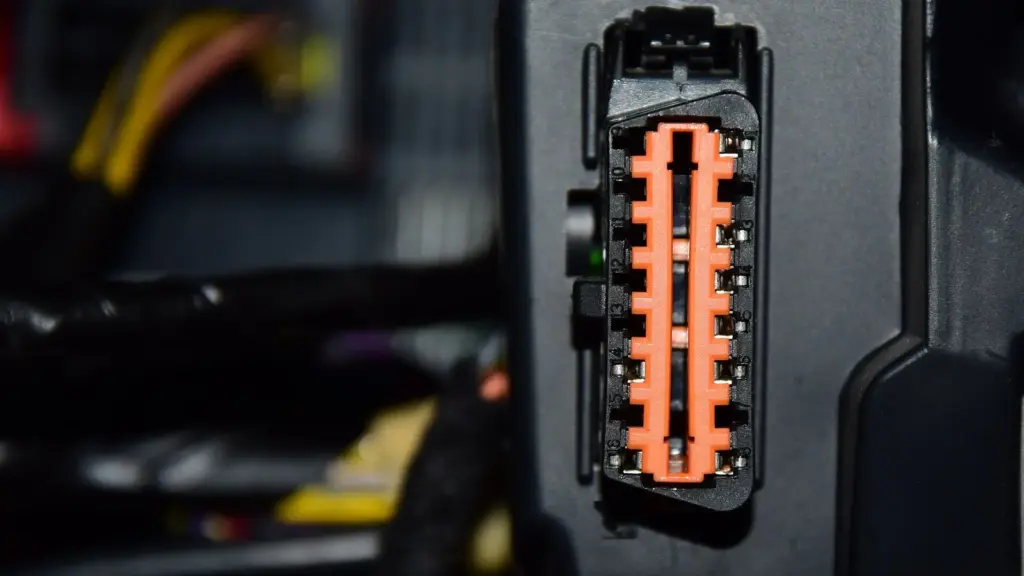
The OBD-II port. It’s usually under the dash on the driver’s side.
04 · The test drive
The Test Drive: What to Listen and Feel For
Aim for at least 20 to 30 minutes, with some city driving, a rough road and a stretch of highway. Turn the radio off. Here’s what to check, in order:
- 1. Pull awaySmooth acceleration with no hesitation, stumbling or flashing warning lights.
- 2. ShiftingAutomatic shifts should be quick and smooth. Slips, clunks, a delay into Drive or Reverse, or a CVT that shudders or whines are expensive warnings.
- 3. BrakesThe car should stop straight, with no pulling, grinding, pulsing in the pedal or a pedal that sinks.
- 4. Steering and suspensionNo wandering on a straight road, no clunks over bumps and no vibration through the wheel at highway speed.
Don’t forget the boring stuff
Test the heat and A/C on every setting, the defrosters, every window and lock, the seat heaters, the infotainment, the backup camera and the parking brake. Each one is a small repair on its own, and they add up fast. When you’re back, park on clean ground for a few minutes and look underneath for fresh drips.
05 · By car type
Extra Checks for Gas, Diesel, Hybrid and Electric Cars
Everything above applies to every car. But what goes wrong, and what costs the most to fix, depends a lot on what’s under the floor or the hood. If you want the background on how each type works, each section links to our full guide.
Gasoline cars
- Timing beltDue or done?Many engines need a new timing belt somewhere around 100,000 to 160,000 km. If it’s due and there’s no receipt, budget for it, because a snapped belt can wreck the engine.
- Oil burningBlue smoke and low oilAsk how often they top up the oil. Blue smoke on startup or a low dipstick can mean worn rings or valve seals.
- Misfires and the catalytic converterThe priciest check engine fixA rough idle or flashing check engine light often means a bad coil or spark plug. Ignore it for long and it can kill the catalytic converter, the No. 1 check engine repair at about $1,500.
- CVT service historyAsk for the fluid changesMany small cars and SUVs use a CVT. It should feel smooth with no shudder, whine or flare, and a record of fluid changes is a good sign.
New to how a gas engine works? Read How a Gasoline Engine Works.
Diesel cars and trucks
- Cold startGlow plugs at workA healthy diesel should start within a few seconds, even when it’s cold. A long crank or a lot of white smoke can mean glow plug or injector trouble.
- Smoke and blow-byColour tells a storyHeavy black smoke means too much fuel or a boost problem. With the engine running, carefully loosen the oil filler cap: a lot of fumes puffing out (blow-by) can mean worn piston rings.
- DEF and the DPFThe emissions systemsNewer diesels need diesel exhaust fluid (DEF) and have a particulate filter (DPF) that cleans itself on longer drives. Ask how the truck was used: a diesel driven only on short trips can clog its DPF, and these parts are expensive.
- Emissions “delete”Walk awaySome diesels have had their emissions equipment removed and the computer reprogrammed. It’s illegal in both Canada and the US, it can fail inspections, and it’s very expensive to put back. A shop scan can spot it, and a history report usually won’t.
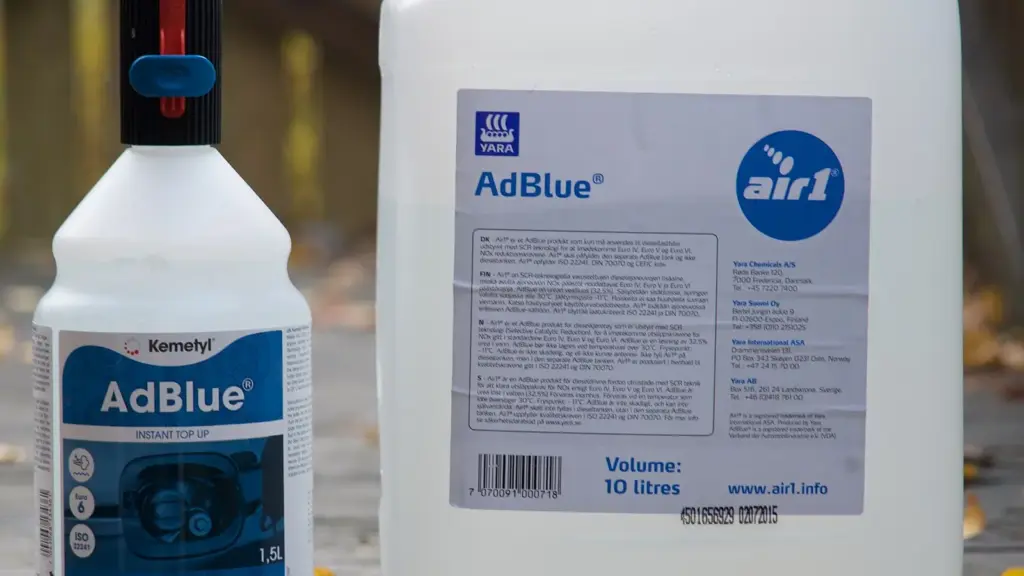
Diesel exhaust fluid (also sold as AdBlue). A newer diesel won’t run properly without it.
Also check the hitch for heavy wear, since a hard-working tow rig has had a harder life. More in How a Diesel Engine Works.
Hybrids and plug-in hybrids
- Hybrid battery warrantyCheck what’s leftToyota Canada covers hybrid batteries on 2020 and newer models for 10 years or 240,000 km, and the coverage transfers to the next owner. Check the in-service date and what’s left on yours.
- “Ready” and hybrid warningsNo red trianglesThe car should go to “Ready” without fuss and show no hybrid system warnings. A good scan tool can also read hybrid battery codes.
- Battery cooling ventOften near the back seatMany hybrids cool the battery with cabin air through a small vent. If it’s clogged with dust or pet hair, the battery may have been running hot.
- Plug-ins: test the chargingBring the cablePlug a PHEV in and make sure it charges. Check the electric range on the dash against the original rating, and make sure the charging cable comes with the car.
Brakes on hybrids barely get used, so check for rusty or seized calipers. More in How Hybrids and Plug-in Hybrids Work.
Electric cars
- Battery healthThe single biggest checkAsk for a battery health (state of health) report from a dealer or a service like Recurrent. Compare the range estimate at full charge with the car’s original rating, and photograph the dash before and after your test drive.
- Fast chargingTry it before you buyAsk the seller not to charge above 80% before your visit, then plug into a DC fast charger after the drive to see if it charges at a normal speed.
- Battery warrantyOften the best partEV batteries usually come with an 8-year, 160,000 km (100,000 mile) warranty, and it typically transfers to the next owner. Check the in-service date.
- Plug type, tires and 12 VThe small stuffCheck which fast-charge plug it uses (older Nissan Leafs use CHAdeMO, which is getting harder to find), look closely at the tires since EVs are heavy on them, and ask about the 12-volt battery.
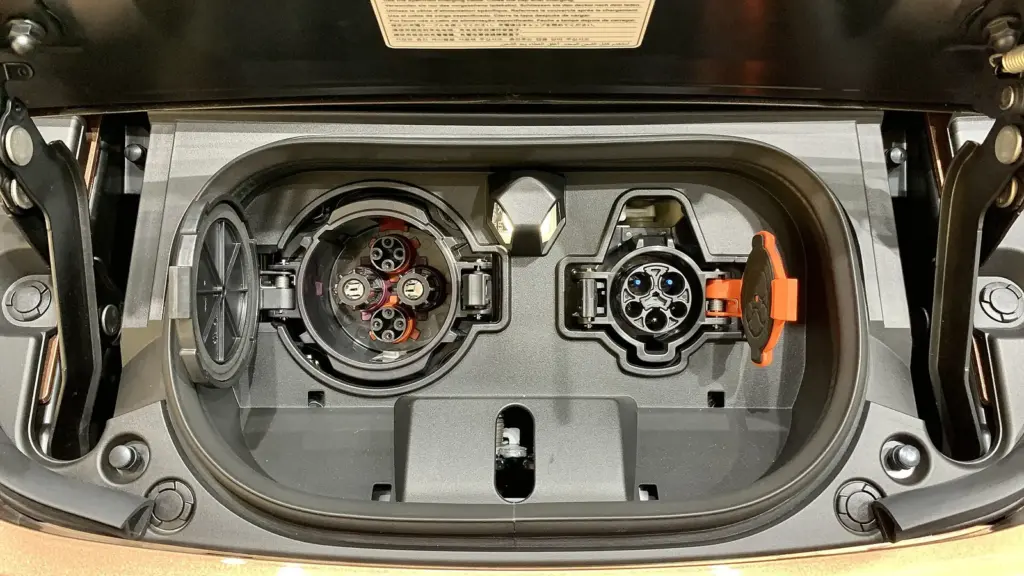
A Nissan Leaf’s charging ports. The round one on the left is CHAdeMO, so check where you can still fast charge with it.
Battery failure is rare, and a healthy used EV can be a great buy. Learn the basics in How an Electric Car Works and Car Batteries Explained.
What matters most for each type
| Gas | Diesel | Hybrid / PHEV | Electric | |
|---|---|---|---|---|
| Biggest money risk | Engine or transmission | Emissions parts and injectors | Hybrid battery (often under warranty) | Battery health |
| Must-do check | Cold start, scan for codes | Cold start, check for a delete | Hybrid warnings, battery warranty | Battery health report, fast charge test |
| Ask the seller | Timing belt and fluid changes | How it was used and towed | Battery or inverter work done | How it was charged |
| Watch for | Blue smoke, CVT shudder | Black smoke, blow-by | Rusty brakes, clogged battery vent | Low range, slow charging |
06 · Inspection and red flags
Get a Pre-Purchase Inspection, and Know When to Walk Away
Even if everything looks good, pay an independent mechanic to put the car on a lift before you buy. A basic pre-purchase inspection usually runs about $100 to $150, and a full one costs more: BCAA’s 199-point inspection is $249.95 plus tax. That’s nothing next to one transmission or battery repair, and the report gives you real leverage to negotiate.
Pick the shop yourself instead of using one the seller suggests. For hybrids, EVs and diesels, a shop that knows the brand is worth the extra drive.
Walk away if…
- No inspectionThe seller won’t allow an independent inspection
- Wrong nameThe car isn’t registered to the seller
- Too cheapThe price is far below market, with a sob story
- Rush and cashPressure to decide now, cash only, no receipt
Good signs: one or two long-term owners, a thick folder of receipts, a clean history report that matches what you see, and a seller who answers every question and is happy for you to get it inspected.
Bad signs: a branded title the seller didn’t mention, cleared codes, fresh undercoating sprayed over rust, and a story that changes when you ask the same question twice.
Frequently Asked Questions
Is a pre-purchase inspection really worth it?
Yes. For about $100 to $250, a mechanic will spot things you can’t see without a lift, like frame rust, leaks and hidden accident repairs. If it finds a problem, you either walk away or use the report to negotiate the price down, which often pays for the inspection.
What’s the most important thing to check on a used car?
The history and the cold start. A clean history report rules out the worst problems (write-offs, flood cars, rolled-back odometers), and a cold start reveals engine trouble that disappears once the car warms up.
How many kilometres is too many for a used car?
It depends more on care than the number. A well-maintained car with 200,000 km and receipts can be a better buy than a neglected one with 100,000 km. Look at how it was driven and serviced, and whether big jobs like the timing belt are coming due.
Is a used EV or hybrid a risky buy?
Not usually. Battery failures are rare, and many hybrid and EV batteries are still under warranty, which typically transfers to the next owner. The key is checking battery health on an EV and hybrid warnings and warranty on a hybrid.
Should I buy a used diesel?
They can last a very long time, but repairs are expensive. Check how it was used, make sure the emissions system is intact, and get a shop to scan it. If the emissions equipment has been removed, walk away.
Is it safer to buy from a dealer than a private seller?
A registered dealer usually has to disclose more and is covered by provincial rules, while private sales are mostly “as is”. Either way, do the same checks, and make sure a “private seller” isn’t really an unlicensed curbsider.
What should I bring when I go to see a used car?
A flashlight, a tread depth gauge or a coin, paper towel for checking fluids, a cheap OBD-II scanner, and a friend for a second opinion. And this checklist on your phone.
Know What You’re Buying
The more you understand what’s under the hood, the easier it is to spot a good used car. Our Engines Explained series covers every type:
Sources
- CARFAX Canada: nearly one million open recalls on used vehicles for sale in 2025
- CARFAX: odometer rollbacks jump 14% to 2.45 million vehicles
- CarPro: up to 45,000 vehicles flood-damaged in 2025 storms (CARFAX)
- CarPro: CarMD check engine light report (2025 data)
- KBB: average car now 12.8 years old (S&P Global Mobility)
- OMVIC: avoid curbsiders
- DriveSmartBC: check for stolen vehicles (CPIC)
- Texas DPS: OBD readiness monitors explained
- Tire Rack: how to determine the age of your tires
- Recurrent: 6 things to check before buying a used electric car
- KBB: hybrid and EV battery warranty facts
- Toyota Canada: hybrid battery warranty extended to 10 years / 240,000 km
- Truck News: can I get a DPF delete?
- BCAA: pre-purchase vehicle inspection
- Bankrate: buying a used car? Get an inspection first
Photo credits
- OBD-II diagnostic port under a car dashboard: 0x010C, CC BY-SA 4.0, cropped and resized.
- Simple tire tread depth gauge: Fahi, Public domain, cropped and resized.
- Containers of diesel exhaust fluid (AdBlue) for…: Lenborje, CC BY-SA 4.0, cropped and resized.
- Charging ports on a 2021 Nissan Leaf,…: Kazyakuruma, CC0, cropped and resized.
- Header image: Shixart1985, CC BY 2.0, cropped and resized.