
 Written by
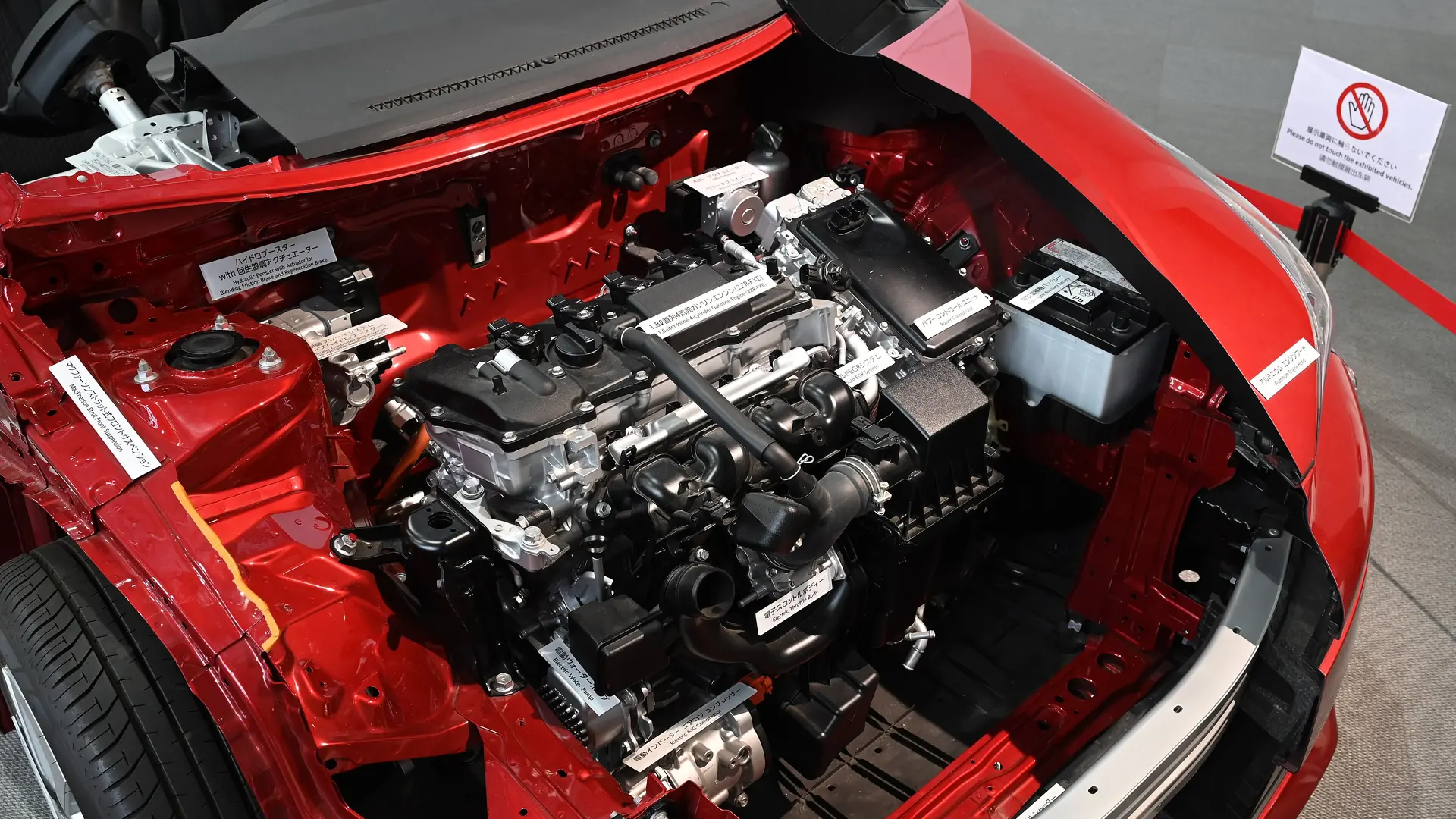
How Hybrids and Plug-in Hybrids Work: Types, Batteries, Charging and Maintenance
A hybrid is a gas car and an electric car sharing one body, and the clever part is the computer that decides which one does the work. Here’s how mild, full and plug-in hybrids actually work, why a Toyota and a Honda hybrid do it differently, what plugging in really changes, and what you’ll need to service as the kilometres pile up.
Engines Explained · Part 4 of 4
Updated October 2026 · 14 min read
Hybrids at a Glance
If you’ve read our gas and EV guides, you already know both halves of a hybrid. This one is about how they team up. A few numbers to set the scene:
Main types 4 Mild, full, plug-in and range-extender
Mild hybrid fuel savings 2–8% It helps, but it can’t drive on electricity alone
Hybrids in Japan 33.8% Share of new cars, first half of 2025
Plug-in hybrids in China 5.9 million Sold in 2025, over a third of all “new energy” cars
Toyota battery warranty 10 yrs / 240,000 km Canada, 2020 and newer hybrids
PHEV real-world CO2 3.5× Higher than the lab figure, EU data
01 · The four types
Not All Hybrids Are the Same
“Hybrid” on a badge can mean anything from a beefed-up starter motor to a car that drives 100 km on electricity. The difference comes down to two things: how big the battery and motor are, and whether you can plug it in. Here they are, from least electric to most:
- Mild hybrid (MHEV)Small 48-volt helperA motor-generator, usually where the starter or alternator would be, shuts the engine off when you stop or coast, restarts it smoothly and adds a little push when you accelerate. It can’t move the car on its own. Ram’s eTorque system on the Ram 1500 works this way.
- Full hybrid (HEV)Drives on electricity at low speedA bigger motor and battery can move the car on electricity alone for short stretches, like crawling through a parking lot or traffic. You never plug it in. The engine and braking keep the battery topped up. Think Prius, RAV4 Hybrid, CR-V Hybrid.
- Plug-in hybrid (PHEV)A real electric range, then a hybridA much bigger battery you charge from the wall gives you a real electric range, often 40 to 100 km, for daily driving. Once it runs low, the car carries on as a regular hybrid.
- Range-extender (EREV)An EV with a gas generatorThe wheels are always driven by electric motors. A gas engine only makes electricity once the large battery runs low. The upcoming Ram 1500 REV is built this way, and so are many popular SUVs in China.
| Mild | Full | Plug-in | Range-extender | |
|---|---|---|---|---|
| Battery size (typical) | Under 1 kWh | About 1–2 kWh | About 10–25 kWh | 30–90+ kWh |
| Drives on electricity alone? | No | Short distances, low speed | Yes, often 40–100 km | Yes, until the battery is low |
| Do you plug it in? | No | No | Yes | Yes |
| Engine turns the wheels? | Yes, always | Usually, depending on design | Usually | No, it only charges |
| Best for | Small fuel savings, smooth stop-start | City and mixed driving with no charging | Short daily drives with home charging | EV driving without range worries |
02 · How a full hybrid works
What Happens When You Drive a Full Hybrid
A full hybrid is basically always making one decision: is it cheaper right now to use the engine, the battery or both? You don’t choose; the computer does, many times a second. A typical drive goes like this:
- 1. Pull awayThe electric motor gets you moving from a stop, where a gas engine is at its least efficient.
- 2. Speed upThe engine starts on its own and joins in. Floor it and both work together for full power.
- 3. CruiseThe engine does most of the work, often charging the battery a little at the same time.
- 4. Slow down and stopThe motor becomes a generator and recharges the battery. At a stop, the engine switches off.
Because the motor covers the low-speed and hard-acceleration jobs, hybrid engines can be tuned purely for efficiency. Many run on the Atkinson cycle, which leaves the intake valve open a little longer. That gives up some low-end punch but squeezes more work out of every drop of fuel, and the electric motor fills in the missing torque.
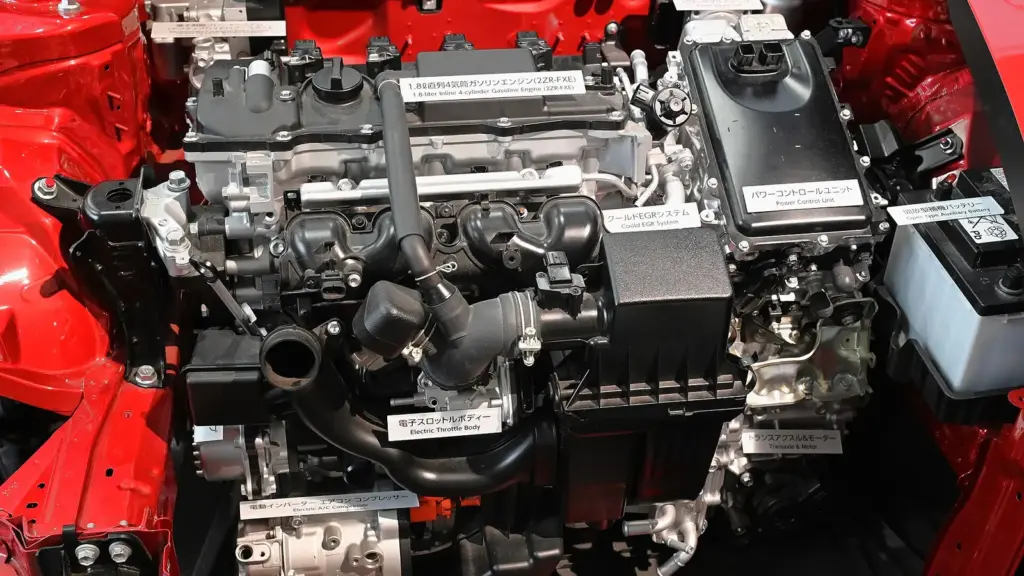
A cutaway Prius: the engine sits next to the transaxle, which hides two motor-generators and the planetary gears that split its power.
Four ways to build one
Every automaker solves the same problem a little differently, which is why a Toyota, a Honda and a Hyundai hybrid feel different to drive:
Toyota, Lexus, Ford
Power split
Planetary gears e-CVT
Two motor-generators and a planetary gear set blend engine and electric power continuously, with no gear changes. One motor-generator also starts the engine, so there’s no conventional starter motor. Smooth and proven, although the engine can drone under hard acceleration.
Honda
Mostly series, with a clutch
e:HEV Two motors
Around town, the engine just runs a generator and an electric motor drives the wheels. At steady highway speeds, a clutch locks the engine directly to the wheels, because that’s more efficient there. It feels more like an EV than most hybrids.
Hyundai, Kia
Parallel with a real gearbox
One motor Automatic transmission
A single electric motor sits between the engine and a conventional automatic gearbox, so you feel real gear changes. It feels the most like a regular gas car, which plenty of drivers prefer.
Nissan
Series hybrid
e-Power Engine never drives
The gas engine only makes electricity, and an electric motor always turns the wheels. Popular in Japan and Europe, e-Power is coming to North America with the next Nissan Rogue.
Many brands
Mild hybrid
48 volts Belt or starter-generator
A small motor-generator replaces the starter and alternator, smoothing out stop-start and adding a little boost. You’ll find it on lots of European cars and on many trucks.
Still there
The 12-volt battery
Runs the computers Can still go flat
Every hybrid still has a small 12-volt battery for the lights, locks and computers. If it’s weak, the car may not go to ‘Ready’ even when the big battery is fine.
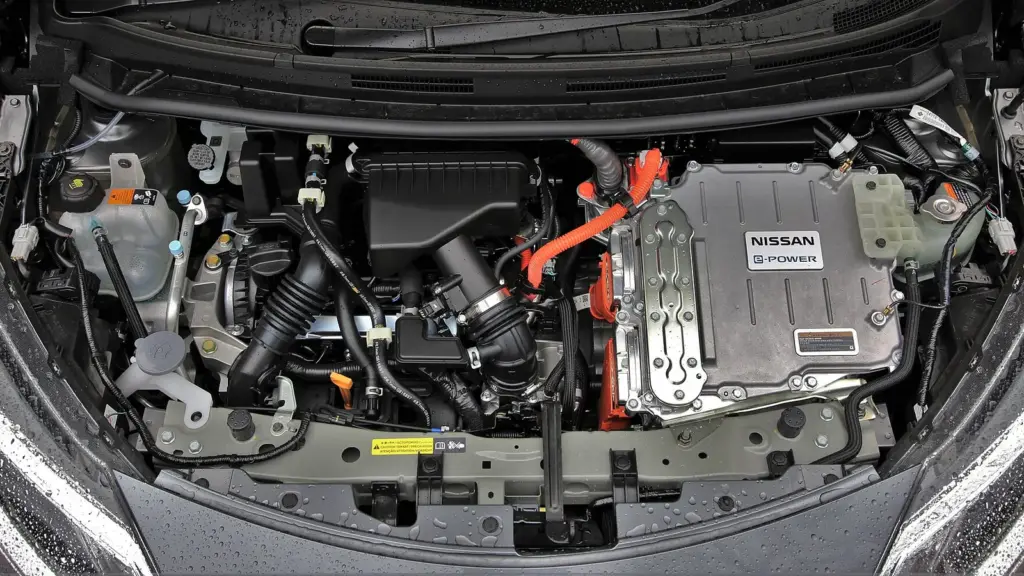
Under the hood of a Nissan Note e-Power: the engine on the left only drives a generator, while the electric drive unit on the right moves the car.
03 · Plug-in hybrids
Plug-in Hybrids: Two Cars in One, If You Plug It In
A plug-in hybrid uses the same basic hardware as a full hybrid, but with a battery around ten times bigger and an onboard charger. Charge it at home overnight and most daily drives can be fully electric. On a road trip, it just keeps going as a hybrid, and you fill up in five minutes like any gas car.
Most PHEVs charge on a regular 120-volt outlet overnight or faster on a 240-volt Level 2 charger, the same ones EVs use (see how EV charging works). Many don’t support DC fast charging at all, and the ones that do charge slowly compared with an EV. That’s fine, because the battery is small.
You’ll usually get a few drive modes: EV (stay electric as long as possible), hybrid/auto (the car decides), save (hold the battery for later, say for city driving at the end of a highway trip) and sometimes charge, which uses the engine to refill the battery. That last one burns extra fuel, so use it sparingly.
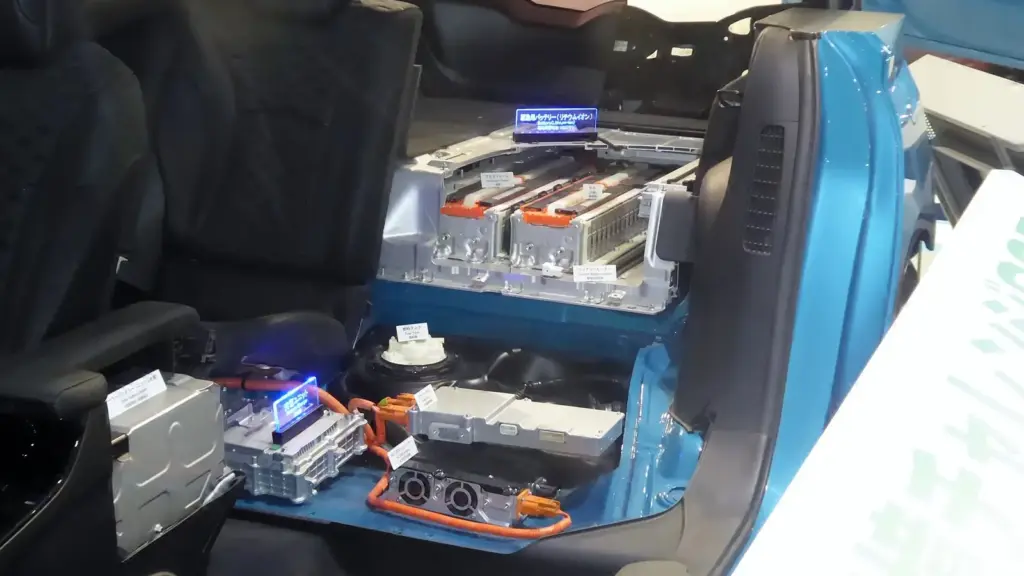
A plug-in Prius cutaway. The extra battery capacity sits under the rear of the car.
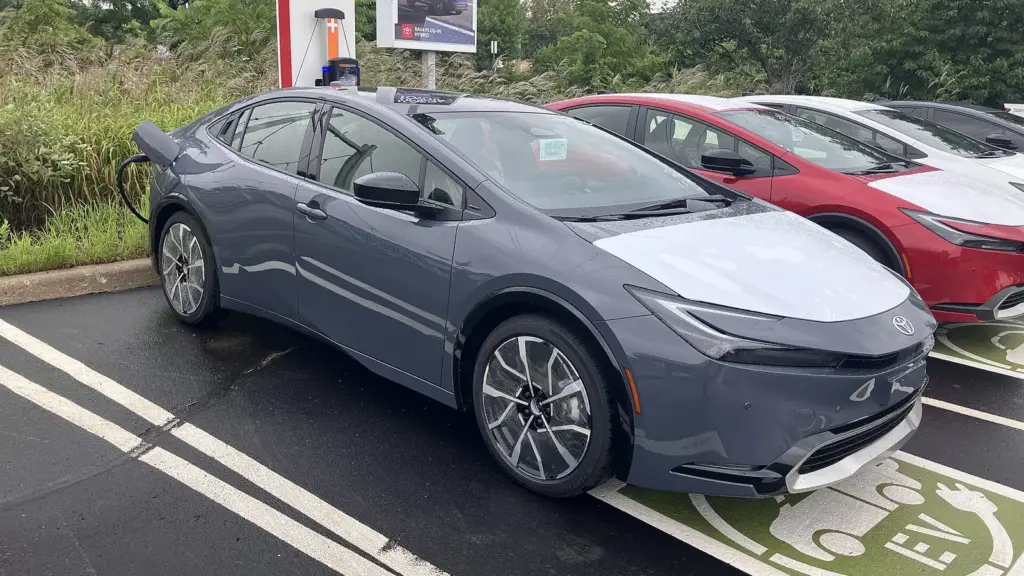
A 2026 Prius Plug-in Hybrid at a public charger. Most PHEV charging happens at home, though.
The catch: a PHEV is only as green as your charging habits. European Commission data from real cars found plug-in hybrids registered in 2021 emitted about 3.5 times more CO2 on the road than in the lab test, because owners didn’t plug in as often as the test assumes. A 2026 Transport & Environment analysis of 2024 cars found the gap had grown to roughly six times. Never plug in, and you’re hauling around a heavy battery for nothing.
A PHEV makes sense if… you can charge at home or work, most of your daily driving fits within the electric range, and you still take long trips where charging would be a hassle.
Skip it if… you can’t plug in regularly. A regular full hybrid will use less fuel than an uncharged plug-in, and it’ll cost less.
04 · Battery, regen and brakes
The Parts You Never See
A full hybrid’s battery is surprisingly small, usually around one to two kWh, compared with 60 kWh or more in a typical EV. The trick is that the car almost never fills or empties it. It keeps the charge in a comfortable middle band, which is easy on the cells and a big reason hybrid batteries tend to last so long.
- NiMH vs. lithium-ionTwo battery typesOlder and some current hybrids use nickel-metal hydride, which is tough and tolerant of heat. Newer ones mostly use lithium-ion, which is lighter and holds more energy. Plug-ins use lithium-ion. We go deeper in Car Batteries Explained.
- Inverter and converterThe power electronicsJust like in an EV, an inverter turns battery DC into AC for the motors. Many hybrids also boost the battery’s voltage before it reaches the motors, and they have their own coolant loop to keep these electronics cool.
- Battery coolingOften a small fanMany hybrids cool the battery with cabin air pulled through a vent, often near the back seat. If that vent or its filter clogs with dust or pet hair, the battery runs hot. It’s an easy thing to check, and an easy one to forget.
Blended braking
When you press the brake pedal in a hybrid, the car first uses the motor as a generator to slow down and recharge the battery. The regular friction brakes only join in for harder stops or the last few km/h. You don’t feel the hand-off in a good system. The upshot is that brake pads often last far longer than on a gas car. Just like on an EV, though, brakes that rarely work hard can rust or stick, especially on salted roads.
- ReadyMeans the car is on, even silently
- No starterOn most full hybrids
- 1–2 kWhTypical full-hybrid battery
- Regen firstFriction brakes second
05 · Around the world
Hybrids Around the World
Where you live shapes which kind of hybrid you’ll see in the driveway next door. Fuel prices, taxes, charging networks and even how cities are built push each region in a different direction.
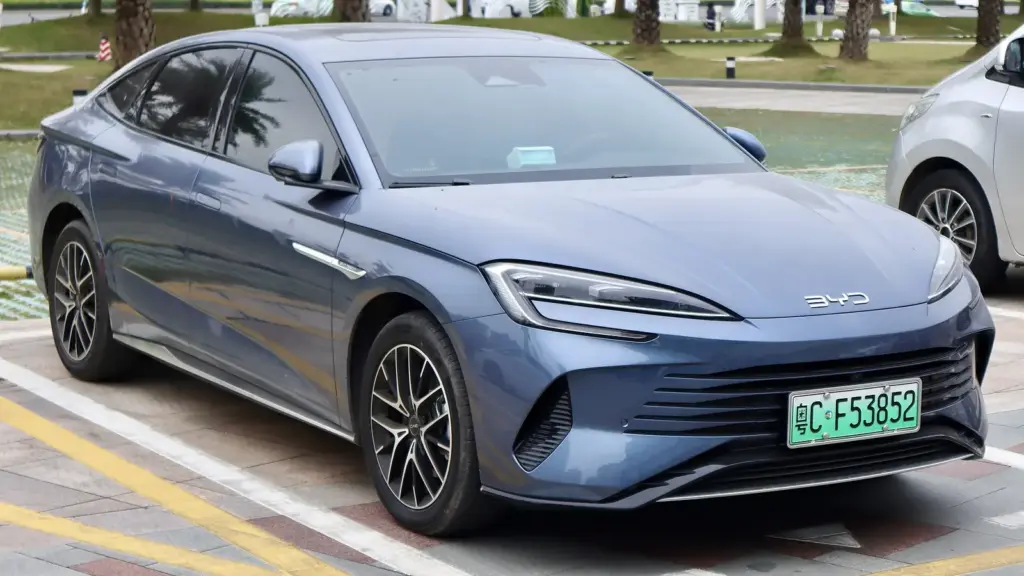
A BYD Seal DM-i in China, where plug-in and range-extender hybrids sell in the millions.
Japan
Hybrid country
33.8% of new cars e-Power
Hybrids made up 33.8% of new car sales in the first half of 2025, while pure EVs were just 1.3%, according to JATO. Toyota alone took about a fifth of the whole market with hybrids, and Nissan’s e-Power and Honda’s e:HEV are everywhere.
China
Plug-in and range-extender boom
5.9 million PHEVs BYD DM-i
China counts plug-in hybrids and range-extenders as “new energy vehicles” next to EVs. Of the 16.49 million sold in 2025, about 5.9 million were plug-ins, led by BYD’s DM-i models and range-extended SUVs from brands like Li Auto.
Europe
Mild hybrids and company PHEVs
48 V everywhere Real-world gap
Mild hybrids are common on European cars. Plug-ins have been popular as company cars thanks to tax breaks, but EU data shows many are rarely charged, which is why their real-world CO2 is so much higher than claimed.
Canada and the US
The hybrid comeback
Toyota, Honda, Hyundai EREV trucks coming
Full hybrids are now some of the best-selling versions of popular SUVs. Toyota sells the Camry and RAV4 only as hybrids in North America, and range-extenders like the Ram 1500 REV and series hybrids like Nissan’s e-Power are on the way.
06 · Maintenance
What Needs Maintenance, and When
Here’s the thing people get wrong: a hybrid still has a full gas engine, so it still needs oil changes, filters and spark plugs. The good news is that the engine works less hard, and the brakes barely work at all. On top of the usual jobs, there are a few hybrid-only items, like the battery cooling filter. The chart shows typical service points over the first 200,000 km for a full hybrid. Plug-ins are the same, plus a quick look at the charging gear. Your owner’s manual is the final word.
Regular maintenance schedule
● Replace or service ○ Inspect
| Part | 20k | 40k | 60k | 80k | 100k | 120k | 140k | 160k | 180k | 200k |
|---|---|---|---|---|---|---|---|---|---|---|
| Engine oil and filterEvery 8,000–16,000 km or yearly | ● | ● | ● | ● | ● | ● | ● | ● | ● | ● |
| Tire rotationEvery 8,000–13,000 km | ● | ● | ● | ● | ● | ● | ● | ● | ● | ● |
| Hybrid battery air filterInspect often; clean about every 32,000 km | ○ | ● | ○ | ● | ○ | ● | ○ | ● | ○ | ● |
| Cabin air filterEvery 20,000–40,000 km or yearly | ○ | ● | ○ | ● | ○ | ● | ○ | ● | ○ | ● |
| Engine air filterEvery 30,000–50,000 km | ○ | ● | ○ | ● | ○ | ● | ○ | ● | ○ | ● |
| Brake fluidEvery 2–3 years | ● | ● | ● | ● | ● | |||||
| Brake pads and calipersInspect; clean calipers yearly where roads are salted | ○ | ○ | ○ | ○ | ○ | ○ | ○ | ○ | ○ | ○ |
| 12-volt batteryEvery 3–6 years | ○ | ● | ○ | ● | ||||||
| Engine coolantFirst change around 160,000 km | ○ | ● | ||||||||
| Inverter / hybrid coolantLong-life; check your manual | ○ | ○ | ||||||||
| Transmission (e-CVT) fluidOften “lifetime”; inspect | ○ | ○ | ||||||||
| Spark plugs (iridium)Often 160,000–190,000 km | ● | |||||||||
| Hybrid battery healthCheck at each service | ○ | ○ | ○ | ○ | ○ | ○ | ○ | ○ | ○ | ○ |
Parts that wear out as the kilometres add up
Hybrids are known for going a long way between big repairs. These are the items that do eventually show up:
| Part | Typical life | Warning signs |
|---|---|---|
| Hybrid battery | Often the life of the car; Toyota Canada warranties it for 10 years or 240,000 km (2020+) | Worse fuel economy, engine running more, warning light |
| Battery cooling fan | 150,000 km and up | Loud fan, battery cooling warning, reduced power |
| 12-volt battery | 3–6 years | Car won’t go to ‘Ready’, electrical glitches |
| Brake rotors and calipers | Often rust before they wear out | Grinding, pulsing, uneven pad wear |
| Engine and motor mounts | 150,000 km and up | Clunk or shudder when the engine starts or stops |
| Electric water pumps | 150,000 km and up | Overheating or inverter warnings |
| Suspension bushings and shocks | 100,000–160,000 km | Clunks over bumps, bouncy ride |
| Charge port and cable (PHEV) | Depends on use | Loose fit, charging stops, damaged pins |
| Onboard charger (PHEV) | Usually the life of the car | Won’t charge from the wall at all |
Plug-in owners who rarely use gas: the engine still needs oil changes on time, and gas can go stale. Many PHEVs will start the engine now and then on their own, or ask you to use up old fuel. Check your manual, and don’t fill the tank to the brim if you hardly ever burn any.
Quick checks you can do every month
- Battery ventKeep it clear of dust and bags
- Tire pressureLow tires cost real mileage
- Oil levelThe engine still needs it
- Charge portClean and dry (plug-ins)
Frequently Asked Questions
Do I need to plug in a regular hybrid?
No. A regular (full or mild) hybrid charges its own battery from the engine and from braking. Only plug-in hybrids and range-extenders have a charging port.
Can I drive a plug-in hybrid without ever charging it?
Yes, it just becomes a heavier regular hybrid. EU data shows that’s how many PHEVs are actually driven, and their real fuel use ends up several times higher than the official figure. If you won’t plug in, a regular hybrid is usually the better buy.
How long do hybrid batteries last?
Usually a very long time, because the car keeps them in a gentle middle range of charge. Toyota Canada covers hybrid batteries on 2020 and newer models for 10 years or 240,000 km. Keeping the battery cooling vent clean helps.
Do hybrids have a starter motor?
Most full hybrids don’t. One of the motor-generators spins the engine to start it, which is why restarts are so smooth. Mild hybrids use a starter-generator instead. Every hybrid still has a small 12-volt battery.
Are hybrids more expensive to maintain?
Generally not. You still need oil changes and filters, but brake pads often last much longer, and there’s no belt-driven starter or alternator to wear out on most full hybrids. Battery cooling filters and inverter coolant are the main extras.
How do hybrids handle Canadian winters?
Fine, but expect worse fuel economy. In the cold, the engine runs more often to make cabin heat and to warm the battery, so you’ll see less electric-only driving. Plug-ins lose some electric range in winter too, just like EVs.
Hybrid, plug-in or full EV: which should I get?
It depends on where you drive and whether you can charge at home. We compare all the options side by side in Gas vs. Diesel vs. Hybrid vs. Electric.
That’s the Whole Series
This is part 4 of our Engines Explained series, and the last one. You now know how gas, diesel, electric and hybrid cars actually work. Catch up on any you missed:
Sources
- US Department of Energy: How do hybrid electric cars work?
- Hybrid Synergy Drive (Toyota power split)
- Mild hybrid
- The Drive: Nissan isn’t doing normal hybrids. Here’s why
- Classics World: Hybrid electrification explained, Honda vs. Toyota
- European Commission: real-world CO2 emissions of cars and vans (2022 data)
- The Driven: plug-in hybrids emit six times more than claimed (T&E study)
- Toyota Canada: hybrid battery warranty extended to 10 years / 240,000 km
- JATO: Japan’s electrification trends, first half of 2025
- CnEVPost: China NEV sales in 2025 (CAAM)
- Tustin Toyota: how often to inspect the hybrid battery air filter
Photo credits
- Header image: TTTNIS, CC0, cropped and resized.
- Nissan Note e-Power series hybrid powertrain on…: TTTNIS, CC0, cropped and resized.
- Cutaway of the Toyota Prius plug-in hybrid…: Tokumeigakarinoaoshima, CC BY-SA 4.0, cropped and resized.
- 2026 Toyota Prius Plug-in Hybrid plugged into…: Gogerr, CC BY-SA 4.0, cropped and resized.
- BYD Seal DM-i plug-in hybrid photographed in…: User3204, CC BY-SA 4.0, cropped and resized.
- Cutaway Toyota Prius hybrid showing the engine,…: TTTNIS, CC0, cropped and resized.