
 Written by
EV Range in Winter: How Much You Lose and How to Get It Back
Every EV owner learns this the first time the temperature drops below freezing: the range number on the screen shrinks, sometimes a lot. A car that did 400 km (250 miles) on a mild fall day might manage closer to 300 km (185 miles) on a January highway trip. That’s normal, it’s temporary and it isn’t a sign your battery is dying.
This guide breaks down how much range EVs really lose in the cold, using real-world data from Recurrent, lab tests from AAA, Canadian road tests from CAA and Norway’s brutal winter range test. Then we get to the good part: what heat pumps do, how preconditioning works, why fast charging slows down in winter and the simple habits that win back a big chunk of your range.
Guide · EV Ownership
Updated November 2026 · 18 min read
Winter EV Range at a Glance
The key numbers before we dig in:
Range kept at 0°C (32°F) 78% Recurrent’s real-world average across 34 models (2025/2026 study)
Range kept at -7°C (20°F) 70% Same Recurrent study; the best and worst models differ a lot
Lab loss, heater on 41% AAA at -7°C (20°F) in 2019; its 2026 round found 39%
Canadian road test 14–39% Below official range at -7 to -15°C (19 to 5°F), CAA 2025
Heat pump bonus About 10% More range at freezing versus cars without one (Recurrent)
Heated seat vs. cabin heat 75 W vs. 3,000+ W Why warming you beats warming the air (Geotab)
01 · Why it happens
Why EVs Lose Range in the Cold
A gas engine wastes most of its fuel as heat, so in winter it warms the cabin almost for free. An electric car is so efficient that it has very little waste heat to spare, so every bit of warmth for you and the battery has to come out of the same pack that moves the car. That’s the big one, but it isn’t the only reason.
- Heating the cabinThe biggest drainA cabin heater can pull 3,000 to 5,000 watts, according to fleet data firm Geotab. The US Department of Energy says about two-thirds of the extra energy an EV uses in the cold goes to heating the cabin. On a short trip that can be more energy than driving takes.
- A cold batterySlower chemistryLithium-ion cells work best at mild temperatures. When they’re cold, the chemistry slows down, so the car holds back some stored energy, limits regenerative braking and spends power warming the pack. AAA measured a 12% range loss at -7°C (20°F) even with the heater off.
- Winter driving itselfSnow, tires and airCold air is denser, slush and snow add drag, and winter tires usually roll with more resistance than all-seasons. Michelin says rolling resistance accounts for roughly 20 to 30% of an EV’s energy use, so tires matter more than you might think.
- Short tripsHeating up again and againEvery time you start a cold car, it has to warm the cabin and battery from scratch. Consumer Reports found short trips with stops can cost about 50% of range in the cold, far worse than steady highway driving.
- 3,000–5,000 WTypical cabin heater draw
- About 75 WHeated seat or steering wheel
- 21.5°C (70°F)Geotab’s range sweet spot
- 115%Of rated range at that sweet spot
Good news: winter range loss is temporary. Recurrent’s research says there’s likely no long-term damage from the cold, and the range comes back when the weather warms up. Modern battery management systems also stop the car from charging in ways that could harm a frozen pack. If you want to know more about what’s inside the pack, our car batteries explainer covers it.
02 · The numbers
How Much Range You’ll Really Lose
Ask five testers and you’ll get five different numbers, because they measure different things. A lab test with the heater cranked at a steady temperature is not the same as thousands of owners driving their daily commutes. Here’s how the big studies stack up:
| Study | How it was done | Temperature | Range lost |
|---|---|---|---|
| Recurrent (2025/2026) | Real-world data from 30,000+ US cars, 34 models | 0°C (32°F) / -7°C (20°F) | 22% / 30% on average |
| AAA (2019) | Lab dynamometer, five EVs, heater set to 22°C (72°F) | -7°C (20°F) | 41% heater on, 12% heater off |
| AAA (2026) | Lab test, three EVs including Equinox EV and Model Y | -7°C (20°F) | 39% |
| Consumer Reports (2022) | Highway loop at 113 km/h (70 mph), four AWD EVs | About -9°C (16°F) | About 25% |
| CAA (2025) | Ottawa to Mont-Tremblant road test, 13 EVs | -7 to -15°C (19 to 5°F) | 14–39% below official range |
| NAF Norway (2026) | Road test, 24 EVs, coldest edition on record | -8 to -31°C (18 to -24°F) | 37.6% below WLTP on average |
Which EVs hold their range best?
Recurrent’s data, as reported by InsideEVs in January 2025, shows how much of their normal real-world range popular EVs kept at freezing. Teslas and the newer Hyundai and Kia models did well. Older designs without heat pumps lost the most.
89%
Tesla Model X
Heat pump
87%
Tesla Model 3
Heat pump
85%
Hyundai Ioniq 5
Heat pump
84%
Hyundai Kona Electric
Heat pump
82%
Kia EV9
Heat pump
78%
Nissan Leaf
No heat pump
74%
Ford F-150 Lightning
No heat pump
74%
Chevrolet Equinox EV
Heat pump
69%
Chevrolet Bolt EV
No heat pump
66%
Ford Mustang Mach-E
No heat pump
63%
Volkswagen ID.4
No heat pump
Brand-wise, that’s good news for Tesla, Hyundai and Kia owners. Chevrolet’s Equinox EV and the Cadillac Lyriq were the odd ones out: both have heat pumps yet still lost more than expected, and Recurrent said it had reached out to GM about it. Recurrent’s newer 2025/2026 ranking moves some cars around (the F-150 Lightning places higher there), so treat any single list as a guide, not gospel.
What Canada’s road test found
CAA drove 13 EVs from Ottawa to Mont-Tremblant in early 2025 at -7 to -15°C (19 to 5°F) and compared the result with each car’s official Natural Resources Canada (NRCan) range:
| EV | Distance driven | Official range | Difference |
|---|---|---|---|
| Chevrolet Silverado EV | 456 km (283 mi) | 724 km (450 mi) | -14%* |
| Polestar 2 | 384 km (239 mi) | 444 km (276 mi) | -14% |
| Kia EV9 | 349 km (217 mi) | 435 km (270 mi) | -20% |
| Volkswagen ID.4 | 338 km (210 mi) | 423 km (263 mi) | -20% |
| Tesla Model 3 | 410 km (255 mi) | 584 km (363 mi) | -30% |
| Ford Mustang Mach-E | 334 km (208 mi) | 483 km (300 mi) | -31% |
| Chevrolet Equinox EV | 337 km (209 mi) | 513 km (319 mi) | -34% |
| Hyundai Ioniq 5 | 262 km (163 mi) | 410 km (255 mi) | -36% |
| Volvo XC40 Recharge | 248 km (154 mi) | 409 km (254 mi) | -39% |
Our take: plan on losing roughly a quarter to a third of your range on a properly cold day, more on short hops with the heat blasting and less if your EV has a heat pump and you precondition. The rankings shift between studies, so look at how a specific model did in a couple of tests before you buy.
03 · Heat pumps
Heat Pumps: The Winter Feature Worth Paying For
Most early EVs heated the cabin with a resistive heater, basically a giant toaster element. It works, but it turns one unit of electricity into one unit of heat. A heat pump works like a fridge running in reverse: it pulls heat out of the outside air (and on some cars, out of the motor and electronics) and moves it into the cabin. Recurrent says a heat pump makes 3 to 4 units of heat for every unit of electricity it uses.
With a heat pump
83% of range kept
At 0°C (32°F) Recurrent data
Across more than 18,000 US EVs, cars with heat pumps kept 83% of their mild-weather range at freezing on average, according to Recurrent’s January 2025 analysis.
Without one
75% of range kept
At 0°C (32°F) Recurrent data
EVs relying on resistive heat kept 75% on average. That gap of roughly 8 to 10 percentage points is real money on a winter road trip.
The catch
Fades in deep cold
Below about -9°C (15°F) Near -18°C (0°F)
Heat pumps lose their edge as it gets colder. Recurrent says they’re less effective below about -9°C (15°F) and work about as efficiently as a resistive heater near -18°C (0°F).
Tesla was early here. The Model Y was the first Tesla with a heat pump in 2020, and by early 2021 Tesla said every model it built had one, including the Model 3. Recurrent’s data shows the difference: 2021 and later Model 3s with heat pumps kept 87% of their range at freezing, while older ones without kept 79%.
Many newer EVs from Hyundai, Kia, GM and others now offer heat pumps too, but they’re not always standard on every trim or every model year. If you live somewhere with real winters, check the spec sheet or window sticker for the words “heat pump” before you buy, especially on a used EV.
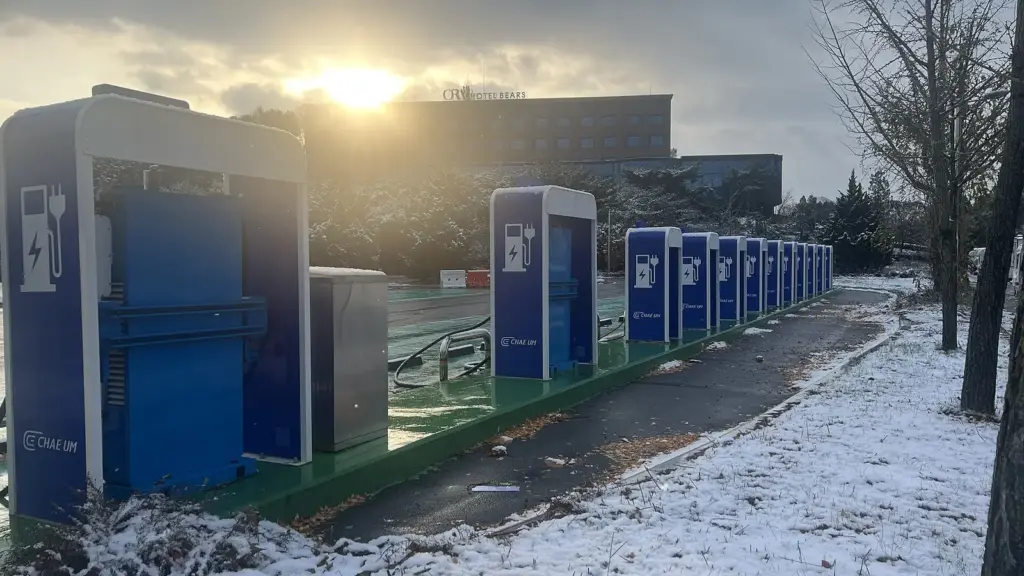
A heat pump helps most in the cold-but-not-frigid temperatures many North American winters spend the most time in.
A heat pump matters most if… your winters hover around freezing, you do lots of short trips or you road-trip in the cold. That’s where Recurrent’s 10% advantage shows up.
It matters less if… you mostly see deep, prairie-style cold below -18°C (0°F), where heat pumps fall back to resistive-heater efficiency. There, preconditioning and staying plugged in do more of the heavy lifting.
04 · Get it back
How to Get Your Winter Range Back
You can’t beat physics, but you can stop paying for heat you don’t need. Here are the habits that make the biggest difference, in order of how much they help:
- 1. Precondition while plugged inWarm the cabin and battery before you leave, while the car is still on the charger, so the energy comes from the grid instead of your battery. Tesla recommends starting 30 to 45 minutes before departure. Consumer Reports’ 2025 testing found preconditioning improved efficiency by 5 to 7%.
- 2. Heat yourself, not the airHeated seats and a heated steering wheel use a tiny fraction of the power of the cabin heater. Turn the cabin temperature down a few degrees and let the seat do the work. CAA, Ford, Chevrolet and Tesla all recommend it.
- 3. Keep it plugged inLeaving the car plugged in overnight lets the charger, not the battery, keep the pack warm. Tesla says to leave it connected even when it’s well below freezing, and to schedule charging to finish close to when you leave.
- 4. Check tire pressure oftenTesla’s manual says tires lose about 1 psi for every 6°C (10°F) drop in temperature. Michelin says tires 20% underinflated can cost 20 to 40 km (12 to 25 miles) on a 400 km (250 mile) EV.
Clear the snow off. Snow and ice on the roof and hood add weight and drag, and in some provinces and states it’s the law to clear them. Use the car’s defrost while it’s still plugged in to loosen ice on the windows and mirrors.
Park smart. A garage, even an unheated one, keeps the battery warmer than a driveway. No garage? CAA suggests parking on the sunny side of the street.
Ease off the highway speed. Drag climbs fast with speed, and Consumer Reports’ roughly 25% loss was measured at 113 km/h (70 mph). Dropping 10 km/h (6 mph) makes a real difference on a long trip.
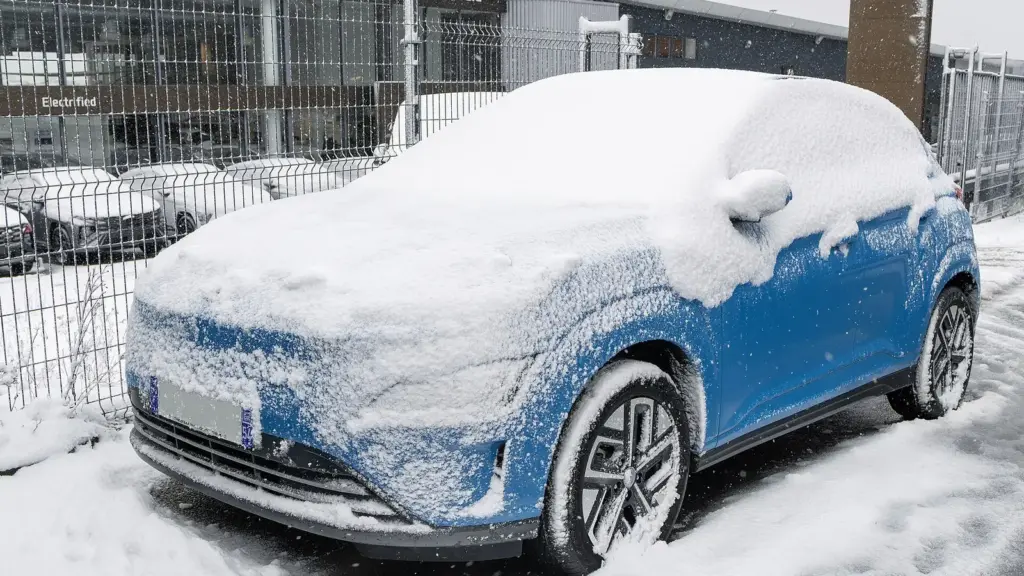
Snow on the roof is extra weight and drag, and in some places leaving it there can get you a ticket.
- Use eco climate modes. Many EVs have an eco or “driver only” setting that heats just your zone.
- Combine errands. One longer trip uses less energy than three short ones, because the car only warms up once.
- Don’t panic about regen. A cold battery can’t take much charge, so regenerative braking may be limited at first. Tesla shows a blue snowflake when that happens. It comes back as the pack warms up.
- Pick efficient winter tires. In Tire Reviews’ 2026 test, rolling resistance differed by 21.6% between the best and worst winter tires. Our winter vs. all-season tire guide explains which type you actually need.
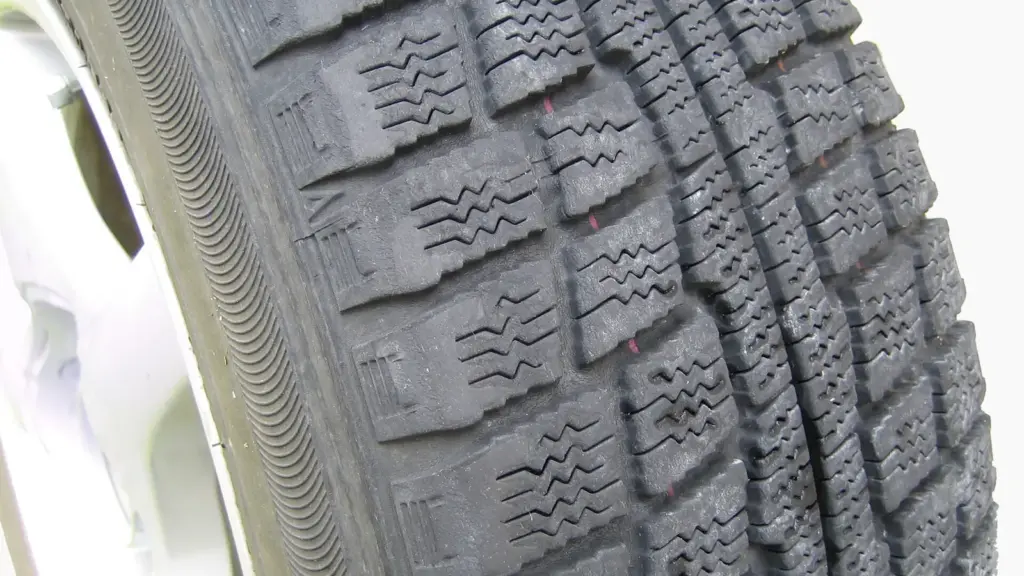
Winter tires on an EV: they’re still the safest choice for snow and ice, so don’t skip them to save range. Tesla notes that fitting winter tires can temporarily reduce regenerative braking power while the car adjusts.
05 · Charging
Charging in the Cold: Why It’s Slower and How to Speed It Up
Range is only half the winter story. The other half is charging speed. A cold battery can’t safely accept a fast charge: pushing too much current into frozen cells risks lithium plating, a permanent loss of capacity. So the battery management system slows charging way down until the pack warms up.
- 36% lessCharge added in 30 minutes at 0°C (32°F) vs. 25°C (77°F), INL study
- Up to 3xSlower charging in the coldest conditions, same study
- About 100 kmAdded in a 15-minute fast charge at -15°C (5°F), CAA average
- 30–60 minBattery preheating time before a fast charge
CAA’s 2025 test shows how wide the spread is. In 15 minutes at a fast charger, a Tesla Model 3 added 205 km (127 miles) and a Silverado EV added 199 km (124 miles), while a Toyota bZ4X added just 19 km (12 miles) and needed 92 minutes to go from 10 to 80%.
Battery preconditioning for fast charging
The fix is to warm the battery on the way to the charger. Most modern EVs do it automatically when you set a fast charger as your destination in the built-in navigation:
- TeslaAutomatic with Trip PlannerNavigate to a Supercharger and the car preheats the battery. Tesla says to start at least 30 to 45 minutes before you arrive.
- FordEn-Route PreconditioningFord EVs warm the battery automatically when you navigate to a DC fast charger using Ford’s Connected Navigation, Google Maps EV routing on Android Auto or, on the 2026 Mustang Mach-E, Apple Maps EV routing on CarPlay.
- ChevroletFast Charge PrepTurn it on manually in the Charging app, or it starts automatically when you route with Google built-in. Chevy says to start up to 30 minutes ahead, or up to 60 minutes when it’s -7°C (20°F) or colder.
- HyundaiBattery preheatingThe Ioniq 5 preheats its battery automatically when a charging stop is set in the navigation, according to Hyundai.
What happens when lots of cold EVs show up without preconditioning? Chicago found out in mid-January 2024, when the city spent about a day and a half below -18°C (0°F). NPR and ABC7 reported long lines at Tesla Superchargers, charges that took far longer than normal and some cars towed after running flat in line.
The lesson from that week is simple: in a deep freeze, keep the car plugged in at home, don’t let the charge drop too low and always navigate to the charger so the battery is warm when you arrive. Tesla’s advice at the time was to keep at least 20% charge.
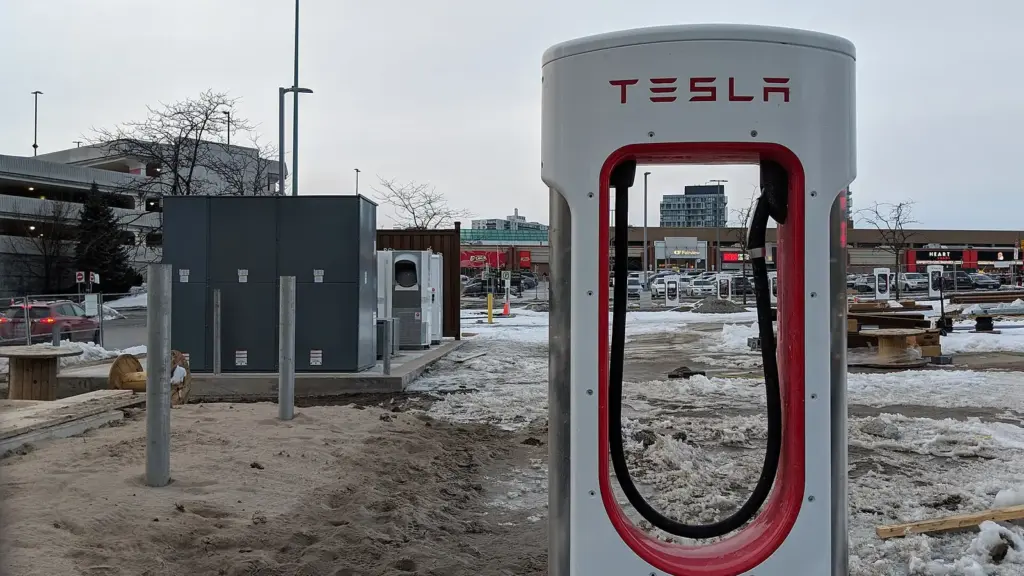
Arrive with a warm battery and a fast charger can do its job, even in a Canadian winter.
Charging at home in winter
Home Level 2 charging is where winter EV ownership gets easy. Plug in every night, set a departure time and the car will warm itself up on grid power before you leave. Recurrent’s testing found home charging gets a little less efficient in the cold, because some energy goes to warming the battery, but it’s still the cheapest and least stressful way to start every day with a full, warm battery.
Road-trip tip: CAA notes that charging from about 10 to 80% in short, frequent stops can cut your total charging time. Charging slows way down as the battery fills up, and that’s even more true in the cold.
06 · Cold-climate ownership
Living With an EV Through a Real Winter
Here’s some perspective: Natural Resources Canada says most Canadians drive about 60 km (37 miles) a day or less. Even an EV that loses 40% of its range on the coldest morning has plenty left for that, as long as you charge at home. Winter range only becomes a real problem on long highway trips, which is why more than half of the Canadian EV drivers CAA surveyed in 2024 said they’d still rather take a gas vehicle on a long trip in extreme cold.
Batteries don’t freeze solid and leave you stranded in the driveway. Chevrolet says it tests its EVs in temperatures as low as -40°C (-40°F), and the car will heat its own battery when it needs to. And with no engine, there’s no block heater to plug in: the charging cable does that job, letting the car keep its battery warm on wall power.

Long winter highway trips are where cold-weather range loss really bites.
Leaving your EV parked in the cold
- Plugged inBest optionLeave it connected and set the charge limit around 70 to 80%, as Recurrent suggests for storage. The car can use wall power to protect the battery if it needs to.
- Not plugged inKeep a bufferTesla says keeping the charge above 50% when the car isn’t plugged in reduces the impact of cold temperatures. Expect the car to use some energy keeping itself ready.
- Before a long tripPlan aheadCharge to a higher level the night before, precondition on the charger and plan fast-charging stops with the car’s navigation so it preheats the battery for each one.
Shopping for an EV in a cold climate?
Look for: a heat pump, heated seats and steering wheel, scheduled preconditioning in the app, and an official range at least a third higher than your longest regular winter drive. Check how the specific model did in CAA’s and Recurrent’s winter data.
Buying used? Ask the seller about winter range and check the trim’s spec sheet for a heat pump. Our used car inspection checklist has an EV section covering battery health. If range anxiety is a deal-breaker, a plug-in hybrid can be a smart middle ground.
Our take: for daily driving with home charging, winter range loss is mostly a non-issue once you start preconditioning and using the seat heaters. For winter road trips, buy more range than you think you need, pick a car with a heat pump and fast cold-weather charging, and always navigate to the charger.
Frequently Asked Questions
How much range does an EV lose in winter?
Usually about 20 to 30% in real-world driving around freezing, according to Recurrent’s data from more than 30,000 cars. It can reach 40% or more on very cold days with short trips and the heat turned up, and much less on a mild winter day with preconditioning.
Does cold weather permanently damage an EV battery?
No. Range loss in the cold is temporary and comes back when it warms up. The car’s battery management system limits charging speed when the battery is cold to prevent lithium plating, which is the kind of damage that would be permanent.
Should I keep my EV plugged in when it’s cold?
Yes. Tesla, Ford, Chevrolet and CAA all recommend it. Staying plugged in lets the car keep the battery warm and precondition the cabin on grid power instead of draining the battery.
Do heat pumps really help EV range in winter?
Yes, by about 10% at freezing on average, according to Recurrent. The advantage shrinks in deeper cold, and near -18°C (0°F) a heat pump is about as efficient as a regular resistive heater.
Why does my EV charge so slowly in the cold?
A cold battery can’t safely take a fast charge, so the car limits the charging rate until the battery warms up. Navigating to the charger in the car’s built-in navigation preheats the battery so you charge faster when you arrive.
Is it better to use heated seats or the heater in an EV?
Heated seats and a heated steering wheel use around 75 watts, compared with 3,000 to 5,000 watts for the cabin heater, according to Geotab. Using them and turning the cabin temperature down a few degrees saves a lot of range.
Get Ready for Winter
Learn how your EV works, pick the right winter tires and find out which brands hold their range best in the cold.
Sources
- Recurrent: winter EV range loss study (2025/2026)
- Recurrent: how temperature affects EV range
- Recurrent: cold-weather EV charging lessons
- InsideEVs: EV range loss in the cold and heat pump data (January 2025)
- Ratchet+Wrench: heat pumps improving EV range in cold temperatures
- AAA: cold weather reduces electric vehicle range (2019)
- AAA: electric vehicle range testing report (2019)
- NPR via KUNC: how well can EVs handle the heat and the cold? AAA put them to the test (2026)
- Consumer Reports: how cold temperatures affect an EV’s driving range
- Consumer Reports: how temperature affects electric vehicle range
- CAA: road test of EV range and charging in winter conditions (2025)
- CAA EV Buyers Guide: EVs in winter
- ÖAMTC: NAF winter range test in Norway (2026)
- Drive Tesla Canada: NAF winter test 2026 results
- US DOE fueleconomy.gov: fuel economy in cold weather
- Natural Resources Canada: electric vehicle questions
- Geotab: how temperature affects EV range
- Tesla Model 3 owner’s manual: cold weather best practices
- Tesla: winter driving tips
- Ford Canada: maximizing EV range in winter
- Ford: preconditioning the battery for DC fast charging
- Chevrolet: EVs in cold weather
- Chevrolet: battery preconditioning
- Hyundai: Ioniq 5 winter driving features
- InsideEVs: Idaho National Laboratory study on cold-weather fast charging
- NPR: Tesla owners in Chicago struggle to charge in the cold (2024)
- ABC7: Chicago-area Tesla charging stations in freezing weather (2024)
- Michelin Canada: how tires impact your EV range
- Tire Reviews: 2026 winter touring tire test
Photo credits
- Header image: Kirill Borisenko, CC BY-SA 4.0, cropped and resized.
- Row of EV fast chargers in a…: Sharon Hahn Darlin, CC BY 2.0, cropped and resized.
- Tesla Supercharger stalls in a mall parking…: Sikander Iqbal, CC BY-SA 4.0, cropped and resized.
- Blue Hyundai Kona covered in snow after…: Alexandre Prevot from Nancy, France, CC BY-SA 4.0, cropped and resized.
- Tread of a studless winter tire with…: Lombroso, Public domain, cropped and resized.
- Snow-covered lanes on the Coquihalla Highway in…: Ruth Hartnup, CC BY 2.0, cropped and resized.