
 Written by
Car Camping Essentials: What You Really Need for a Weekend Out of Your Car, SUV or 4×4
Car camping is the easiest way into the outdoors there is. Your vehicle carries the heavy stuff, doubles as a wind break and a locker, and if the weather turns ugly you’ve got a dry seat and a heater a few steps away. You don’t need a lifted 4×4 or a $5,000 rooftop tent to do it, either. A hatchback, a decent tent and a cooler will get you through a great weekend.
This guide covers what you really need and what can wait: where to sleep (tent, rooftop tent or the car itself), how to keep food cold and your phone charged, the carbon monoxide mistake that kills people every year, the recovery and safety kit worth carrying, and the rules for free dispersed camping on public land in the US and Canada.
Guide · Car Camping
Updated November 2026 · 21 min read
Car Camping at a Glance
A few numbers worth knowing before you pack:
Water to bring 3.8 L About 1 US gallon per person per day, Ready.gov’s minimum
Hard-shell rooftop tent 57–75 kg Roughly 125–165 lb, so check your roof’s dynamic load rating
12V fridge draw ~1 Ah/h Dometic CFX3 35 at 32°C (90°F), about 24 Ah a day
Free camping stay limit 14 days Typical on US national forest and BLM land; local rules vary
US park pass in 2026 $80 America the Beautiful annual pass for US residents ($250 for nonresidents)
Parks Canada pass C$83.50 Adult Discovery Pass in 2026; C$167.50 for a family or group
01 · Shelter and sleep
Where You’ll Sleep: Tent, Rooftop Tent or the Car Itself
Here’s the thing most first-timers get backwards: the shelter matters less than what’s under you. A cheap tent with a warm pad beats a fancy tent on a thin air mattress every time. Still, you’ve got three basic options, and each one suits a different kind of trip.
- Ground tentCheapest and most flexibleA family-size dome tent costs a fraction of anything that bolts to your car, packs in the trunk and leaves the vehicle free for a drive to the trailhead. The downsides: setting up in the dark or rain, and finding a flat spot without rocks or roots.
- Sleeping in the carFree if you already own a wagon or SUVFold the rear seats, lay down a pad and you’re in bed. It’s quiet, secure and great for late arrivals. You’ll want window covers for privacy and light, a window cracked or mesh window socks for condensation, and a level parking spot. Leveling blocks or a rolled towel under your head end help a lot.
- Rooftop tentFastest setup, biggest commitmentUnlatch, unfold, climb in. Your bed stays made, you sleep off the wet ground and setup takes minutes. But REI notes most rooftop tents weigh more than a hundred pounds, they cost real money, they hurt fuel economy, and you have to pack up camp to drive anywhere.
For most people starting out, a ground tent and a small SUV or wagon like a Subaru Forester is the sweet spot. You get room to stretch out at camp, and the car is right there as a gear locker and a wind block. Pitch the tent so the car shields it from the prevailing wind, and keep the stuff you’ll need at night (headlamp, jacket, water) in the tent, not the trunk.
Sleeping in the car works best in cooler weather and for one or two people. Measure your cargo floor with the seats folded before you buy a mattress, and check it’s actually flat.
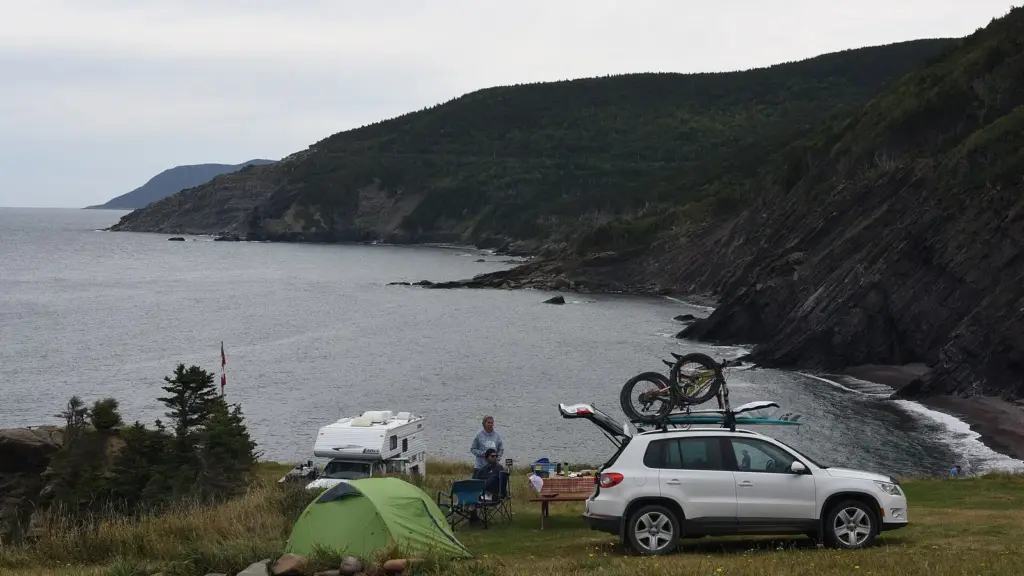
The classic setup: car as a wind break and gear locker, tent next door.
Rooftop tents: check the load rating first
Every roof has two numbers. The dynamic load is what it can carry while you’re driving, and that’s the one a rooftop tent has to fit under, along with the rack. The static load is what the roof can hold while parked, which has to cover the tent plus the people and bedding inside it. iKamper says most hard-shell rooftop tents weigh roughly 57 to 75 kg (125 to 165 lb), and stresses that your vehicle’s roof rating still applies even with stronger crossbars.
Your owner’s manual lists the dynamic limit. If the tent plus the rack is over it, don’t fudge it: look at a bed rack on a pickup or a trailer-mounted tent instead. Our best overlanding vehicles guide covers which trucks and SUVs handle the weight best.
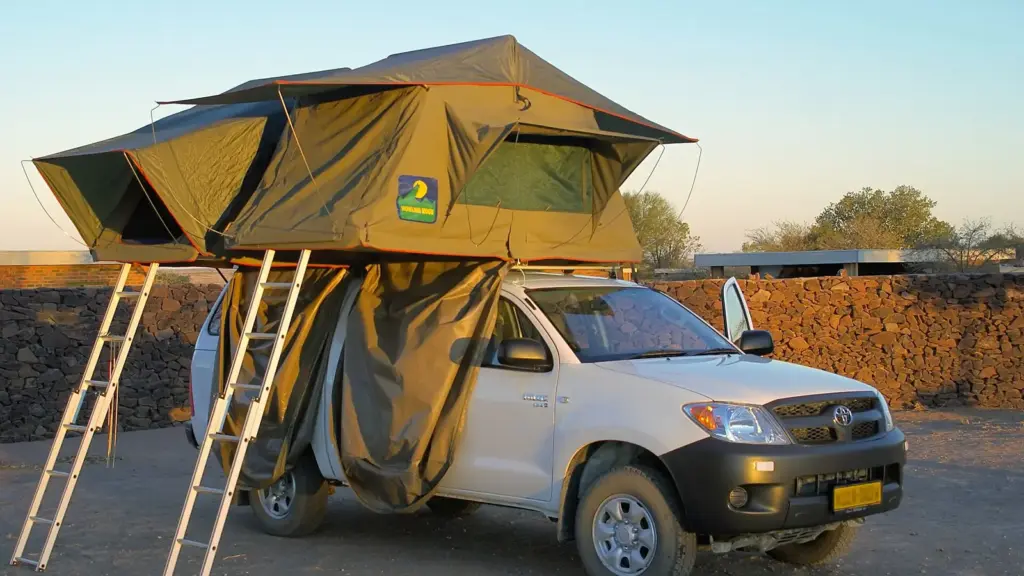
Two rooftop tents on a pickup: fast to pitch, but heavy on the roof.
Your sleep system matters more than your tent
Sleeping pads are rated by R-value, a measure of how well they stop the cold ground from sucking heat out of you. Since the ASTM F3340 test arrived, brands measure it the same way, so you can compare pads fairly. R-values add up, too: a cheap closed-cell foam pad under an inflatable pad makes the whole bed warmer. Here’s REI’s rule of thumb:
| Expected overnight low | Pad R-value | Sleeping bag rating |
|---|---|---|
| 10°C (50°F) | Under 2 | -1°C (30°F) |
| 0°C (32°F) | 2 to 3.9 | -7°C (20°F) |
| -7°C (20°F) | 4 to 5.4 | -9°C (15°F) |
| -18°C (0°F) | 5.5 and up | -18°C (0°F) |
Read the bag label carefully. Sleeping bags list a comfort rating (where a cold sleeper stays comfortable) and a lower limit (where a warm sleeper still does). REI says brands usually headline the comfort rating on women’s bags and the lower limit on men’s bags. If you run cold, shop by the comfort number.
02 · Kitchen and water
The Camp Kitchen: Stove, Water and Keeping Food Cold
Good food is half the fun of car camping, and since you’re not carrying anything on your back, you can bring real pans, real knives and real coffee. Keep it simple, though: one stove, one big pot, one pan and a kit that lives in a single bin so you’re not hunting for the lighter at dusk.
The classic two-burner propane stove is still the go-to. Coleman’s Classic, for example, puts out 20,000 BTU across both burners and runs on the familiar 465 g (16.4 oz) propane cylinders. Coleman says one cylinder lasts about an hour with both burners on high, so pack two or three for a weekend of cooking and morning coffee.
Single-burner butane stoves are smaller and cheaper, and fine for one or two people. Whatever you choose, cook outside in the open air. The CPSC is blunt about it: never use portable fuel-burning camping gear inside a vehicle or tent unless it’s designed for that, and never burn charcoal in one either.
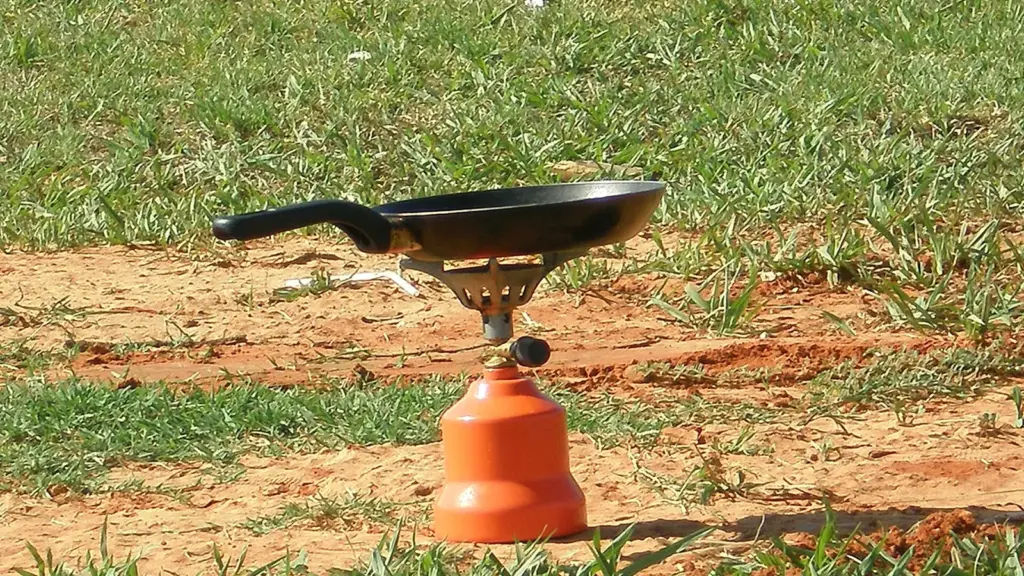
Keep the kitchen outside: stoves and charcoal never go in a tent or car.
Water: more than you think
Ready.gov’s guideline is at least one gallon, about 3.8 L, per person per day for drinking and basic washing. That’s a minimum, and hot weather, hiking and dishwashing all push it up. For a two-person weekend, a 26 L (7 gal) jug with a spigot plus a few bottles covers most trips. Heading somewhere with a stream? Bring a filter or purification tablets and treat everything before you drink it.
Cooler vs. 12V fridge
This is the most argued-about upgrade in car camping, and the honest answer depends on how long your trips are.
| Ice cooler | 12V compressor fridge | |
|---|---|---|
| Upfront cost | Low, from a basic hard cooler | High, plus wiring or a power station |
| Ongoing cost | Ice every day or two | Nothing, if your power holds up |
| Power needed | None | About 1 Ah per hour at 12 V for a Dometic CFX3 35 in 32°C (90°F) heat |
| Soggy food | Yes, unless you drain it | Never |
| Freezer option | No | Yes, on many models |
| Best for | Weekend trips, occasional campers | Trips of three days or more, frequent campers, overlanders |
Our take: for weekend trips a good cooler with block ice, pre-chilled before you leave, is all you need. Once you’re camping most months or staying out longer than two nights, a 12V fridge pays you back in convenience fast.
03 · Power and safety
Power, Lighting and the Carbon Monoxide Mistake to Avoid
Phones, headlamps, a fridge, maybe a CPAP or a laptop: camp needs a little electricity. The question is where it comes from without leaving you with a car that won’t start on Sunday morning.
Portable power stations are the easy answer for most people. They’re big lithium batteries with USB, 12V and household outlets, and their capacity is listed in watt-hours (Wh). EcoFlow explains it simply: divide the battery’s Wh by your device’s watts for a rough runtime, then knock off about 10 to 15% for conversion losses. Many newer units use LiFePO4 (LFP) cells; EcoFlow rates its 1,024 Wh DELTA 3 Plus at 4,000 cycles to 80% capacity.
By our math, a roughly 1,000 Wh station would run that Dometic fridge for around three days in hot weather, longer when it’s cool. Charge it at home, top it up from your car’s 12V socket while driving, or add a folding solar panel.
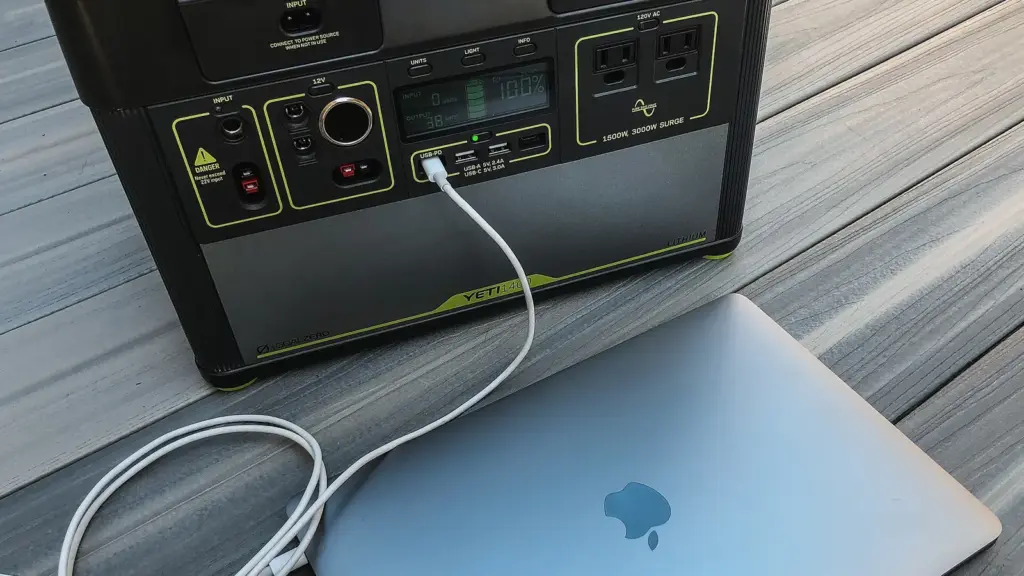
A portable power station keeps your starter battery out of the equation.
- Car’s 12V socketPhones and small stuff onlyFine for charging while you drive. Running a fridge off it overnight with the engine off is how people end up needing a jump.
- Portable power stationThe easy all-rounderNo wiring, works in any car, and you can take it into the house during a power cut. Pick the size from what you’ll run, not the biggest number you can afford.
- Dual-battery systemFor serious overlandersA second deep-cycle battery under the hood or in the cargo area, charged by a DC-DC charger. Redarc notes this protects your starter battery from over-discharge, and that modern “smart” alternators don’t always deliver enough voltage to fully charge an auxiliary battery without one.
If you do drain the starter battery, our how to jump-start a car safely guide walks you through it, and a compact lithium jump pack is a smart addition to any camping kit. Want to know why batteries hate the cold? See car batteries explained.
Camping with an EV
EVs make surprisingly good campers. There’s no engine to idle and no exhaust, so you can run the heat or air conditioning all night, and several models have a dedicated mode for exactly that:
- Tesla Camp ModeClimate stays on all nightKeeps the cabin at your set temperature and powers the USB ports and low-voltage outlet. Tesla’s manual says it only works in Park, turns off Sentry Mode and the alarm, and shouldn’t be used when charge is low.
- Rivian Camp ModeR1T and R1SLevels the vehicle with the air suspension, keeps climate and music running, and a “camp courtesy” setting turns off exterior lights, sounds and proximity locking so you don’t wake the neighbors.
- Hyundai Ioniq 5 V2LVehicle-to-loadVehicle-to-load (V2L) lets the car power household-plug devices, with up to 3.6 kW for camping gear, e-bikes and the like.
- Ford F-150 LightningPro Power OnboardOutlets in the cabin, bed and frunk, from a 2.4 kW or 9.6 kW system depending on the truck. That’s enough for an electric griddle or a coffee maker.
Just remember that running the heat all night costs range, especially in winter. Our EV winter range guide shows how much, and how an electric car works explains why the 12V battery still matters in an EV.
Don’t sleep in a gas or diesel car with the engine running. The CDC says more than 400 Americans die from unintentional carbon monoxide poisoning every year, and CO has no smell or color. Exhaust can creep into the cabin through leaks, an open tailgate, or snow piled around the tailpipe. If you’re ever stuck and must run the engine for heat, the National Weather Service advises running it only about 10 minutes an hour, clearing snow from the exhaust and cracking a window. Never run a generator, heater, stove or charcoal inside a tent or vehicle. The CPSC recommends CO alarms in RVs; a battery-powered one is cheap insurance in a car or tent, too.
04 · Recovery and safety kit
The Safety and Recovery Kit Worth Carrying
Most car camping happens at the end of a paved or graded road, and you don’t need a winch to get there. But the best campsites are often a little further out, phone signal is spotty, and help can be hours away. A small, sensible kit covers the stuff that actually goes wrong.
- First aidA real kit, not a bandage tin
- Full-size sparePlus a jack and a tire plug kit
- Jump packOr cables and a buddy
- Offline mapsDownloaded before you lose signal
Heading onto dirt, sand or snow in a 4×4 like a Land Cruiser or 4Runner? Add a basic recovery kit: a pair of traction boards (BFGoodrich describes them as lightweight ramps that give your tires grip in soft terrain), a kinetic recovery rope, soft shackles, a shovel, a tire deflator and a 12V compressor. 4X4 Australia notes kinetic ropes stretch as much as 30%, compared with about 20% for snatch straps, and soft shackles are lighter and less likely to hurt anyone if something lets go.
Two rules from the pros: only pull from rated recovery points, and BFGoodrich is clear that you should never use a tow ball as one. Our off-road 4×4 guide explains locking diffs, low range and what makes a truck good off the pavement.
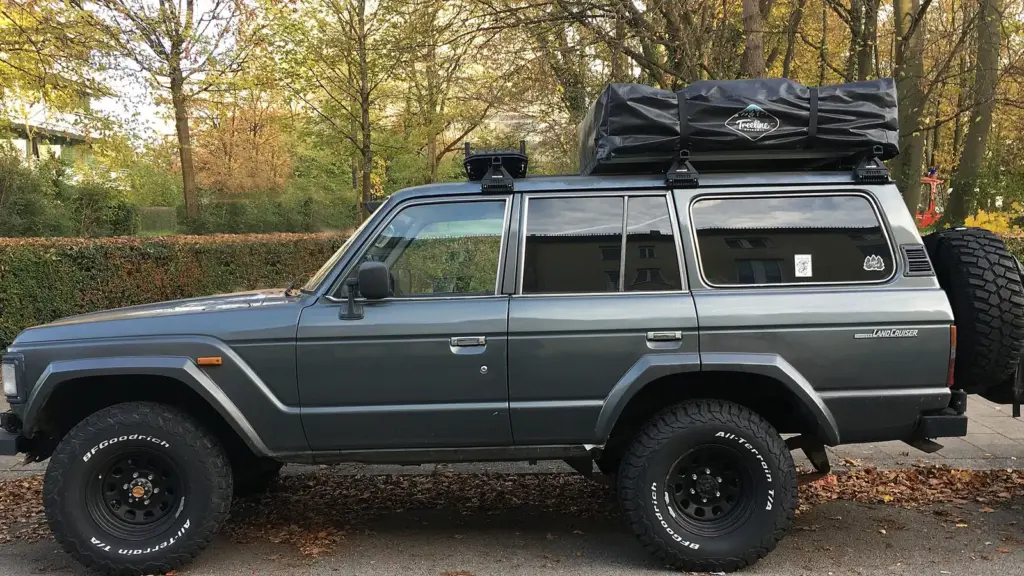
A classic Land Cruiser set up for camping, with a hard-shell rooftop tent.
Airing down on sand and rough tracks
Lowering tire pressure lengthens the tire’s footprint, which ARB says helps traction and resists punctures. Redarc’s broad guide for a loaded 4WD on sand is to start around 170 kPa (25 psi) and drop 35 kPa (5 psi) at a time if you need to, down to about 105 kPa (15 psi). Low pressures mean low speeds and gentle steering, and ARB stresses reinflating to the manufacturer’s spec before you get back on the pavement. That’s why the compressor isn’t optional.
Tell someone your plan. Leave your route, campsite and return time with a friend, and agree on when they should call for help. In remote areas without cell coverage, a satellite messenger or a phone with satellite texting is worth it.
05 · Where to camp
Where to Camp: Campgrounds, Free Dispersed Sites and the Rules
You’ve got two broad choices. Developed campgrounds give you a numbered site, a picnic table, a fire ring and usually a toilet. Dispersed camping, often called boondocking, means camping for free on public land away from any facilities. Both are great; they just need different planning.
Popular campgrounds book up fast. On Recreation.gov, which handles most US federal campgrounds, most sites open for booking six months before your arrival date, usually at 10 a.m. Eastern (7 a.m. Pacific). Some have shorter windows, listed on each campground’s Seasons and Fees tab.
In Canada, Parks Canada runs its own reservation system, and provinces run theirs. Most national parks also charge admission; Parks Canada’s free summer admission under the Canada Strong Pass ran June 19 to September 7, 2026, and regular fees have applied since September 8.
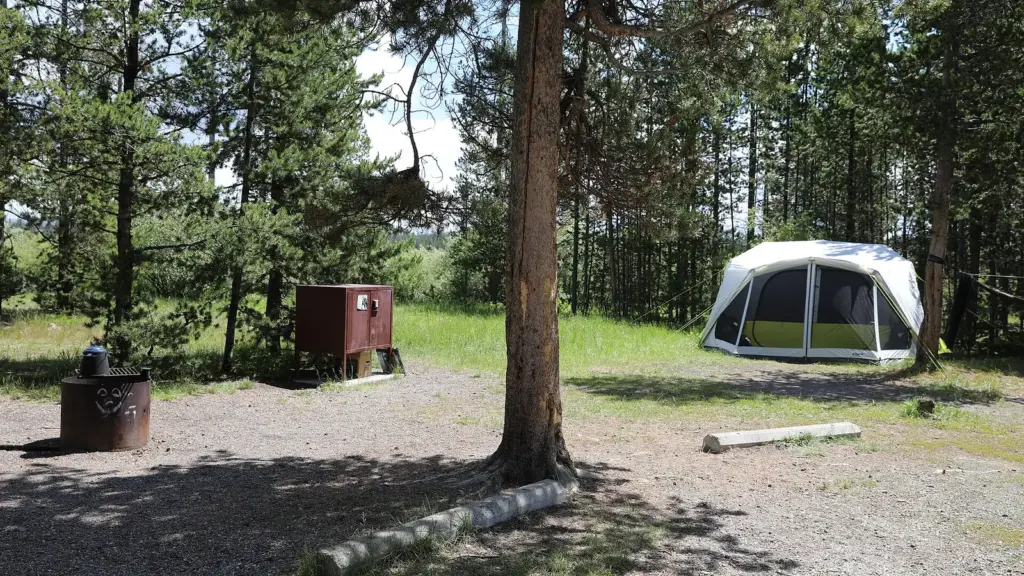
A developed campsite: flat tent pad, fire ring and a bear box for food.
- US national forestsDispersed campingUsually allowed for up to 14 days, though some forests set shorter limits. The Forest Service’s Pacific Southwest Region asks you to pick a site that’s already been used, camp at least 46 m (150 ft) from streams and lakes, stay away from developed areas and trailheads, and use the Motor Vehicle Use Map to find roads open to vehicles.
- BLM landBureau of Land ManagementGenerally 14 days within any 28-day period, after which you move on, often 40 to 48 km (25 to 30 miles) away. The BLM recommends camping at least 61 m (200 ft) from lakes, rivers and streams. Rules vary by field office, so check before you go.
- US national parksMostly designated sitesExpect reservations and an entrance fee. In 2026 the America the Beautiful annual pass costs $80 for US residents and $250 for nonresidents, who also pay a $100 surcharge per person at 11 of the busiest parks if they don’t buy the pass.
- Parks CanadaNational parks and historic sitesThe Discovery Pass covers a year of admission: C$83.50 for an adult or C$167.50 for a family or group in 2026. Camping fees are separate.
- Ontario Crown landCanada’s free campingCanadian residents can camp up to 21 days a year on any one site, then must move at least 100 m. Most non-residents of Canada need a Crown land camping permit north of the French and Mattawa rivers, at $10.57 per person per night. Other provinces have their own rules.
Bear country changes the rules. Food, drinks, toiletries and trash never go in your tent. In Yosemite, for example, the Park Service allows food in a car only during daylight, out of sight with the windows closed; after dark it must go in a food locker, and campground food always goes in the lockers. Other parks differ, so read the rules for where you’re going.
Fires are the other big one. Check for fire bans first, use existing fire rings, and put it out properly: Smokey Bear’s method is drown, stir, drown again, then feel for heat with the back of your hand. If it’s too hot to touch, it’s too hot to leave. And buy firewood where you burn it, since USDA says even short trips with firewood can spread invasive pests.
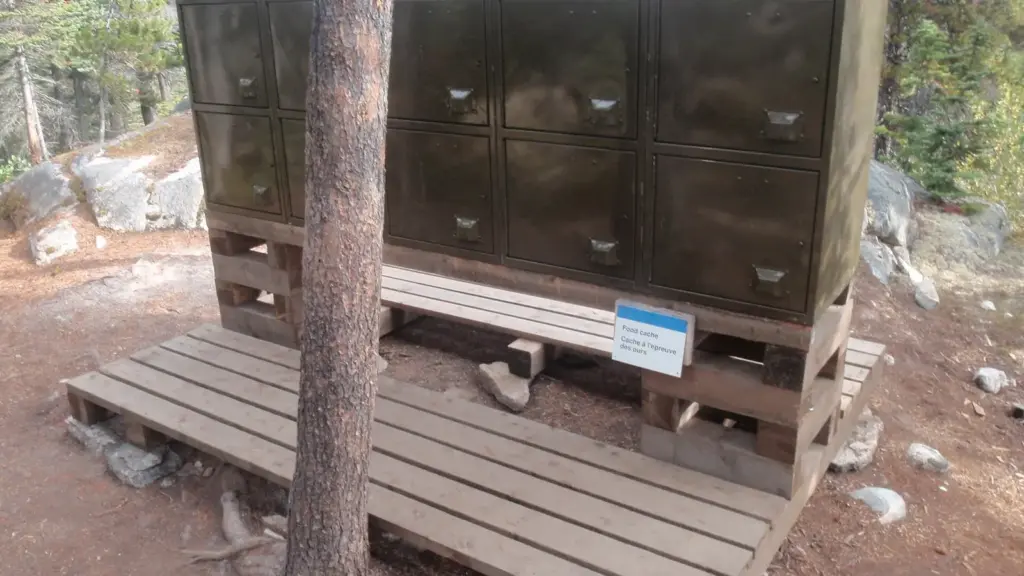
Bear lockers: in parks like Yosemite, they’re where your food spends the night.
Leave No Trace in seven steps
- Plan ahead and prepare: know the rules, the weather and your campsite options.
- Travel and camp on durable surfaces: use existing sites and roads, don’t drive onto meadows.
- Dispose of waste properly: pack out all trash, and bury human waste well away from water or use a portable toilet.
- Leave what you find: rocks, plants and artifacts stay put.
- Minimize campfire impacts: small fires in existing rings, or a stove instead.
- Respect wildlife: watch from a distance and never feed animals.
- Be considerate of other visitors: keep noise, lights and generators down, especially after dark.
06 · The checklist
The Car Camping Checklist: Start Cheap, Upgrade Later
You don’t need everything on day one. Borrow what you can for your first couple of trips, figure out what you missed, and spend money where it made you miserable. Here’s how the essentials stack up:
| Category | Budget start | Worth upgrading to |
|---|---|---|
| Shelter | Dome tent with a full rainfly | Rooftop tent or car window covers and a fitted mattress |
| Sleep | Foam pad plus a sleeping bag rated for the season | Thick self-inflating pad (R 4+) and a camp pillow |
| Kitchen | Two-burner propane stove, one pot, one pan, a lighter | Camp kitchen box, a table and a coffee setup |
| Food storage | Hard cooler with block ice | 12V compressor fridge |
| Water | A 26 L (7 gal) jug and bottles | Water filter and a bigger jug with a spigot |
| Light | A headlamp per person | Rechargeable lantern or LED strip lights |
| Power | USB battery bank | Portable power station or dual-battery setup |
| Safety | First aid kit, jump pack, spare tire | Satellite messenger and a battery CO alarm |
| Off-road | Shovel and tire gauge | Traction boards, kinetic rope, soft shackles, compressor |
- 1. A week outCheck campsite rules, fire bans and the forecast. Book or pick two backup spots for dispersed camping.
- 2. The night beforeCharge everything, freeze water bottles to use as ice, fill the water jug and download offline maps.
- 3. At the siteArrive with daylight to spare. Pick a flat spot, check overhead for dead branches, then pitch the tent before you cook.
- 4. LeavingDrown the fire, pack out every scrap of trash and take a last walk around. Leave the site better than you found it.
Keep it simple if… you camp a few weekends a year at established campgrounds. A tent, a good pad, a cooler and a stove cover almost everything, and none of it needs your car to change.
Invest in the upgrades if… you camp often, go remote or stay out for days. That’s when a fridge, a power station and a recovery kit stop being toys and start saving trips.
Frequently Asked Questions
What do I really need for my first car camping trip?
A tent (or a car you can sleep flat in), a sleeping pad and bag rated for the overnight low, a stove with fuel, a cooler, about 3.8 L (1 gallon) of water per person per day, a headlamp, a first aid kit and trash bags. Everything else is nice to have.
Is it safe to sleep in my car?
Yes, with the engine off. Crack a window or use mesh window covers for airflow, park somewhere legal and level, and never run a gas or diesel engine, heater or stove for warmth while you sleep. Carbon monoxide has no smell and kills more than 400 Americans a year, according to the CDC.
Can I run my car’s heater all night?
Not in a gas or diesel car while you sleep, because of the carbon monoxide risk. Instead, bring a sleeping bag rated for the low and a warm pad. EVs are different: with no exhaust, modes like Tesla’s Camp Mode can keep the cabin warm overnight, at the cost of some range.
Is a rooftop tent worth it?
If you camp often and value quick setup, maybe. Hard-shell models typically weigh 57 to 75 kg (125 to 165 lb), cost a lot more than a ground tent and have to fit under your roof’s dynamic load rating. For occasional trips, a good ground tent is better value.
Where can I camp for free?
In the US, most national forest and BLM land allows free dispersed camping, usually for up to 14 days. In Canada, Crown land is the main option: Ontario lets Canadian residents camp free for up to 21 days a year on one site. Always check local rules and fire restrictions first.
Cooler or 12V fridge?
A good cooler with block ice is cheaper and perfect for weekends. A 12V compressor fridge costs more and needs a power source, but it keeps food dry and cold for as long as your battery lasts, which makes it worth it for longer or frequent trips.
Pick the Right Rig for the Trip
Thinking about a vehicle that can take you further out? Start with our guides to the trucks and SUVs built for it.
Sources
- Ready.gov: water
- REI Expert Advice: how to choose a rooftop tent
- iKamper: rooftop tent mounting guide
- REI Expert Advice: how to choose sleeping pads
- REI Expert Advice: sleeping bag temperature ratings
- ASTM F3340-22: thermal resistance of camping mattresses
- Coleman: Classic propane stove
- Dometic: CFX3 35 specifications
- EcoFlow: what is a watt-hour
- EcoFlow: DELTA 3 Plus specifications
- Redarc: what is a dual battery charger
- CDC: carbon monoxide poisoning basics
- CPSC: carbon monoxide fact sheet
- National Weather Service: winter safety
- Tesla Model Y owner’s manual: Camp Mode
- Rivian: Camp Mode software update
- Hyundai: Ioniq 5 vehicle-to-load
- Ford: Pro Power Onboard
- 4X4 Australia: kinetic recovery ropes
- BFGoodrich: 4×4 recovery techniques
- ARB: 4×4 driving techniques
- Redarc: tire pressure basics
- Recreation.gov: tips for campsite reservations
- USDA Forest Service Pacific Southwest Region: dispersed camping
- Bureau of Land Management: camping on public lands
- National Park Service: modernized national park access (2026 pass prices)
- Parks Canada: passes, permits and fees
- Parks Canada: Banff National Park fees
- Government of Ontario: recreational activities on Crown land
- National Park Service: Yosemite bear safety and food storage
- Smokey Bear: campfire safety
- USDA APHIS: buy firewood where you burn it
- Leave No Trace: the seven principles
Photo credits
- Header image: Dane from Oxford, Mi, CC BY 2.0, cropped and resized.
- Small SUV with a bike rack parked…: Chris Hunkeler from Carlsbad, California, USA, CC BY-SA 2.0, cropped and resized.
- Toyota Hilux pickup with two unfolded rooftop…: Hans Hillewaert, CC BY-SA 3.0, cropped and resized.
- Small portable gas burner with a frying…: Itai, Public domain, cropped and resized.
- Portable lithium power station charging a laptop…: Tony Webster from Minneapolis, Minnesota, United States, CC BY-SA 2.0, cropped and resized.
- Campground site with a tent, a metal…: Forest Service - Northern Region, Public domain, cropped and resized.
- Row of metal bear-proof food lockers at…: NPS photo, Public domain, cropped and resized.
- Toyota Land Cruiser J60 with a folded…: Pittigrilli, CC BY-SA 4.0, cropped and resized.