
 Written by
Gasoline Engine Types, Explained: Two-Stroke, Four-Stroke, Six-Stroke, Rotary, Boxer and Flat-Plane
The gasoline engine has been around for more than 160 years, and in that time engineers have tried just about every way imaginable to turn a small explosion into motion. Some ideas stuck, like the four-stroke piston engine in your driveway. Others, like the rotary, became cult legends. And Porsche is still inventing new ones.
This guide walks through how the gasoline engine evolved, then explains the main types in plain English: two-stroke, four-stroke, Porsche’s patented six-stroke, the Wankel rotary, the boxer and the flat-plane-crank V8. We finish with our picks for the 10 greatest racing engines and the 10 greatest production engines ever built.
Guide · Tech Explained
Updated November 2026 · 17 min read
Gasoline Engines at a Glance
A few numbers that tell the story:
Four-stroke patent 1876 Nikolaus Otto, with Daimler and Maybach
Strokes per power pulse 2, 4 or 6 Two-stroke, four-stroke and Porsche’s patent
Rotary moving parts About 75% fewer Than a comparable piston engine
Most F1 wins, one engine 155 Cosworth DFV, 1967 to 1985
Small-blocks built 100 million GM hit the mark in 2011
Honda VTEC target 100 hp per liter 160 hp from 1.6 liters in 1989
01 · Evolution
How the Gasoline Engine Evolved
The engine under your hood didn’t arrive in one flash of genius. It was built up piece by piece, by inventors in France, Germany, Britain and later everywhere else. Here are the milestones that matter most:
| Year | Milestone | Why it mattered |
|---|---|---|
| 1860 | Étienne Lenoir’s gas engine | One of the first commercially used internal combustion engines. It didn’t compress its fuel and air, so it was weak and thirsty. |
| 1861 | Alphonse Beau de Rochas describes the four-stroke cycle | He wrote down the principle on paper but never built it. |
| 1876 | Nikolaus Otto patents the four-stroke engine | With Gottlieb Daimler and Wilhelm Maybach. Compressing the charge first made it far more efficient, and it’s still how most car engines work. |
| 1879–1881 | The two-stroke arrives | Carl Benz built a two-stroke prototype in 1879, and Dugald Clerk produced the first commercially successful design in 1881. |
| 1885 | Engines start moving people | Benz built his Patent-Motorwagen, and Daimler’s “Grandfather clock engine” powered his Reitwagen motorcycle. |
| 1897 | The first flat engine | Benz built a twin with horizontally opposed cylinders, the ancestor of every boxer engine. |
| 1932 | Ford’s flathead V8 | The first V8 light and cheap enough for mass-produced cars. |
| 1957 | Felix Wankel’s rotary runs | A completely different idea: no pistons, just a spinning triangular rotor. |
| 1989 | Honda introduces VTEC | Variable valve timing and lift went mainstream, giving small engines both economy and high-rpm power. |
| 2014 | Formula 1 goes hybrid | Turbocharged 1.6-liter V6 engines with energy recovery replaced the old V8s. |
| 2024 | Porsche’s six-stroke patent surfaces | Proof that engineers are still finding new ways to burn gasoline. |
Along the way came the upgrades we now take for granted: fuel injection replacing carburetors, overhead camshafts, four valves per cylinder, turbocharging and computer engine management. Want to see how all the parts of a modern four-stroke work together? Our gasoline engine guide takes it apart piece by piece.
02 · Two vs. four stroke
Two-Stroke vs. Four-Stroke: What a “Stroke” Means
A stroke is one trip of the piston, either up or down the cylinder. The number in the name tells you how many strokes the engine needs to complete one full cycle and make one power pulse.
The four-stroke: suck, squeeze, bang, blow
- 1. IntakeThe piston moves down and the intake valve opens, drawing in air and fuel.
- 2. CompressionBoth valves close and the piston rises, squeezing the mixture.
- 3. PowerThe spark plug fires and the expanding gas shoves the piston down. This is the only stroke that makes power.
- 4. ExhaustThe exhaust valve opens and the rising piston pushes the burned gas out.
That takes two full turns of the crankshaft for every power stroke. It’s efficient, clean and long-lasting, which is why nearly every car engine sold today is a four-stroke.
The two-stroke: all of that in one turn
A two-stroke engine does the same job in just one up-and-down movement of the piston, or one turn of the crankshaft. There are usually no valves at all. The piston itself uncovers ports in the cylinder wall as it moves, and the sealed crankcase underneath acts as a pump to push in the fresh mixture.
Most gasoline two-strokes have no oil sump either. Oil is mixed into the fuel, often around 32 parts fuel to 1 part oil, and it burns along with the gasoline. That’s where the blue smoke and the distinctive smell come from.
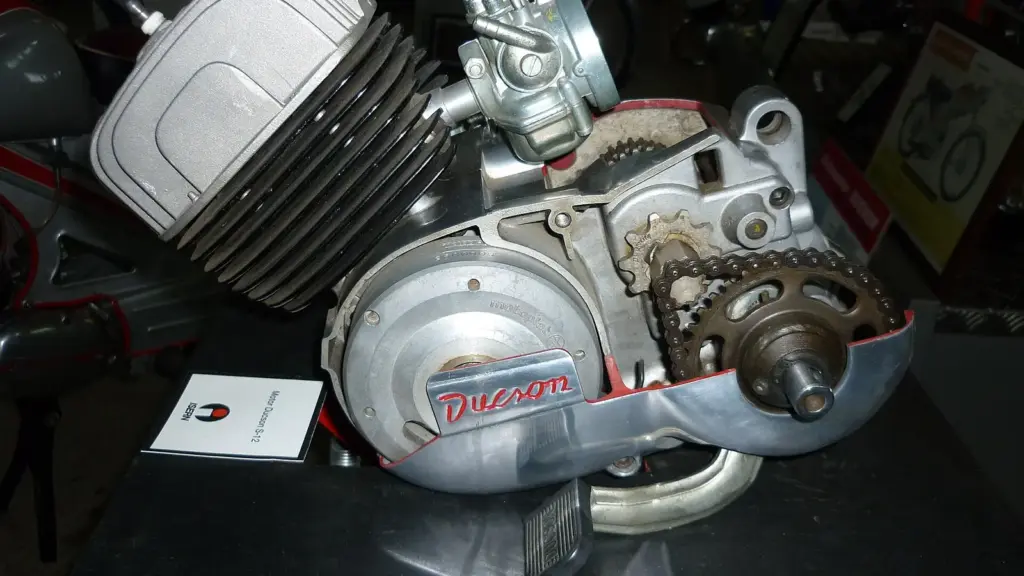
A cutaway two-stroke moped engine: no valves, no camshaft, just ports in the cylinder wall.
| Two-stroke | Four-stroke | |
|---|---|---|
| Power strokes | One every crankshaft turn | One every two turns |
| Valves | Usually none, just ports | Intake and exhaust valves with camshafts |
| Lubrication | Oil mixed into the fuel | Separate oil system |
| Strengths | Light, simple, lots of power for its size, runs at any angle | Efficient, clean, durable, smooth |
| Weaknesses | Burns oil, some fuel escapes unburned, high emissions | Heavier and more complex |
| Where you’ll find it | Chainsaws, leaf blowers, dirt bikes, outboard motors, snowmobiles | Almost every car, truck and modern motorcycle |
Two-strokes did power real cars. Saab, DKW and the East German Trabant all used them, and Suzuki and Subaru built two-stroke cars into the 1970s. Tightening air-pollution rules killed them off in the West by the 1980s, and Eastern Bloc production ended around 1991. Today the biggest two-strokes on Earth are giant diesel engines in container ships, which work on a different principle. Our diesel engine guide covers how diesels work.
03 · Porsche six-stroke
Porsche’s Six-Stroke Engine: What It Is and What It Means
In September 2024, a Porsche patent application for a “method for combustion machine with two times three strokes” went public, and the internet lost its mind. Could Porsche reinvent the piston engine?
Here’s the idea. A normal four-stroke goes suck, squeeze, bang, blow. Porsche’s design adds a second squeeze and a second bang before the exhaust: suck, squeeze, bang, squeeze, bang, blow.
- 1–3. Intake, compression, powerExactly like a regular four-stroke engine, up to the first combustion.
- 4–5. Second compression and powerInstead of exhausting, the piston compresses the hot gas again, and a second combustion pushes it down a second time.
- 6. ExhaustOnly now does the exhaust valve open and the burned gas get pushed out.
- The clever partA crank that movesAccording to Hagerty, the crankshaft spins inside a ring on planetary gears, so the piston’s top and bottom positions change between the two sets of strokes. That also gives a form of variable compression.
- The goalA more complete burnA second compression and combustion should burn the fuel more completely, which could improve power, efficiency and emissions.
- The catchComplexity and costSix-stroke ideas have been tried before, and the extra complexity has usually outweighed the gains. Porsche hasn’t said it will build one.
Our take: a patent isn’t a product. Carmakers patent ideas all the time to protect them, and most never reach a showroom. But it shows Porsche is still investing in combustion engines, which fits with its interest in synthetic e-fuels.
04 · Rotary
The Wankel Rotary Engine: No Pistons Required
Felix Wankel’s engine throws out the pistons, connecting rods and valves altogether. Instead, a rounded triangular rotor spins inside an oval-ish housing. As it turns, the three spaces between the rotor and the housing grow and shrink, carrying out intake, compression, power and exhaust all at the same time, in different parts of the housing.
The first engine ran in 1957, and Wankel built the true rotary layout used today in 1958. NSU put it into production in the NSU Spider in 1964 and the Ro 80 sedan in 1967. That same year, Mazda launched the Cosmo Sport, the start of the company that made the rotary famous.
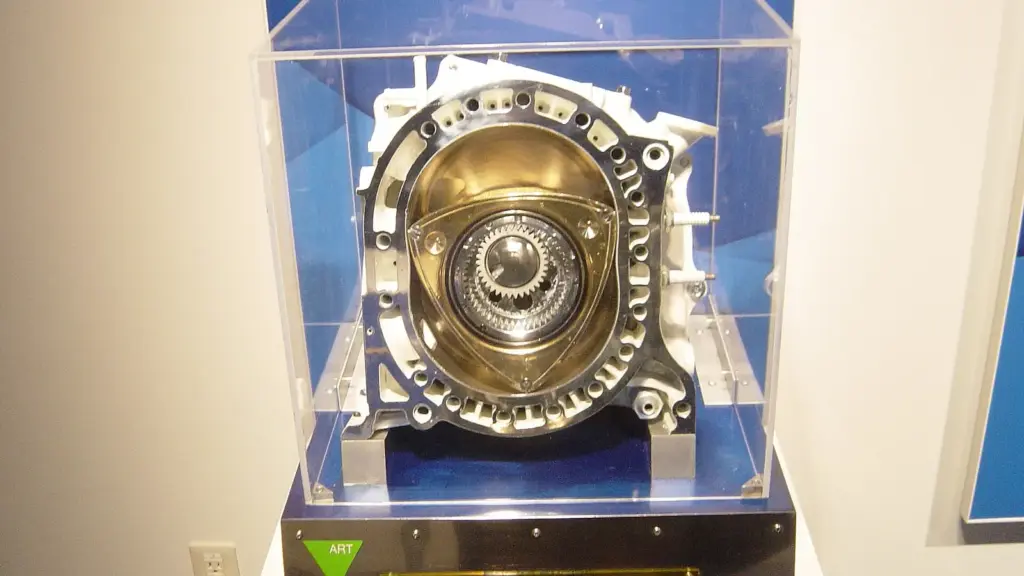
The rounded triangular rotor does the job of the pistons, rods and valves.
Why people love it: it’s compact and light, has about 75% fewer moving parts than a comparable piston engine, runs incredibly smoothly and loves to rev.
Why it nearly died: it burns more fuel, struggles with emissions rules, uses oil by design to lubricate its seals, and the rotor-tip apex seals are a known weak point.
Mazda kept the faith for decades. More than 800,000 RX-7s were sold worldwide, and the final FD generation used a twin-turbo 13B-REW rotary making 255 hp. In 1991 the four-rotor Mazda 787B won the 24 Hours of Le Mans, still the only win there for a car without pistons. In 2023 the rotary returned in a new role, as a compact generator charging the battery in the MX-30 R-EV plug-in hybrid.
05 · Boxer and flat-plane
Boxer Engines and Flat-Plane Cranks, Explained
The boxer engine
A boxer is a flat engine: the cylinders lie down on either side of the crankshaft instead of standing upright. Each opposing pair of pistons moves in and out at the same time, like two boxers punching their gloves together, which is where the name comes from.
Laying the engine flat gives a low center of gravity and a short engine, and the opposed pistons cancel out each other’s shaking very well. The downside is width, plus two cylinder heads to build. Karl Benz built the first one in 1897. The Volkswagen Beetle made it famous, the Porsche 911 has used a boxer six since 1964, and Subaru has built boxer fours since 1966.
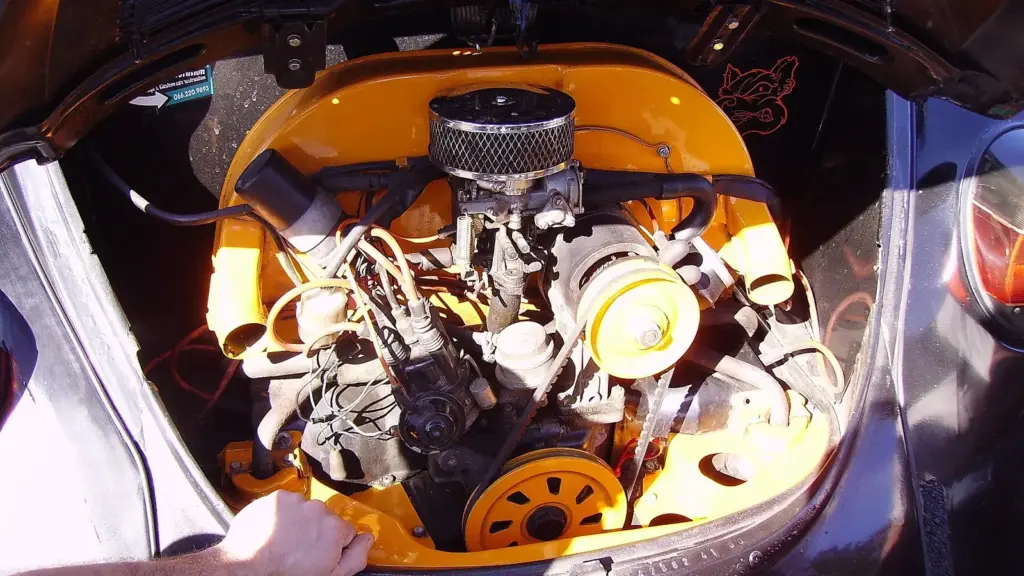
The air-cooled Volkswagen Beetle engine, the boxer that put millions on the road.
Not every flat engine is a boxer. In a true boxer, each piston has its own crankpin. Some flat engines share one crankpin between opposite cylinders, so one piston moves in while the other moves out. Engineers call that a 180-degree V. The famous Porsche 917 race engine on our list below is technically one of these.
What a flat-plane crank means
This one is about the crankshaft inside a V8, not the shape of the engine. Picture the crankshaft from the end. On most American V8s, the four crankpins sit at 90-degree angles to each other, so they look like a plus sign: that’s a cross-plane crank. On a flat-plane crank, all four pins lie in a single flat plane, 180 degrees apart, like a four-cylinder engine’s crank.
Most American V8s
Cross-plane crank
Smooth Deep rumble
Fires two cylinders on the same bank back to back, which gives the classic V8 burble. It cancels the secondary vibrations well and runs smoothly, but needs heavy counterweights, so it’s slower to rev.
Exotics and track specials
Flat-plane crank
Revs high High-pitched wail
Fires alternately between the two banks, so exhaust pulses clear more easily. The crank is lighter and spins up faster. The trade-off is more vibration, because secondary forces aren’t cancelled.
Real-world examples
Who uses it
Corvette Z06 Shelby GT350
Exotic European sports cars have used flat-plane V8s for years. The Mustang Shelby GT350’s 5.2-liter Voodoo made 526 hp, and the C8 Corvette Z06’s 5.5-liter LT6 makes 670 hp at 8,400 rpm.
Our take: a flat-plane V8 is a race engine at heart. It trades a little smoothness for a lighter, faster-revving crank and that unmistakable scream. A cross-plane V8 is the better choice for a smooth, torquey road car.
06 · Racing legends
The 10 Greatest Racing Engines of All Time
Picking the greatest racing engines starts fights at every bar near every race track. Our picks are based on what each engine won, how long it stayed on top and how much it changed the sport. In order of their debut:
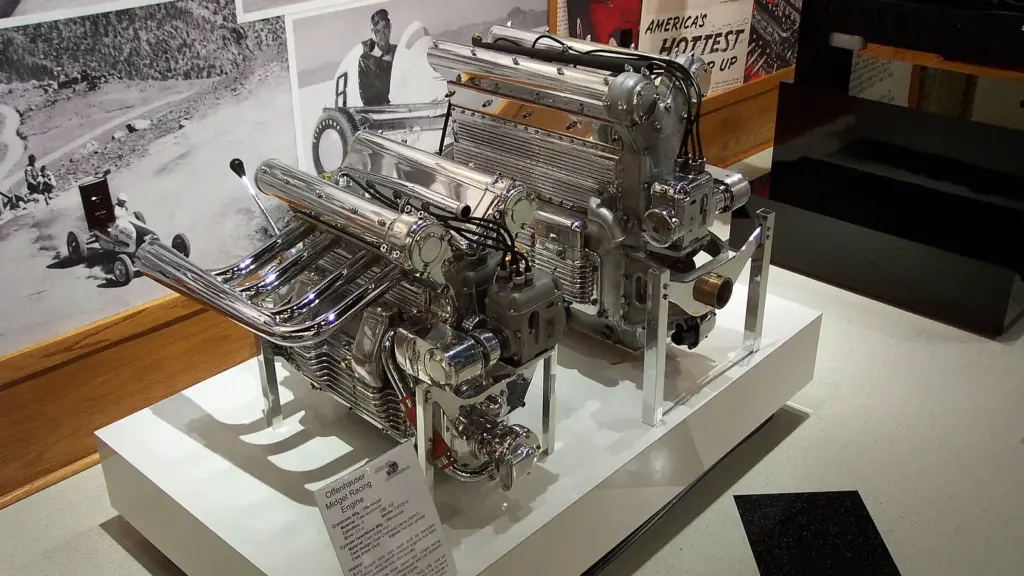
Indy legend
1. Offenhauser four
4 cylinders 27 Indy 500 wins
The “Offy” won the Indianapolis 500 27 times between 1935 and 1976. Turbocharged versions made about 1,100 hp by 1972, when one carried Jerry Grant past 320 km/h (200 mph) in qualifying.
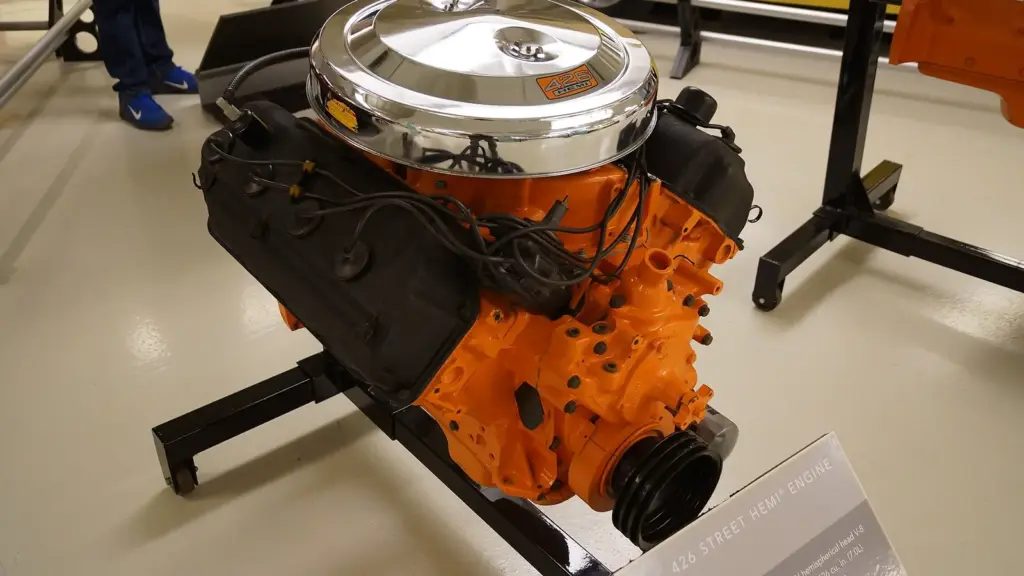
NASCAR king
2. Chrysler 426 Hemi
7.0-liter V8 “The Elephant”
Debuted at the 1964 Daytona 500 and swept the top three, with Richard Petty winning by more than a lap. NASCAR banned it for 1965, so Chrysler built about 11,000 Street Hemis to make it legal again.
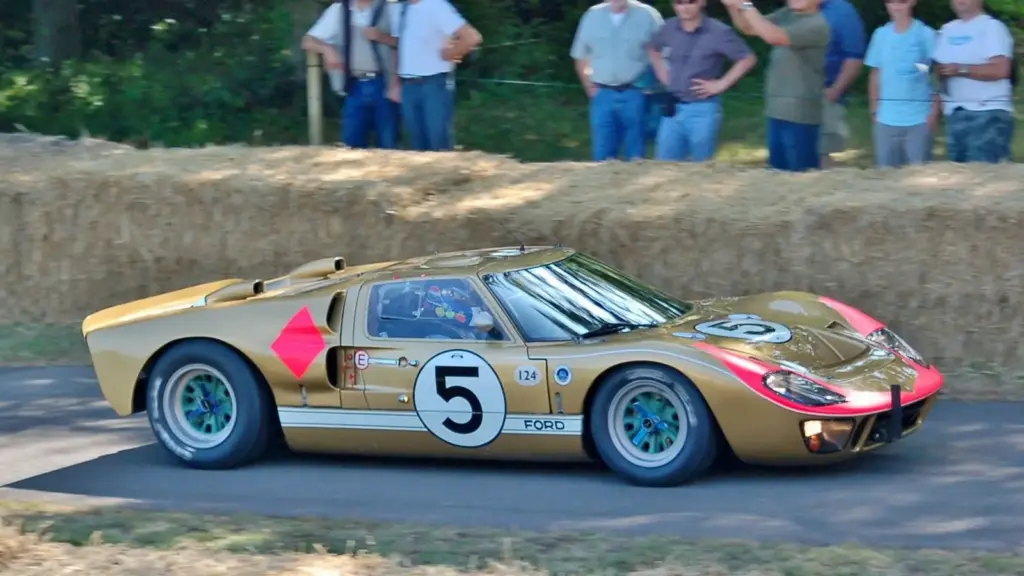
Le Mans conqueror
3. Ford 427 V8
7.0-liter V8 485 bhp
Powered the GT40 Mk II to Ford’s famous 1-2-3 finish at the 1966 24 Hours of Le Mans, with Bruce McLaren and Chris Amon winning. Ford won again in 1967.
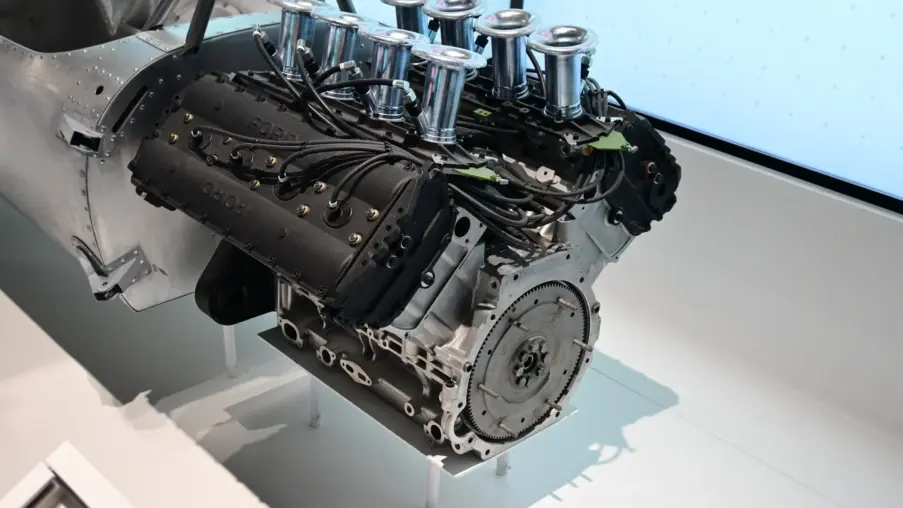
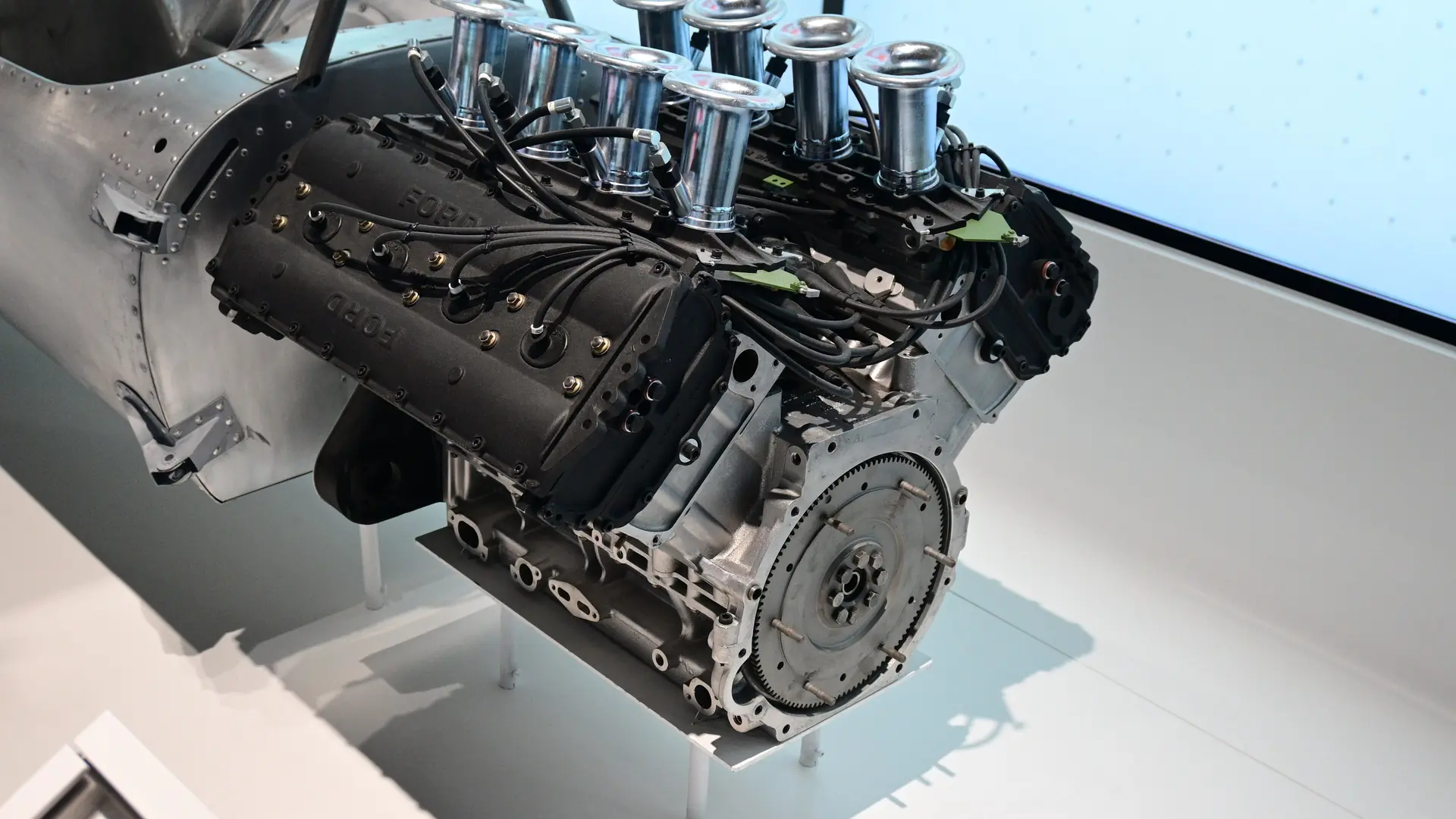
- 4. Cosworth DFV3.0-liter V8 · Formula 1Won first time out, in Jim Clark’s Lotus 49 at Zandvoort in 1967, and went on to win 155 Formula 1 races, 12 drivers’ titles and 10 constructors’ titles. It was sold to any team that wanted one, which let smaller teams compete with the factory giants. Turbo versions won the Indy 500 ten years in a row.
- 5. Porsche 917 “flat-12”4.5 to 5.4 liters · Le Mans and Can-AmWon the 24 Hours of Le Mans overall in 1970 and 1971. The twin-turbo 917/30 version for Can-Am made about 1,100 hp in race trim, and more than 1,500 hp with the boost turned all the way up.
- 6. BMW M12/13 turbo1.5-liter four · Formula 1Built from a production BMW four-cylinder block first made in 1961. It took Nelson Piquet to the 1983 world title, the first for a turbocharged car, and by 1986 qualifying versions made well over 1,000 hp.
- 7. Honda RA168E1.5-liter turbo V6 · Formula 1Even with boost and fuel cut for 1988, it made about 685 hp. In the McLaren MP4/4 it won 15 of 16 races, still one of the most dominant seasons ever.
- 8. Mazda R26BFour-rotor rotary · Le MansMade close to 700 hp at 9,000 rpm and carried the 787B to victory at Le Mans in 1991, the only win ever for a car without pistons. Rotaries were ruled out from 1992.
- 9. Ferrari Tipo 0533.0-liter V10 · Formula 1The last of the V10s that powered Michael Schumacher’s five straight titles from 2000 to 2004. In the F2004 it won 15 of 18 races, and Ferrari took six straight constructors’ titles from 1999.
- 10. Mercedes hybrid V61.6-liter turbo hybrid · Formula 1Mercedes nailed the 2014 hybrid rules better than anyone. Its power units won a record eight straight constructors’ championships, from 2014 to 2021.
Honorable mentions: the Chevrolet small-block that has won almost everything in grassroots racing, and Mazda’s little rotaries that dominated club racing in RX-7s. Want to race something yourself? Our weekend race car guide shows you how to start.
07 · Road legends
The 10 Greatest Production Engines Ever Built
Production engines have a different job: they have to be affordable, last for hundreds of thousands of kilometres and still make you smile. These 10 changed what drivers expected. In order of their debut:
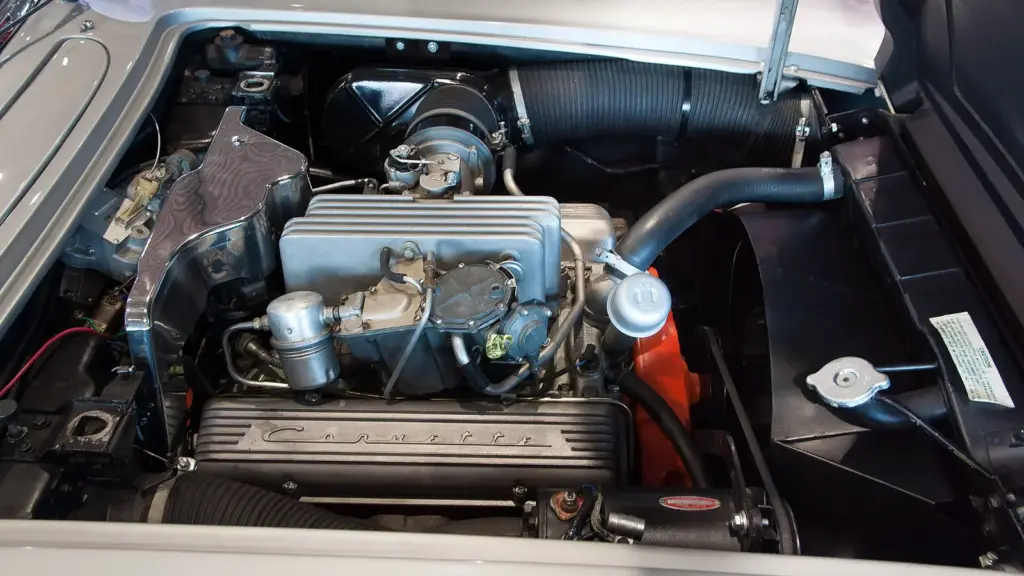
1955 · 4.3 liters to start
Chevrolet small-block V8
100 million built Since 1955
The 1955 original was a 265-cubic-inch (4.3-liter) V8 making up to 195 hp. It became the most-produced engine family in the world: GM built its 100-millionth small-block in 2011. See our Chevrolet page for the cars it powered.
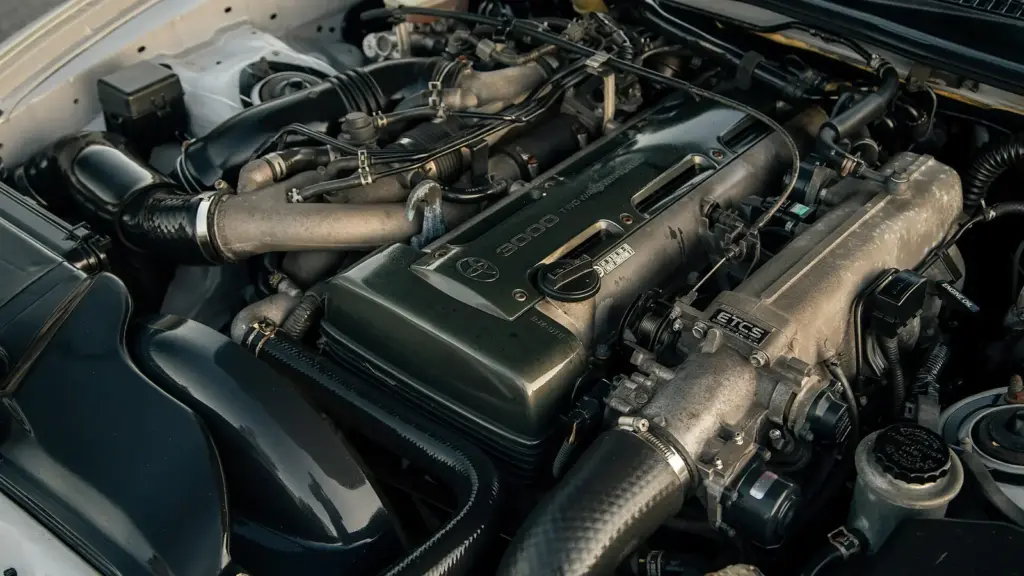
1991 · 3.0-liter twin-turbo six
Toyota 2JZ-GTE
320 hp in the US Iron block
The Toyota Supra’s engine. Its iron block, forged crank and closed deck are so strong that many tuners say the stock internals handle about 800 hp, and some builds pass 1,000 hp.
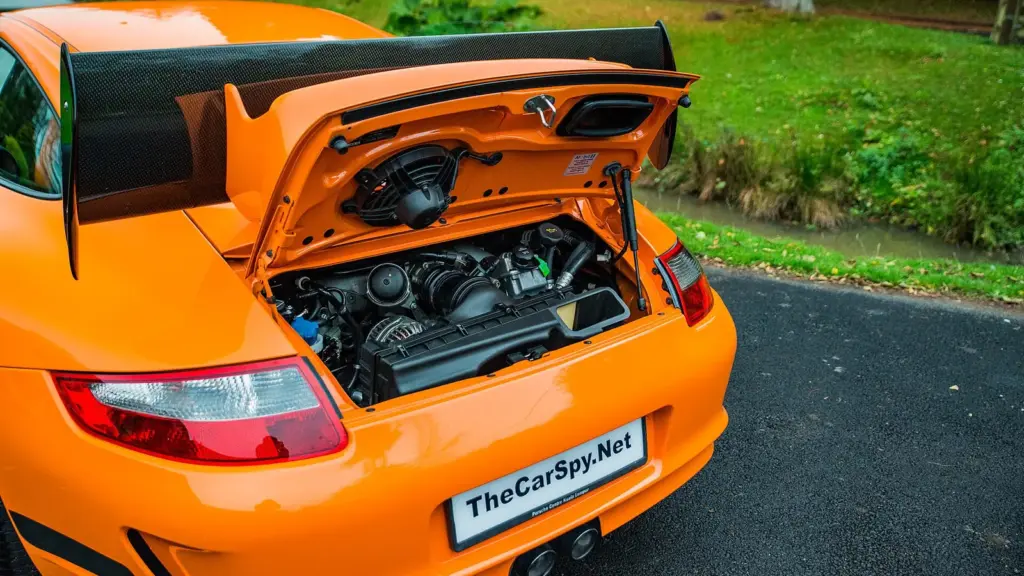
996 and 997 era · up to 4.0 liters
Porsche Mezger flat-six
Race-derived “Almost impossible to break”
Developed from Porsche’s GT1 race engine, which won Le Mans in 1998, it powered the 996 and 997 GT3, GT2 and Turbo models. The last was the 500 bhp 4.0-liter in the 997 GT3 RS 4.0, sold in 2011.
- Ford flathead V81932The first V8 light and cheap enough for ordinary cars, with the block cast in one piece. More than 25 million Ford cars and trucks used it, and it basically launched hot rodding.
- Volkswagen air-cooled flat-four1936–2006Started at 985 cc and 30 hp in the original Beetle and stayed in production for 70 years. It also powered buses, kit cars, light aircraft and the Formula Vee race cars that still run today.
- Lexus 1UZ-FE V81989The 4.0-liter V8 that launched Lexus in the LS 400 with 256 hp. Engineers logged more than a million hours of testing, and owners routinely report several hundred thousand trouble-free miles.
- Honda B16A1989The first Honda VTEC engine, in the Integra. It hit Honda’s goal of 100 hp per liter: 160 hp from 1.6 liters, revving to 8,000 rpm. It made small engines exciting.
- Nissan RB26DETT1989The 2.6-liter twin-turbo six in the R32 Skyline GT-R. Officially rated at 276 hp, it powered the car to 29 wins from 29 starts in Japanese Group A racing and earned it the “Godzilla” nickname. See our Nissan page.
- Mazda 13B rotary1970s–2000sThe twin-rotor engine behind most RX-7s, ending with the twin-turbo 13B-REW in the 255 hp FD. Tiny, light and happy to rev all day.
- Ford Coyote 5.0 V82011Brought the “5.0” back to the Mustang GT with 412 hp, then grew to 460 hp by 2018. Modern, tough and endlessly tunable, it also powers the F-150.
Our take: the best engines aren’t always the most powerful. The small-block, the flathead and the Beetle’s flat-four earned their spots by putting good, cheap power in millions of hands. The 2JZ, RB26 and Mezger earned theirs by being so overbuilt that enthusiasts are still pushing them decades later.
Frequently Asked Questions
What is the difference between a two-stroke and a four-stroke engine?
A four-stroke engine needs four piston movements (intake, compression, power and exhaust) over two crankshaft turns to make one power stroke. A two-stroke does it in two piston movements and one turn, usually without valves and with oil mixed into the fuel. Two-strokes are lighter and punchier but dirtier and less efficient.
Is Porsche building a six-stroke engine?
Not that Porsche has announced. A Porsche patent application for a six-stroke engine became public in September 2024, but a patent doesn’t mean a production engine is coming.
Why did rotary engines die out?
They burn more fuel and oil than piston engines and struggle to meet emissions rules, and their apex seals wear. Mazda still uses a rotary as a compact generator in the MX-30 R-EV plug-in hybrid.
Is a boxer engine better?
It has real advantages: a low center of gravity, a short length and very good balance. But it’s wider and needs two cylinder heads. That’s why Porsche and Subaru love it and most other carmakers use inline and V engines.
What does flat-plane crank mean?
It describes a V8 crankshaft whose crankpins all lie in one flat plane, 180 degrees apart. It revs faster and sounds like a race car, but it vibrates more than the cross-plane crank used in most American V8s.
What is the most successful racing engine ever?
By Formula 1 wins, the Cosworth DFV, with 155 victories. In the Indianapolis 500, the Offenhauser won 27 times.
Go Deeper
Now that you know the types, see how a modern engine works inside, and follow the series where the great racing engines made their names.
Sources
- Wikipedia: history of the internal combustion engine
- Wikipedia: two-stroke engine
- Hagerty: Porsche patents six-stroke engine (September 2024)
- eBay Motors: history of the rotary engine
- Mazda USA: RX-7 heaven
- Motor Authority: the only piston-less race car to win Le Mans
- Top Gear: the story of the 787B and Mazda’s only Le Mans win
- Wikipedia: flat engine
- Jalopnik: the difference between cross-plane and flat-plane cranks
- The Drive: the Corvette Z06’s LT6 V8
- SlashGear: what makes Ford’s 5.2L Voodoo V8 special
- Jalopnik: the Offenhauser’s 27 Indy 500 wins
- EngineLabs: Hemi history
- Ultimatecarpage: Ford GT40 Mk II
- The Henry Ford: Ford’s 1966 Le Mans sweep
- Wikipedia: Cosworth DFV
- Stuttcars: Porsche 917 engines
- Motor Sport: how the Porsche 917 dominated Le Mans
- Wikipedia: BMW M12
- Honda: RA168E (1988)
- Wikipedia: Ferrari F2004
- Wikipedia: Mercedes V6 hybrid Formula One power unit
- Old Cars Weekly: GM builds 100-millionth small-block
- The Henry Ford: Ford’s game-changing V-8
- Wikipedia: Volkswagen air-cooled engine
- SlashGear: what made the 1UZ-FE special
- Honda heritage: the VTEC engine, 1989
- evo: Nissan Skyline GT-R R32
- Jalopnik: why the 2JZ is legendary
- Motor Sport: the Mezger engine
- Steeda: history of the Coyote engine
Photo credits
- Header image: Hullian111, CC BY-SA 4.0, cropped and resized.
- Cutaway of a small 1960s two-stroke moped…: Peprovira, CC BY 3.0, cropped and resized.
- Triangular Wankel rotary engine rotor inside its…: Unknown, CC BY-SA 3.0, cropped and resized.
- Air-cooled Volkswagen Beetle flat-four boxer engine in…: Cjp24, CC BY-SA 3.0, cropped and resized.
- Offenhauser four-cylinder racing engines on display at…: JOHN LLOYD from Concrete, Washington, United States, CC BY 2.0, cropped and resized.
- Orange 1966 Chrysler 426 Street Hemi V8…: Greg Gjerdingen from Willmar, USA, CC BY 2.0, cropped and resized.
- Gold 1966 Ford GT40 Mk II number…: Bahnfrend, CC BY-SA 4.0, cropped and resized.
- Fuel-injected 283 small-block V8 in a 1959…: Thilo Parg, CC BY-SA 3.0, cropped and resized.
- 2JZ-GTE twin-turbo inline-six in a 1995 Toyota…: guyoniii, CC BY 4.0, cropped and resized.
- Orange Porsche 911 GT3 RS of the…: The Car Spy on Flickr : https://www.flickr.com/photos/thecarspy/, CC BY 2.0, cropped and resized.