
 Written by
AWD vs. 4WD: What’s the Difference and Which Do You Need?
Walk onto almost any dealer lot and you’ll see “AWD” and “4WD” badges everywhere. They both send power to all four wheels, so what’s the difference? The AWD vs 4WD question comes down to how the power gets split, when it gets split, and what kind of slippery stuff you’re actually going to drive on.
This guide explains it in plain English: the four basic system types, what low range and locking differentials really do, why winter tires matter more than either badge, what the extra hardware costs you at the pump and at the dealer, and how to figure out which one you need. Spoiler: plenty of drivers need neither.
Guide · Drivetrains
Updated November 2026 · 19 min read
AWD vs 4WD at a Glance
A few numbers to keep in mind before you tick that option box:
New vehicles with AWD or 4WD 63% Share of US model year 2024 production, per the EPA
AWD option on a 2026 CR-V $1,500 On most trims; a 2026 RAV4 is $1,400
Extra weight 54 kg About 119 lb, 2026 CR-V LX AWD vs front drive
Fuel economy cost 1–3 mpg Typical combined drop in 2026 EPA ratings we checked
Winter tire grip Up to 50% More traction than all-seasons, according to CAA
Wrangler Rubicon crawl ratio Up to 100:1 Thanks to a 4:1 low-range transfer case
01 · The basics
AWD vs 4WD in Plain English
Here’s the short version. Four-wheel drive (4WD or 4×4) is the tough-guy system built for trucks and off-roaders. It usually has a transfer case with a low-range gear and, in its classic form, you choose when to turn it on. All-wheel drive (AWD) is the set-and-forget system built for cars and crossovers. It works on its own, on any road surface, and you never touch a lever.
The catch is that automakers don’t follow one rulebook, so the badges blur. Some 4WD systems run all the time, and some AWD systems spend most of their life sending power to just the front wheels. Edmunds sorts them into four groups, and that’s the easiest way to make sense of the window sticker:
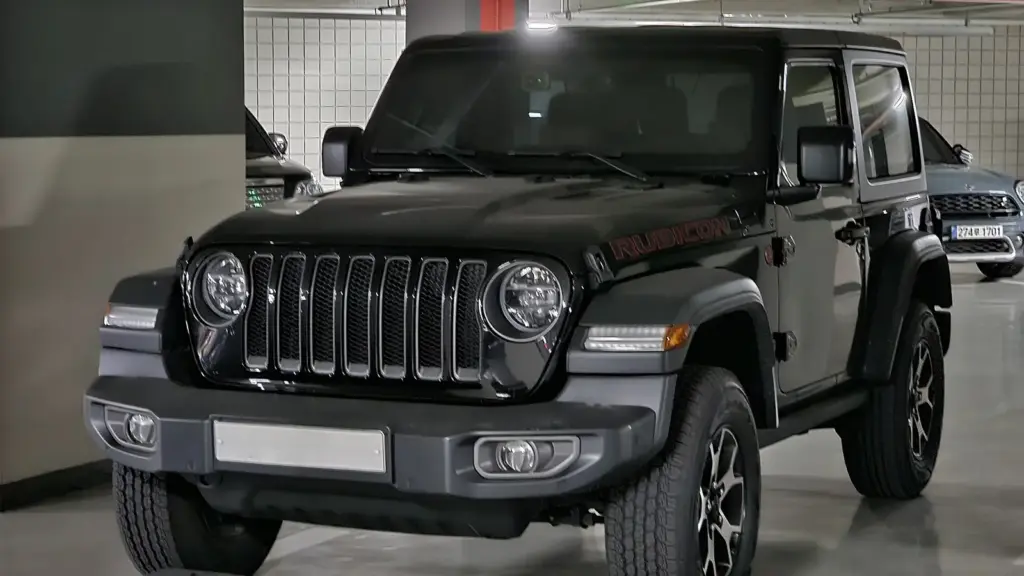
Part-time 4WD
Jeep Wrangler Rubicon
Driver engages it Low range
Rear-wheel drive by default. You shift into 4WD when the road gets slippery. There’s no center differential, so it’s meant for loose or slick surfaces only. The Wrangler Rubicon and Ford Bronco are classic examples.
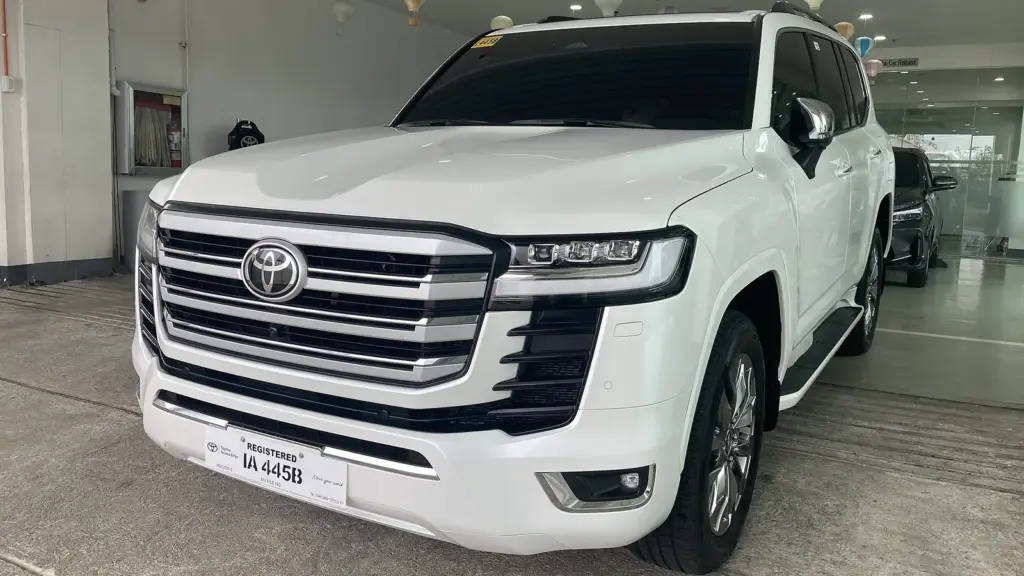
Full-time 4WD
Toyota Land Cruiser
Always on Low range
All four wheels are driven all the time, through a center differential, and there’s still a low-range gear for the rough stuff. Every 2025 Land Cruiser has it, along with center and rear locking differentials.
Full-time AWD
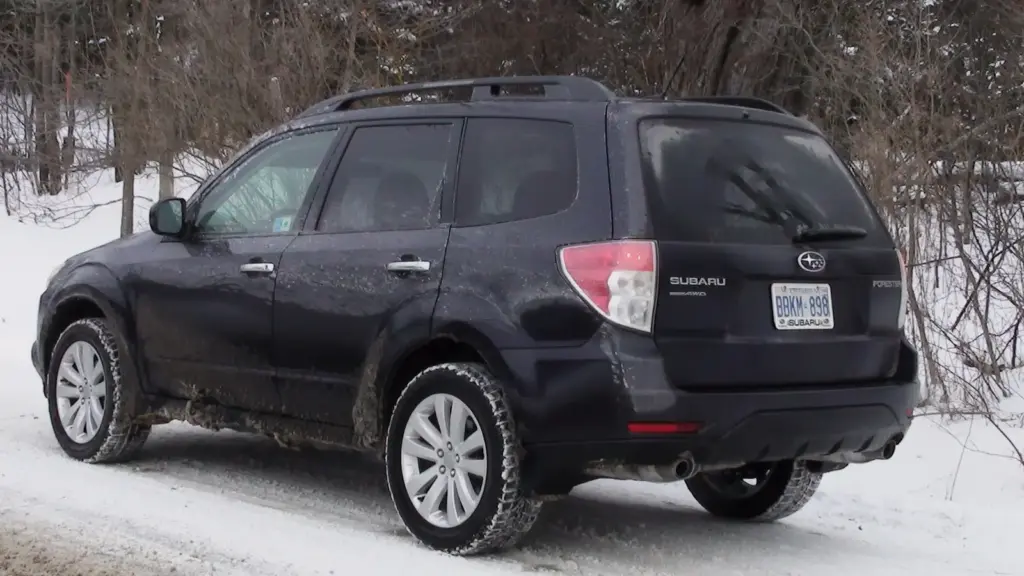
Subaru Forester
Always on No low range
Power goes to both axles all the time, and the system shuffles it front to rear as grip changes. Subaru builds almost its whole lineup this way, and Audi’s quattro works on the same idea.
Part-time AWD
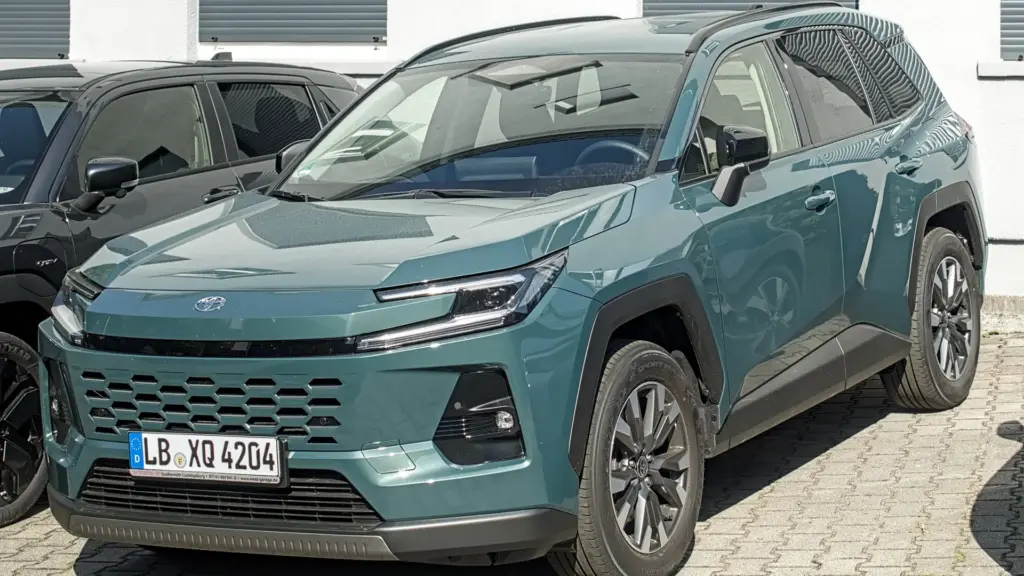
Toyota RAV4 Hybrid
On demand Mostly front drive
Usually drives one axle (normally the front) and brings in the other when it senses slip or hard acceleration. This is what most crossovers have, including the RAV4 Hybrid and the Honda CR-V.
Why does any of this matter? Because each system is good at a different job. A part-time 4WD truck is brilliant on a muddy trail and a little clumsy on a wet highway. An on-demand AWD crossover is the opposite. And both are only as good as the tires underneath them, which we’ll get to.
Badge decoder: “4×4” and “4WD” mean the same thing. “AWD,” “quattro,” “Symmetrical AWD,” “4MOTION,” “xDrive” and “SH-AWD” are all brand names for all-wheel drive. In its fuel economy reports, the EPA lumps AWD and 4WD together, which is why you’ll see one big “four-wheel drive” number in government stats.
02 · How 4WD works
How Four-Wheel Drive Works: Transfer Cases, Low Range and Lockers
The heart of any 4WD system is the transfer case, a gearbox behind the transmission that splits power between a front and a rear driveshaft. In a part-time system, the transfer case locks those two driveshafts together. That’s great in mud, sand or snow, but it creates a problem on dry pavement.
When you turn, your front wheels travel a longer path than your rears, so they need to spin at slightly different speeds. Locked together, they can’t. On a loose surface the tires just slip a little and nobody notices. On dry asphalt, Jeep says the driveline “binds,” which strains parts, can cause overheating and wears things out early. That’s why your owner’s manual says to stay in two-wheel drive on dry roads.
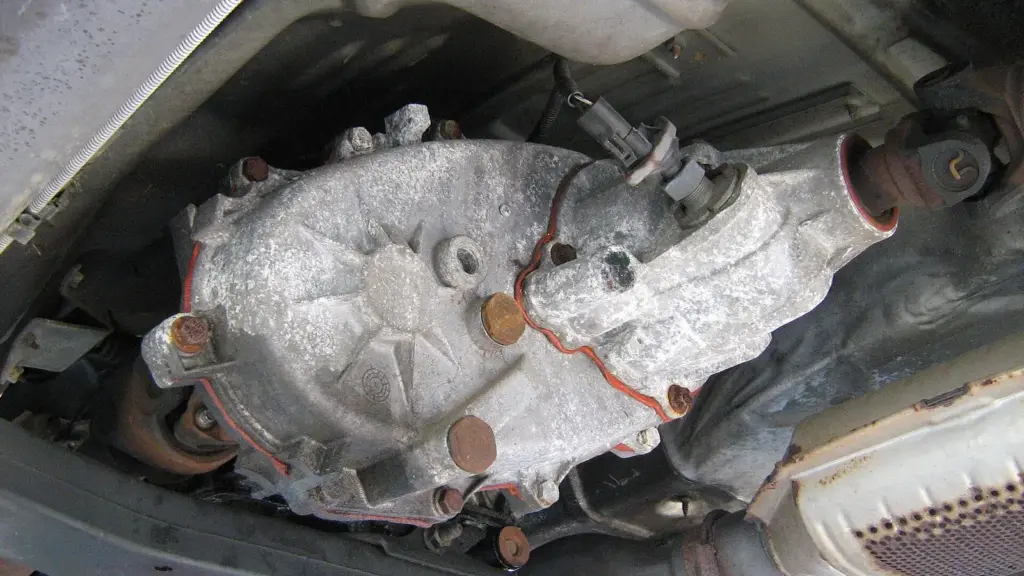
The transfer case of a 1993 Grand Cherokee’s full-time Quadra-Trac 4WD: its center differential lets the axles turn at different speeds.
Full-time 4WD fixes that with a center differential inside the transfer case, which lets the front and rear axles turn at different speeds. You can leave it in 4WD on any surface. When things get really rough, you lock the center differential and get the same solid connection as a part-time system.
The modes on your 4WD selector
- 2HTwo-wheel drive, high rangeRear-wheel drive only. It’s the default in part-time systems and the most fuel-efficient setting.
- 4A or AutoAutomatic 4WDFound on many trucks, including Chevrolet’s Auto 4WD. It runs mostly in rear drive and sends power to the front when the rear slips. Chevrolet says it’s fine on any road surface and is mainly meant for wet or wintry roads, with a slight fuel economy penalty compared with 2H.
- 4HFour-wheel drive, high rangeFront and rear driveshafts locked together at normal gearing. Use it on snow, ice, gravel, sand and dirt. Chevrolet says not to use it on dry roads or roads with good traction.
- 4LFour-wheel drive, low rangeA second set of reduction gears that multiplies engine torque for slow, steady crawling. Chevrolet says not to use it on dry surfaces or above 72 km/h (45 mph); Jeep’s guidance is to stay under 40 km/h (25 mph).
What low range actually does
Low range works like a super-low first gear. It lets the truck creep over rocks or down a steep hill at walking pace without riding the brakes or slipping the clutch. The number to look at is the crawl ratio: the low-range ratio multiplied by first gear and the axle ratio. The higher it is, the slower and more controlled the truck can crawl.
| Vehicle and system | Low-range ratio | Best crawl ratio |
|---|---|---|
| Jeep Wrangler, Command-Trac (part-time) | 2.72:1 | Not published by Jeep |
| Jeep Wrangler Rubicon, Rock-Trac | 4:1 | Up to 100:1 |
| 2025 Ford Bronco, part-time 4×4 | 2.72:1 | 79.92:1 with the manual |
| 2025 Ford Bronco, advanced 4×4 | 3.06:1 | 94.75:1 with the manual |
Locking differentials are the other big off-road weapon. A normal “open” differential sends power to whichever wheel has the least resistance, so if one wheel is in the air or on ice, it spins and you go nowhere. A limited-slip differential pushes some torque to the other wheel. A locker ties both wheels on an axle together so they turn as one. Like part-time 4WD, Jeep says lockers aren’t for dry pavement.
Many modern 4x4s also fake a locker with the brakes: traction control grabs the spinning wheel so torque flows to the one with grip. It works surprisingly well and nothing is mechanically locked. The 2025 Toyota 4Runner uses both, with A-TRAC brake-based traction control on 4WD models and a real rear locker on the TRD Off-Road, TRD Pro and Trailhunter. For the full off-road story, see our off-road 4×4 guide.
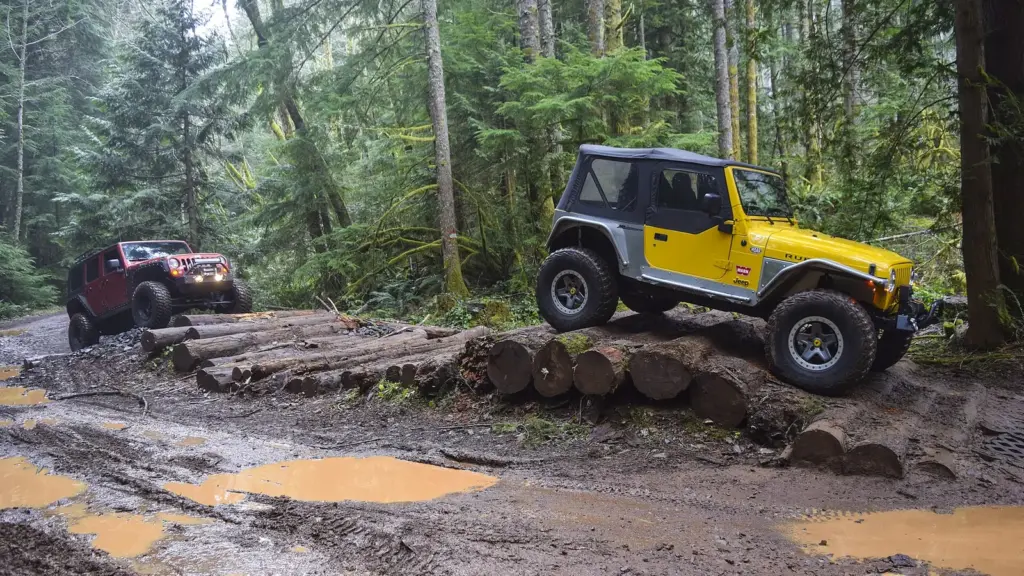
Logs, rocks and mud: this is the job low range and lockers were made for.
03 · How AWD works
How All-Wheel Drive Works: Full-Time, On-Demand and Electric
AWD has no low range and no lever. It always has some way to let the front and rear axles turn at different speeds, which is why you can leave it on all year, on any road. The big difference between systems is how much of the time the rear wheels are actually doing any work.
- Full-time AWDSubaru, Audi quattroBoth axles get power all the time. Subaru says every version of its Symmetrical AWD sends torque to all four wheels constantly, with splits that range from 50:50 on manual-transmission cars to variable splits on its CVT models. Audi’s longitudinal-engine quattro cars use a self-locking center differential with a normal split of 40% front and 60% rear. Subaru fits AWD to every model in its lineup except the rear-drive BRZ sports car.
- On-demand AWDMost crossoversThe car runs mostly in front-wheel drive and uses a clutch pack to bring the rear axle in when it detects slip, or when you accelerate hard. It’s lighter and more fuel-efficient, and modern versions react in a fraction of a second. Toyota’s RAV4 and the Honda CR-V work this way.
- Torque-vectoring AWDAcura SH-AWD, ToyotaA smarter on-demand system that can also split power between the left and right rear wheels to help the car turn. Acura says SH-AWD can send up to 70% of torque to the rear and up to 100% of that to one rear wheel. Toyota’s Dynamic Torque Vectoring AWD sends up to 50% to the rear and can disconnect the rear driveshaft when it isn’t needed, to save fuel.
- Electric AWDHybrids and EVsInstead of a driveshaft, a separate electric motor drives the rear wheels. In the RAV4 Hybrid, Toyota says the rear motor kicks in when needed and has no mechanical link to the front. Dual-motor EVs take the same idea further, and because electric motors react almost instantly, they’re very good at it. Our EV explainer has more on how that works.
So is full-time AWD better than on-demand? For most drivers, honestly, you won’t feel much difference in day-to-day driving. Full-time systems feel a touch more planted when you pull away on a slippery hill, while on-demand systems save a little fuel because the rear axle loafs most of the time.
Where AWD falls short is serious off-roading. With no low range and, usually, no locking differentials, a crossover can handle a snowy cottage road or a gravel track to a trailhead, but not a rock garden. Some, like Subaru’s Wilderness models, add more ground clearance and smarter traction modes to stretch that a bit further.
Full-time AWD like Subaru’s is great on snowy roads. It just can’t help you stop.
Our take: if you’ll never leave pavement or a decent gravel road, AWD is the better tool. It’s smoother, lighter, works on its own and you can’t forget to switch it on.
04 · Snow and ice
AWD vs 4WD in Snow: Why Your Tires Matter More
Here’s the part a lot of buyers miss. AWD and 4WD help you go. They don’t help you stop, and they barely help you turn. Every car has four-wheel brakes, so when it’s time to slow down on ice, an AWD SUV has no advantage over a front-drive sedan. What decides that is how much grip the tires have.
- Up to 50%More traction from winter tires vs all-seasons (CAA)
- 25%Shorter braking with good winter tires (Government of Québec)
- 7°C (45°F)Where all-season rubber starts to stiffen (Transport Canada)
- Under 15%AWD and 4WD owners using winter tires in a 2015 Consumer Reports survey
Consumer Reports tested this back in 2015. AWD was far better than two-wheel drive at getting moving on slick roads, but it didn’t help in braking or in some cornering situations. On new winter tires, a front-drive Toyota Camry and an AWD Honda CR-V stopped in about the same distance, roughly 91 m (300 ft) from 97 km/h (60 mph) on snow. The same CR-V on all-season tires needed far longer. Tyre Reviews found the same pattern in 2021: a front-drive Mini Countryman on winter tires stopped about a car length shorter than an AWD Countryman on all-seasons, and their handling course times were nearly identical.
Transport Canada says all-season and summer tires start to lose elasticity below 7°C (45°F), and recommends tires with the three-peak mountain and snowflake symbol, fitted in sets of four. Our winter vs all-season vs all-weather tire guide explains the difference, and our tire sidewall guide shows you where to find the symbol.
The best winter setup is AWD or 4WD plus winter tires. If you can only afford one, most experts would put the money into tires first.
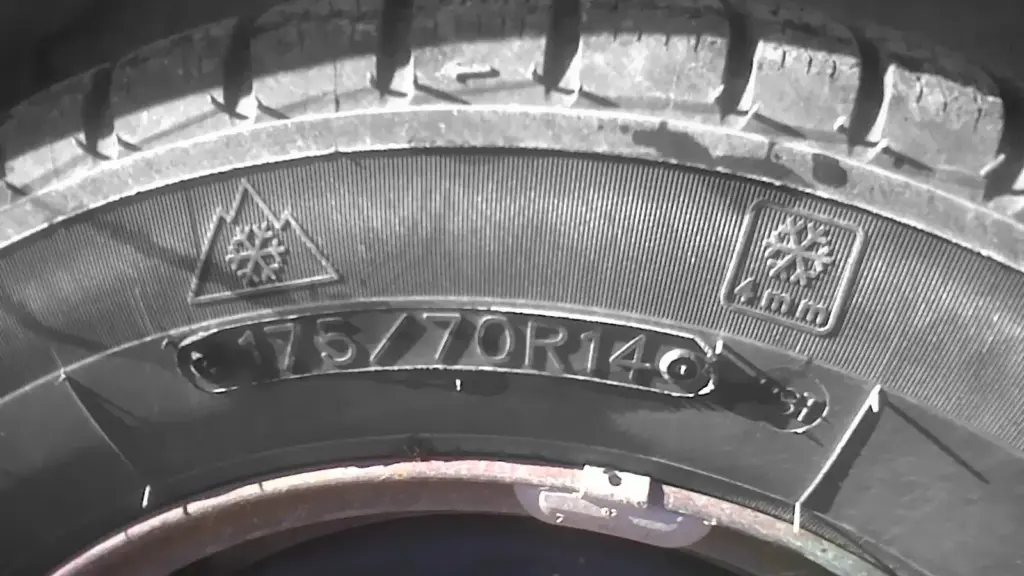
This symbol, not the badge on your tailgate, is what helps you stop on snow.
Canada’s winter tire rules
| Province | What’s required | When |
|---|---|---|
| Québec | Winter tires (with the winter pictogram) or studded tires on all passenger vehicles registered in the province | December 1 to March 15 |
| British Columbia | Winter tires or chains on most designated highways. The legal minimum is an M+S tire with at least 3.5 mm of tread; BC recommends three-peak snowflake tires, including all-weathers | October 1 to April 30 (some routes end March 31) |
| Rest of Canada | No province-wide requirement, but winter tires are strongly recommended, and some insurers offer a discount | Check your province |
The AWD confidence trap: because AWD gets you moving so easily, it can trick you into driving faster than your tires can stop. If your crossover pulls away from a snowy light like it’s dry, that tells you nothing about how it’ll brake. Leave extra space either way.
05 · The costs
What AWD and 4WD Really Cost You
Driving all four wheels means extra hardware: a transfer case or power take-off unit, another driveshaft, another differential, more fluid. You pay for that in four ways.
1. The sticker price
On popular 2026 crossovers, AWD adds $1,400 to a Toyota RAV4 (LE, SE and XLE Premium) and $1,500 to a Honda CR-V (LX, EX, EX-L, Sport Hybrid and Sport-L). On pickups, 4×4 is a bigger and more variable option. For a Ford F-150, the price depends on the cab and bed, and 4×4 is standard on the Tremor and Raptor.
2. Weight
Honda lists a 2026 CR-V LX at 1,575 kg (3,472 lb) with front-wheel drive and 1,629 kg (3,591 lb) with AWD, a gain of about 54 kg (119 lb). That’s like carrying an extra adult around all the time.
3. Fuel
-1 mpg
Honda CR-V gas
7.8 vs 8.1 L/100 km (30 vs 29 mpg) combined
-2 mpg
Toyota Tacoma i-FORCE, automatic
10.2 vs 11.2 L/100 km (23 vs 21 mpg) combined
-2 mpg
Ford F-150 2.7L V6
10.7 vs 11.8 L/100 km (22 vs 20 mpg) combined
-3 mpg
Honda CR-V Hybrid Sport
5.9 vs 6.4 L/100 km (40 vs 37 mpg) combined
Those are 2026 EPA ratings as published by Honda, Toyota and Cars.com, two-wheel drive first. A mile or two per gallon doesn’t sound like much, but over 24,000 km (15,000 miles) a year, a 2 mpg drop on a 22-mpg truck works out to roughly 257 extra liters (68 gallons) of fuel.
4. Maintenance and tires
- 1. Extra fluidsTransfer cases and differentials have their own oil. Check your maintenance schedule, and change it more often if you tow or go off-road.
- 2. Matching tiresAWD hates mismatched tires. Audi asks for tread depths within about 3 mm (4/32 in) of each other; Subaru wants circumferences within 6 mm (1/4 in).
- 3. Spares and flatsSubaru warns that using anything other than the original temporary spare can cause severe drivetrain damage. One ruined tire can mean buying two or four.
- 4. Towing itMany AWD cars can’t be towed with two wheels on the ground. 4x4s that can be flat-towed, like the Wrangler, need the transfer case in neutral. Check your manual first.
Tire shaving: if you need to replace one tire on an AWD car, a shop like Tire Rack can shave a new tire down to match the other three’s tread depth, for about $25 to $35 per tire. It’s often far cheaper than buying a full set.
06 · The verdict
AWD, 4WD or Neither: Which Do You Need?
AWD and 4WD are hugely popular. The EPA says 63.3% of new light vehicles built for the US in model year 2024 had one or the other, up against 29.2% with front-wheel drive, and Experian counted AWD as the most common drivetrain on American roads in mid-2026. But popular doesn’t mean necessary. Here’s how to decide:
- NeitherCity and suburban drivers in mild climatesIf your roads get plowed, it rarely snows and you don’t tow or go off-road, front-wheel drive with good tires will do the job and save you money up front and at the pump. In snowy places, a front-drive car on proper winter tires is a perfectly safe choice.
- AWDSnow belt commuters and cottage-road regularsIf you deal with real winters, steep driveways or unpaved roads, AWD makes getting going a lot less stressful and you never have to think about it. Pair it with winter tires and you’re set. Most crossovers, Subarus and many luxury cars fit here.
- 4WDTowing, trails and deep snowIf you tow heavy trailers, launch boats on slimy ramps, live at the end of a long unplowed road or want to go off-road, you want 4WD with low range. Pickups like the Tacoma and F-150, and SUVs like the Wrangler, Bronco and 4Runner, are built for it.
- Full-time 4WDWant both?If you want trail ability and no-fuss winter driving, look for full-time 4WD or an automatic 4WD mode. The Land Cruiser has it as standard, and it’s available on the 4Runner, the Tacoma’s Limited hybrid and full-time Wranglers with Selec-Trac.
AWD is best for… drivers who stay on paved or gravel roads and want extra grip in rain and snow without thinking about it. It’s lighter, more efficient and works on its own.
4WD is best for… drivers who tow, go off-road, or face deep snow and mud. Low range and locking differentials do things no AWD crossover can.
One more thing: a 4WD truck isn’t automatically better in a snowstorm than an AWD crossover. A light, empty pickup bed means little weight over the rear wheels, so in 2H it can be squirmy on snow, and if you forget to switch into 4WD you lose the advantage entirely. That’s why automatic 4WD modes have become so popular.
If you’re planning an adventure rig, our overlanding vehicles guide goes much deeper on what to buy, and our car buying guide has picks by type and budget.
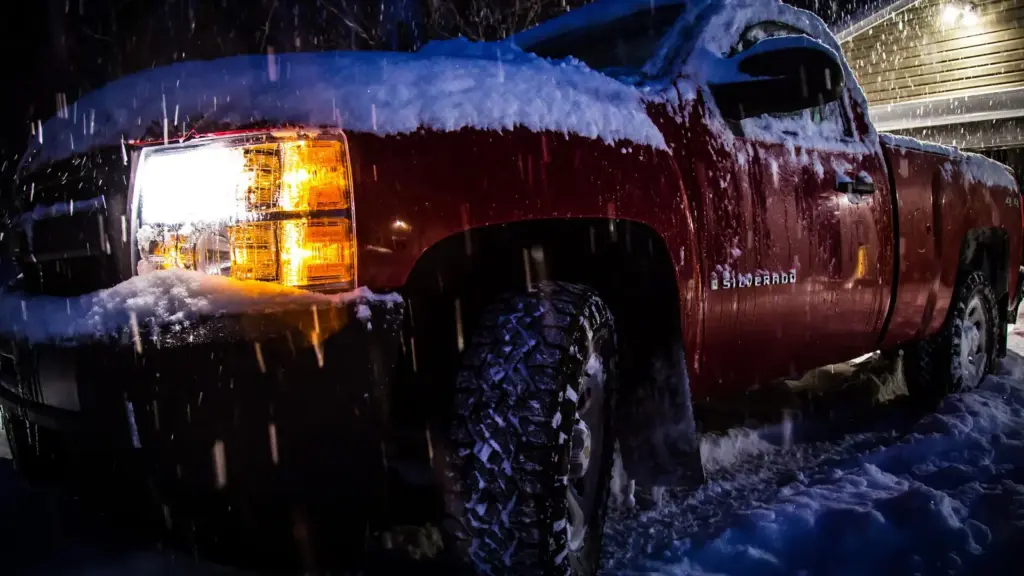
An empty pickup has little weight over its rear wheels, so in snow, 4WD and good tires both earn their keep.
Our take: for most people, the right answer is AWD plus a set of winter tires if you get real winters, or front-wheel drive plus winter tires if you want to save money. Buy 4WD when you’ll actually use low range: towing, trails or roads the plow forgets.
Frequently Asked Questions
Is AWD or 4WD better in snow?
For normal snowy roads, AWD is easier to live with because it works automatically on any surface. For deep snow, unplowed roads or getting unstuck, 4WD with low range is more capable. Either way, winter tires make a bigger difference to braking and cornering than the drivetrain.
Can I drive in 4WD on the highway?
Only if your vehicle has full-time 4WD or an automatic 4WD mode, or the highway is snowy or icy. Part-time 4WD in 4H shouldn’t be used on dry pavement because the driveline binds in turns. Never use 4L at highway speeds.
Does AWD use more gas?
Yes, a little. In 2026 EPA ratings, AWD or 4WD versions of popular models typically lose 1 to 3 mpg combined compared with two-wheel drive, from the extra weight and friction.
Do I need winter tires if I have AWD?
If you get real winters, yes. AWD helps you accelerate but doesn’t help you stop or steer. Consumer Reports found a front-drive car on winter tires stopped about as short as an AWD SUV on winter tires, and far shorter than the AWD SUV on all-seasons. In Québec they’re mandatory from December 1 to March 15 regardless.
Why do I have to replace all four tires on an AWD car?
AWD systems need all four tires to be the same size and close in tread depth, or the drivetrain has to work constantly to make up the difference, which can damage it. Many shops can shave a new tire to match the others instead.
What is the difference between 4H and 4L?
4H locks the front and rear driveshafts together at normal gearing for slippery roads at normal speeds. 4L adds a low gear that multiplies torque for slow crawling over rocks, steep hills or deep mud, and it’s only for low speeds.
Get Your Grip Right
Drivetrain sorted? Next, make sure the rubber underneath is up to the job, and see what serious 4x4s can do.
Sources
- Edmunds: AWD vs 4WD, what’s the difference and which to choose
- Jeep: 4×4 FAQ and glossary
- Jeep: Wrangler capability and 4×4 systems
- Chevrolet: Autotrac and Auto 4WD modes
- Ford: 2025 Bronco technical specifications
- Toyota: 2025 4Runner
- Toyota: 2025 Land Cruiser
- Toyota: 2024 Tacoma
- Toyota: RAV4 Dynamic Torque Vectoring AWD and hybrid AWD
- Subaru: four versions of Symmetrical AWD (2014)
- Audi MediaCenter: the quattro technology portfolio
- Acura: Super Handling All-Wheel Drive
- Consumer Reports: do you really need AWD in the snow? (2015)
- Motor1: AWD on all-seasons vs FWD on winter tires (2021)
- Motor1: why AWD isn’t the winter advantage you think it is
- Transport Canada: using winter tires
- CAA: winter tires
- Government of Québec: requirements for winter tires
- Government of BC: winter tire and chain-up routes
- Government of BC: about winter tires
- Honda: 2026 CR-V EPA fuel economy ratings
- Honda: 2026 CR-V specifications
- Cars.com: how much is the 2026 Honda CR-V?
- Edmunds: 2026 Toyota RAV4 pricing
- Cars.com: how much is the 2026 Ford F-150?
- Tire Rack: tire tread depth and AWD vehicles
- Subaru Impreza owner’s manual (2013): tires and spare
- Quadratec: Jeep Wrangler flat towing guide
- EPA: Automotive Trends Report 2025
- Autobody News: Experian data shows AWD is the most common US drivetrain
Photo credits
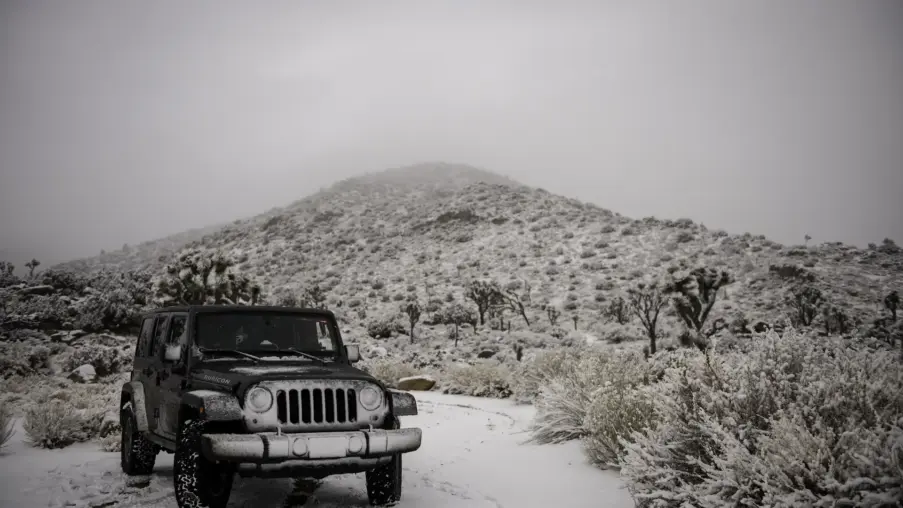
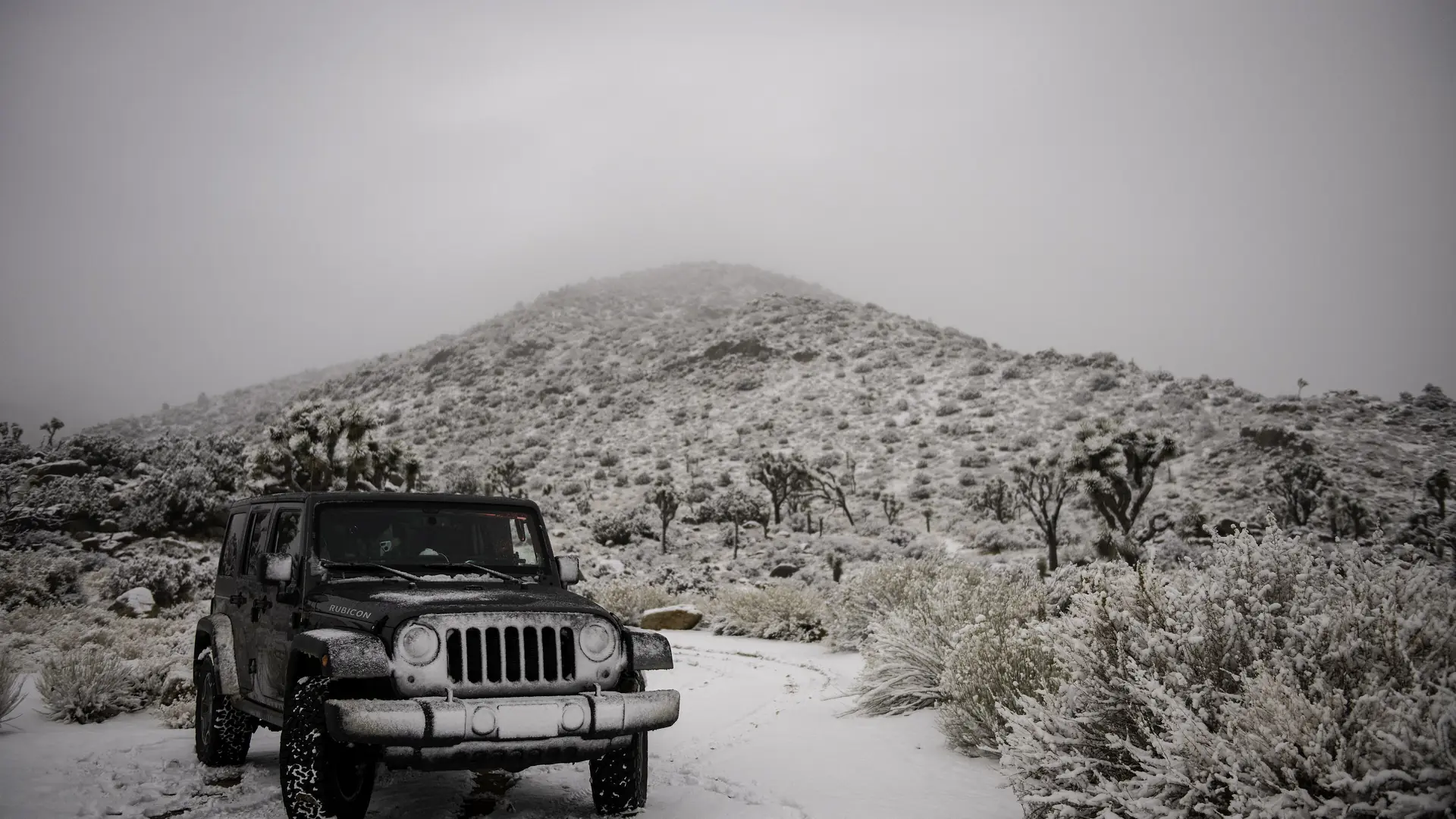
- Header image: Joshua Tree National Park, Public domain, cropped and resized.
- Yellow Jeep Wrangler TJ crawling over logs…: BLM Oregon & Washington, Public domain, cropped and resized.
- Underside of a 1993 Jeep Grand Cherokee…: CZmarlin — Christopher Ziemnowicz, a photo credit would…, Public domain, cropped and resized.
- Black third-generation Subaru Forester parked on a…: Tino Rossini from Toronto, Canada, CC BY 2.0, cropped and resized.
- Red full-size pickup truck covered in fresh…: Daniel Ross, CC0, cropped and resized.
- Black Jeep Wrangler Rubicon (JL) two-door with…: Damian B Oh, CC BY-SA 4.0, cropped and resized.
- White Toyota Land Cruiser 300 ZX: Captainmorlypogi1959, CC BY-SA 4.0, cropped and resized.
- Teal sixth-generation (XA60) Toyota RAV4 Hybrid in…: Alexander Migl, CC BY-SA 4.0, cropped and resized.
- Winter tire sidewall with the size 175/70R14…: A7N8X, CC BY-SA 3.0, cropped and resized.