

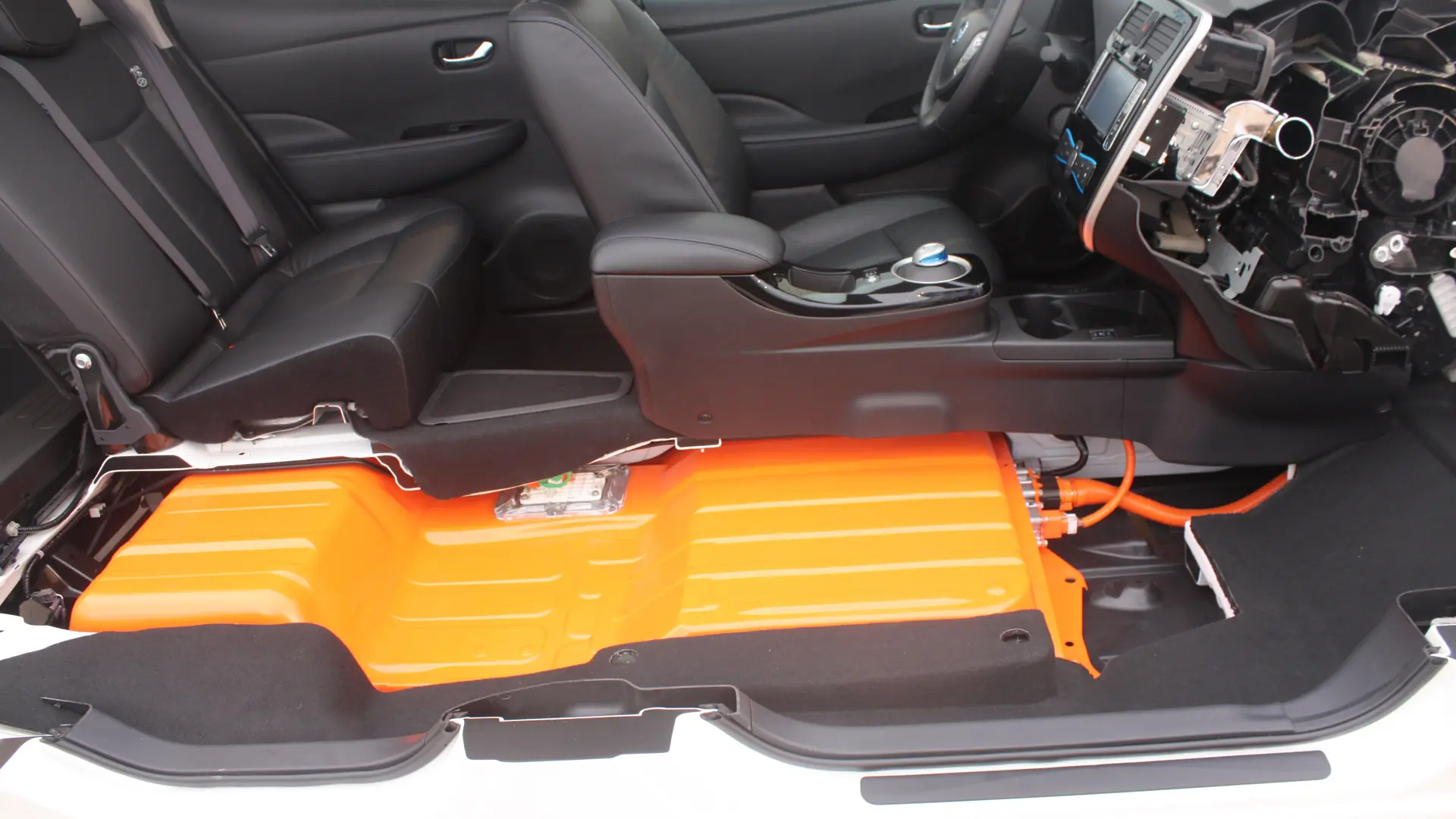
Car Batteries Explained: From Lead-Acid to Solid-State
Every car on the road has at least one battery, and in an electric car it’s now the single most expensive part. Here’s how we got from a jar of lead and acid in 1859 to the sodium-ion and solid-state cells of 2026, who builds them, and who owns the ideas.
Deep Dive · Batteries
Updated September 2026 · 13 min read
Batteries by the Numbers
The battery business has exploded in the last five years. These are the figures that tell the story, and we’ll unpack every one of them below.
EV batteries installed, 2025 1,187 GWh Up 32% on 2024
CATL’s global share 39.2% More than the next four combined
LFP share of EV batteries 55%+ Up from about 50% in 2024
Average pack price, 2025 $108/kWh EV packs averaged $99/kWh
Price drop since 2010 93% From $1,474/kWh, in real terms
China’s share of cell making 80%+ Of global manufacturing capacity
01 · History
From Lead-Acid to Lithium: 160 Years of Car Batteries
The rechargeable battery is older than the car itself. In 1859, French physicist Gaston Planté built a lead-acid cell by rolling two sheets of lead into a jar of acid. In 1881, Camille Faure’s pasted plates made the design practical to mass-produce, and that same basic chemistry still starts most gasoline cars today.
Around 1900, batteries briefly ruled the road. Electric cars were quiet, clean and didn’t need a hand crank, and they made up about a third of all vehicles in the United States. Thomas Edison spent years developing a tougher nickel-iron battery for them, and makers like Detroit Electric sold cars to drivers who wanted to skip the noise and smell of gasoline.
Two things ended that first electric era: cheap Ford Model Ts, and Charles Kettering’s electric starter in 1912, which did away with the hand crank. From then on, the battery’s main job was to start the engine. It took the lithium-ion battery, and a Nobel Prize’s worth of chemistry, to put it back at the heart of the car.
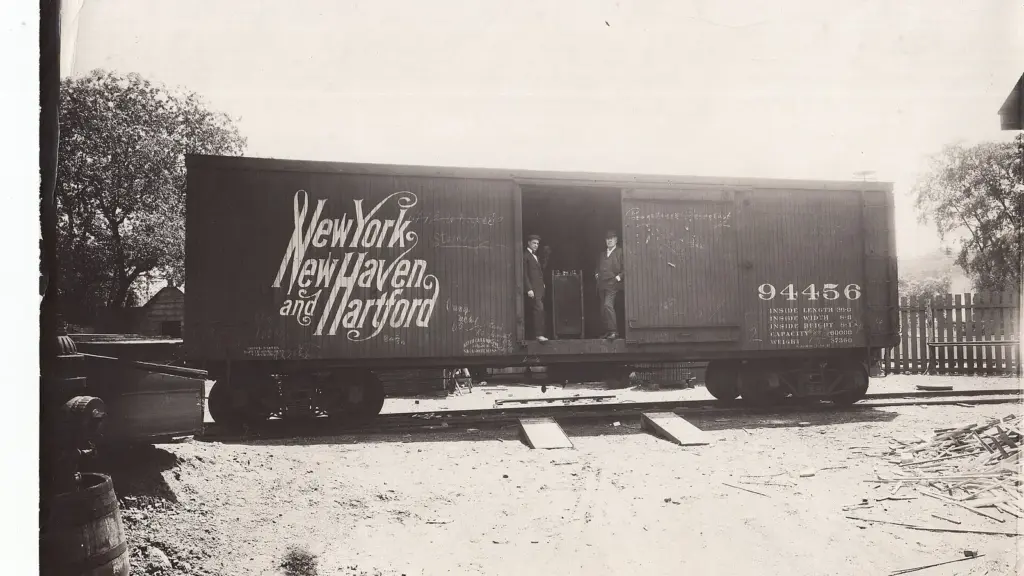
Thomas Edison with a railroad car loaded with his storage batteries, early 1900s.
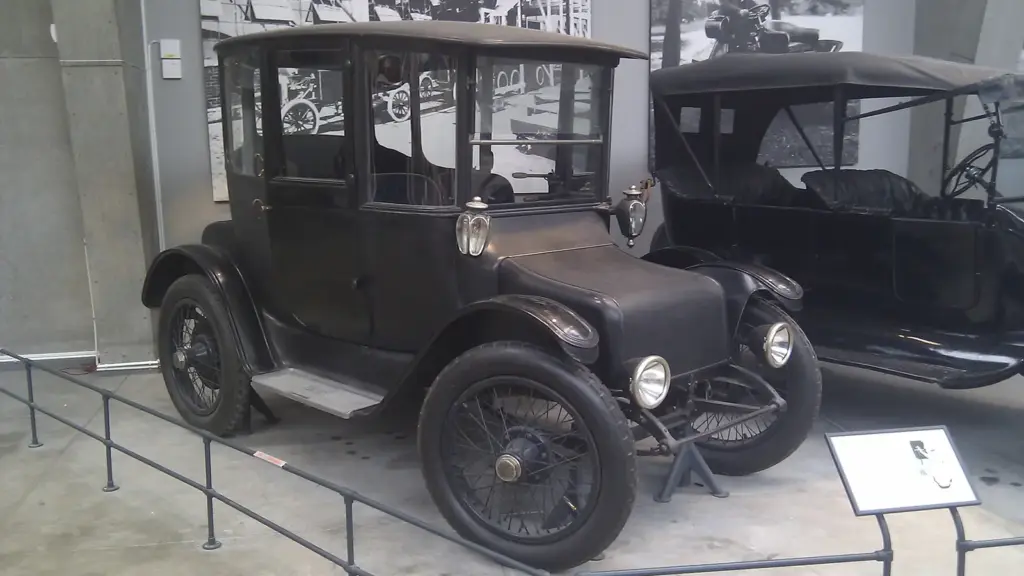
A 1915 Detroit Electric. Some were sold with Edison nickel-iron batteries.
- 1859 Gaston Planté invents the rechargeable lead-acid battery in France.
- 1881 Camille Faure’s pasted plates make lead-acid batteries practical to mass-produce.
- 1890 William Morrison of Des Moines, Iowa, builds one of the first successful US electric cars. Top speed: 14 mph.
- 1900 Electric cars make up about a third of the vehicles on US roads.
- 1901 Thomas Edison patents his nickel-iron storage battery, later offered in Detroit Electric cars.
- 1912 Charles Kettering’s electric starter makes a lead-acid battery standard equipment in gasoline cars.
- 1970s Stanley Whittingham, working at Exxon, builds the first rechargeable lithium battery, at just over 2 volts.
- 1980 John Goodenough shows that a lithium cobalt oxide cathode can deliver about 4 volts.
- 1985 Akira Yoshino builds the first commercially viable lithium-ion battery, using a carbon anode.
- 1991 Lithium-ion batteries go on sale, starting with consumer electronics.
- 1996 GM launches the EV1, first with lead-acid and later with nickel-metal hydride (NiMH) batteries.
- 1997 The Toyota Prius arrives with a NiMH battery. The same year, Akshaya Padhi and John Goodenough describe the LFP cathode.
- 2008 The Tesla Roadster becomes the first production electric car powered by lithium-ion cells, using thousands of small laptop-style cells.
- 2010 The Nissan Leaf and Chevrolet Volt bring lithium-ion to mass-market cars.
- 2019 Goodenough, Whittingham and Yoshino share the Nobel Prize in Chemistry.
- 2020 BYD launches its Blade LFP battery, and Tesla unveils its larger 4680 cell.
- 2025 EV battery packs average $99/kWh, and the world installs about 1.2 TWh of EV batteries.
- 2026 CATL and Changan announce the first mass-production passenger car with sodium-ion batteries.
02 · Who makes them
Who Makes the World’s Car Batteries
Most carmakers don’t build their own battery cells. They buy them from a small club of giant specialists, and that club has become very Chinese. In 2025, the world installed 1,187 GWh of batteries in electric, plug-in hybrid and hybrid vehicles, and the top two suppliers alone delivered more than half of it.
39.2%
CATL
464.7 GWh · China
16.4%
BYD
194.8 GWh · China
9.2%
LG Energy Solution
108.8 GWh · South Korea
5.3%
CALB
62.8 GWh · China
4.5%
Gotion High-tech
53.5 GWh · China
| Rank | Company | Home country | 2025 installs | Market share |
|---|---|---|---|---|
| 1 | CATL | China | 464.7 GWh | 39.2% |
| 2 | BYD | China | 194.8 GWh | 16.4% |
| 3 | LG Energy Solution | South Korea | 108.8 GWh | 9.2% |
| 4 | CALB | China | 62.8 GWh | 5.3% |
| 5 | Gotion High-tech | China | 53.5 GWh | 4.5% |
| 6 | SK On | South Korea | 44.5 GWh | 3.7% |
| 7 | Panasonic | Japan | 44.2 GWh | 3.7% |
| 8 | EVE Energy | China | 31.3 GWh | 2.6% |
| 9 | Samsung SDI | South Korea | 28.9 GWh | 2.4% |
| 10 | Svolt | China | 28.5 GWh | 2.4% |
Meet the big six
China · Founded 2011
CATL
No. 1 since 2017 LFP and NMC
Contemporary Amperex Technology, based in Ningde, supplies Tesla, BMW, Mercedes-Benz, Volkswagen and dozens of Chinese brands. It is also leading the move to sodium-ion with its Naxtra cells.
China · Founded 1995
BYD
Cars and batteries Blade LFP
BYD started out making phone batteries and now builds both the cells and the cars. Its Blade LFP battery, launched in 2020, uses long, thin cells that double as part of the pack’s structure.
South Korea
LG Energy Solution
GM partner Pouch and prismatic
Spun off from LG Chem in 2020, it’s the biggest supplier outside China. It makes cells with GM through Ultium Cells and is developing manganese-rich (LMR) cells for GM’s trucks, due in 2028.
Japan
Panasonic
Tesla partner Cylindrical cells
Panasonic has supplied Tesla’s cylindrical cells since the early Model S days, including from the Nevada Gigafactory, and has been developing the larger 4680 format.
South Korea
SK On
Hyundai and Kia Pouch cells
The battery arm of SK Innovation, spun off in 2021, supplies Hyundai and Kia and has partnered with Ford on US battery plants.
South Korea
Samsung SDI
BMW and Stellantis Solid-state R&D
Supplies BMW and runs a US joint venture with Stellantis. It is one of the most active solid-state developers and is targeting mass production in 2027.
Why China leads. China controls most of the supply chain, from refining lithium to making cathodes and cells. According to the IEA, it holds over 80% of global cell manufacturing capacity, and Chinese companies supplied almost 75% of the batteries in electric cars sold worldwide in 2025.
The gap is still widening. In the first three months of 2026, CATL’s share climbed to about 40.7%, while South Korea’s three big makers together held 15.6%, down 2.1 points on a year earlier. Japan’s Panasonic leans heavily on a single customer, Tesla.
Cost is the reason. BloombergNEF found that battery packs in China averaged $84/kWh in 2025, compared with $121 in North America and $131 in Europe.
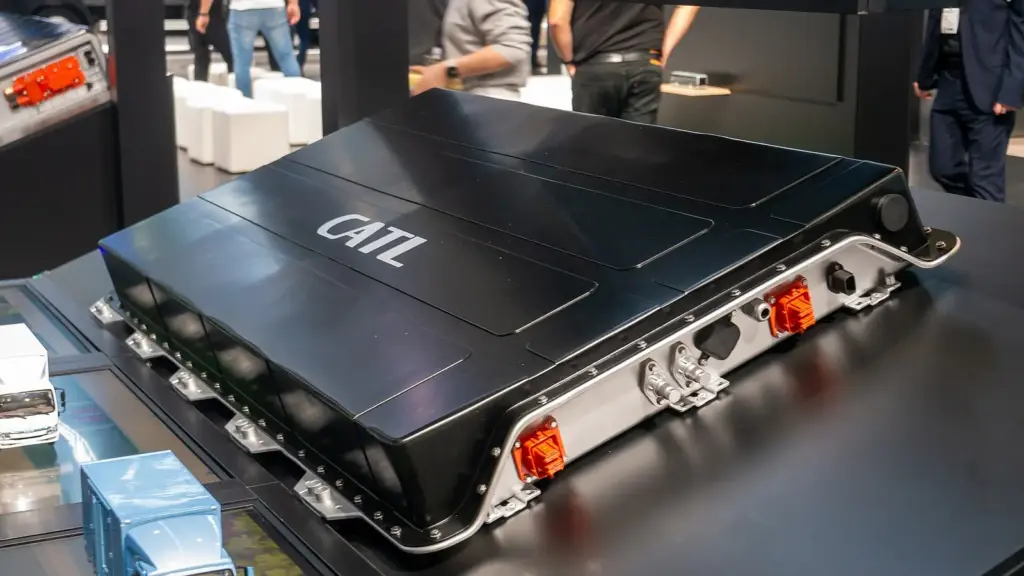
CATL, the world’s largest battery maker, on display at the IAA 2024 show in Germany.
03 · Battery types
The Battery Types Inside Today’s Cars
Every battery has three key parts: a positive electrode (the cathode), a negative electrode (the anode) and an electrolyte that lets charged atoms, called ions, shuttle between the two. Change the recipe, especially the cathode, and you change almost everything: range, price, lifespan and how the battery copes with cold.
Those letter codes you see, like LFP and NMC, describe the cathode chemistry. Here’s what you’ll actually find in cars in 2026.
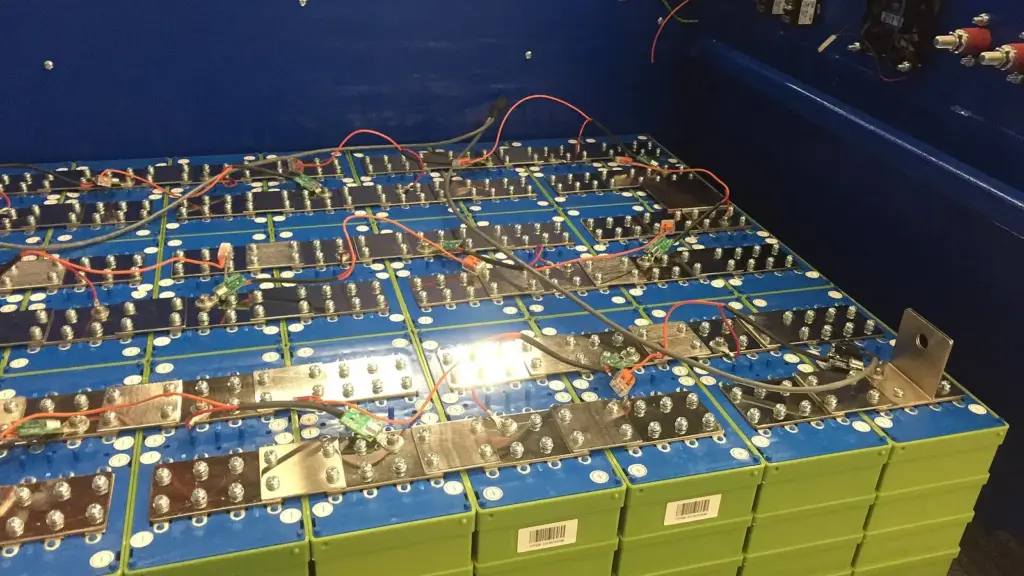
Large prismatic LFP cells, the chemistry now in more than half of new EV batteries.
12-volt · Nearly every car
Lead-acid
Starting and electronics Cheap and heavy
Still the battery that cranks most gas engines. Most EVs carry a small 12-volt battery too, for locks, lights and computers, though some makers now use lithium-ion for it.
Hybrids
Nickel-metal hydride (NiMH)
Early hybrids Very durable
The workhorse of the first hybrids, and still used in some today. Tough and tolerant of heat, but heavier and less energy-dense than lithium-ion.
Long-range EVs
NMC and NCA
Most energy Nickel and cobalt
Lithium nickel manganese cobalt oxide, and its cousin with aluminium, packs the most energy into the least weight, which is why long-range and premium EVs use it. Nickel and cobalt make it pricier.
Most new EVs
LFP
55%+ of EV batteries Cheaper, longer life
Lithium iron phosphate uses no nickel or cobalt. It’s heavier for the same energy, but cheaper, very stable and fine to charge to 100%. In 2025, LFP packs averaged $81/kWh versus $128 for NMC.
The next step for LFP
LMFP
Adds manganese More range
Adding manganese to LFP raises its voltage and squeezes out more energy while keeping the cost low. Chinese makers have started putting it into cars.
The newcomer
Sodium-ion
No lithium Cold-weather champion
Swaps lithium for cheap, plentiful sodium. It stores less energy than LFP, but CATL’s Naxtra cells keep over 90% of their capacity at −40 °C. The first production cars arrive in 2026.
| Chemistry | Energy (Wh/kg, cell) | Cost | Cold weather | Where you find it |
|---|---|---|---|---|
| Lead-acid | 30–40 | Very low | Weak | 12-volt starter batteries |
| NiMH | 60–120 | Moderate | Fair | Hybrids |
| NMC / NCA | 250–300 | Higher | Fair | Long-range EVs |
| LFP | 160–205 | Low | Weaker | Most new EVs |
| Sodium-ion | Up to 175 | Low at scale | Excellent | Affordable EVs and hybrids |
04 · Inside the pack
Cells, Modules and Packs
An EV battery isn’t one battery. It’s hundreds or thousands of individual cells wired together, often grouped into modules and sealed inside a crash-proof pack with its own cooling system and a computer, the battery management system, that watches every cell.
Cells come in three main shapes, and each maker has a favourite:
- CylindricalLike oversized AA batteriesMade famous by Tesla and Panasonic. The name is the size: a 2170 cell is 21 mm wide and 70 mm tall, and the newer 4680 is 46 by 80 mm.
- PrismaticFlat, hard-shell boxesFavoured by CATL, BYD and Samsung SDI. BYD’s Blade is an extreme version, with cells nearly a metre long that form part of the pack’s structure.
- PouchSoft, foil-wrapped layersUsed by LG Energy Solution and SK On. Light and space-efficient, but they need more support inside the pack.
The big trend: cell-to-pack. Newer designs skip the modules and put cells straight into the pack. Less packaging means more room for energy, which is a big reason LFP cars have caught up on range.
05 · What’s next
Where Battery Technology Is Heading
The next decade of batteries is being fought on four fronts: more energy, lower cost, faster charging and fewer scarce materials. These are the technologies to watch, and the companies leading each one.
Target: 2027–2030
All-solid-state
Toyota Samsung SDI QuantumScape
Replaces the liquid electrolyte with a solid one for more range, faster charging and lower fire risk. Toyota plans its first cars for 2027–28, Samsung SDI targets 2027, and QuantumScape is building cells with Volkswagen’s PowerCo.
Road-tested
Solid-state prototypes
Mercedes-Benz Factorial BMW
In September 2025, a Mercedes-Benz EQS fitted with Factorial solid-state cells drove 1,205 km from Stuttgart to Malmö on a single charge. BMW is testing Solid Power cells in an i7.
On sale in China
Semi-solid-state
Nio WeLion
A halfway step that uses a gel-like electrolyte. Nio already offers a 150 kWh semi-solid pack, which has carried its ET7 sedan more than 1,000 km on one charge in testing.
Arriving 2026
Sodium-ion
CATL BYD
CATL’s Naxtra cells reach 175 Wh/kg and go into mass-production cars with Changan in 2026, promising cheaper batteries that shrug off extreme cold.
Target: 2028
Lithium manganese-rich (LMR)
GM LG Energy Solution
GM and LG say their LMR cells will hold 33% more energy than the best LFP cells at a similar cost, giving full-size electric trucks more than 400 miles (640 km) of range.
Here now
Megawatt charging
BYD CATL
BYD’s Super e-Platform charges at up to 1,000 kW, adding about 400 km of range in five minutes, close to the time it takes to fill a gas tank.
A reality check on solid-state. Headlines have promised solid-state batteries “next year” for more than a decade. As of 2026, the IEA says the most advanced designs are still at the prototype stage, and the first cars to get them will be expensive ones. Expect them in affordable cars closer to 2030.
06 · Patents and inventors
Who Invented It, and Who Owns the Ideas
Batteries are one of the busiest areas of invention on the planet. A joint study by the European Patent Office and the IEA found that battery patenting grew about 14% a year between 2005 and 2018, four times faster than technology as a whole.
The inventors behind the battery in your car
1859
Gaston Planté
French physicist who invented the rechargeable lead-acid battery, which still starts most gasoline cars.
1970s
M. Stanley Whittingham
Built the first rechargeable lithium battery while working at Exxon. Shared the 2019 Nobel Prize in Chemistry.
1980
John B. Goodenough
Found the cobalt oxide cathode that doubled lithium battery voltage, and later co-discovered LFP. At 97, the oldest Nobel laureate ever.
1985
Akira Yoshino
Built the first commercially viable lithium-ion battery at Asahi Kasei, using a carbon anode. Nobel Prize, 2019.
1997
Akshaya Padhi
Working with Goodenough at the University of Texas, identified lithium iron phosphate, the chemistry now in most new EVs.
1980s
Stanford Ovshinsky
American inventor whose company developed the nickel-metal hydride batteries used in the GM EV1 and in hybrids that followed.
Who holds the patents
- 14% a yearBattery patent growth, 2005–2018
- 45%Share of 2018 battery-cell patents that were lithium-ion
- 47%Battery patents held by just 25 companies, 2000–2018
- 13 of 25Top patent holders that are Japanese
The EPO and IEA study found that the top 25 patent holders were mostly Asian. Japan led with 13 companies, including Panasonic and Toyota. South Korea had three (Samsung, LG and Hyundai), Germany had four (Bosch, Daimler, BASF and Volkswagen) and the United States had two (Ford and General Motors). The Volta Foundation’s 2025 Battery Report still ranks Samsung first for lithium-ion patent families, with LG Chem fourth and General Motors, in 22nd place, the highest-ranked company from the Western hemisphere. China now leads new filings in solid-state, sodium-ion and battery recycling.
Three patent stories that shaped the industry
07 · Recycling
Second Life, Recycling and the New Rules
EV batteries last far longer than early skeptics feared. Most come with warranties of 8 years or 160,000 km, and real-world data shows they typically lose only 1 to 2% of their capacity a year. When a pack finally leaves the car, it still has two more lives ahead of it.
- ReuseSecond-life storageA pack with 70 to 80% of its capacity left is still useful for storing solar power or backing up buildings. Redwood Materials already powers a data centre with used EV batteries.
- RecycleMetals back into batteriesRedwood Materials, founded in 2017 by former Tesla CTO JB Straubel, says it recovers more than 95% of the nickel, cobalt, lithium and copper. In 2025, mining giant Glencore took over the assets of bankrupt recycler Li-Cycle.
- RegulateEurope sets the targetsFrom February 2027, EV batteries sold in the EU need a digital battery passport. From 2031, new batteries must contain 16% recycled cobalt and 6% recycled lithium and nickel, and recyclers must recover 80% of the lithium.
Frequently Asked Questions
Do electric cars still have a 12-volt battery?
Yes. Almost all EVs carry a small 12-volt battery that powers the locks, lights, screens and the computers that wake the car up. Some newer models use a small lithium-ion unit instead of lead-acid.
How long does an EV battery last?
Usually as long as the car. Warranties typically cover 8 years or 160,000 km, and most packs lose capacity slowly, around 1 to 2% a year. Lots of heat, frequent fast charging and sitting at 100% for long periods speed that up a little.
Is LFP better than NMC?
It depends on what you need. LFP is cheaper, lasts more charge cycles and can be charged to 100% every day. NMC stores more energy per kilogram, so it gives more range for the weight and copes a little better with cold.
What does kWh mean?
A kilowatt-hour is a unit of energy, the battery version of the litres in a fuel tank. A 75 kWh pack could run a 1,000-watt appliance for 75 hours, and typically moves a car around 400 to 500 km.
When will solid-state batteries be in cars?
Toyota, Samsung SDI and others are targeting 2027 to 2028 for their first production cars, starting with expensive models. Semi-solid-state packs are already on sale in China. Affordable cars will likely wait until around 2030.
Why are batteries so much cheaper than they used to be?
Scale, competition and cheaper chemistry. According to BloombergNEF, average pack prices fell from about $1,474/kWh in 2010 to $108/kWh in 2025, thanks to giant factories and the shift to LFP.
Keep Reading
Deciding what to drive next? Compare every powertrain side by side, or dig into the brands behind the batteries.
Sources
- SNE Research: global EV battery usage, full year 2025
- SNE Research: global EV battery usage, January to March 2026
- IEA: Global EV Outlook 2026, electric vehicle batteries
- BloombergNEF: battery pack prices fall to $108/kWh
- The Nobel Prize in Chemistry 2019
- US Department of Energy: the history of the electric car
- EPO and IEA: innovation in batteries and electricity storage (summary)
- Mewburn Ellis on the Volta Foundation Battery Report 2025
- CATL and Changan: first mass-production sodium-ion car
- Mercedes-Benz: EQS with solid-state battery covers 1,205 km
- GM and LG Energy Solution: LMR battery cells
- BYD: Super e-Platform with megawatt charging
- EU Battery Regulation targets (summary)
Photo credits
- Header image: Norsk Elbilforening, CC BY 2.0, cropped and resized.
- Thomas Edison with a railroad car carrying…: Unknown author, Public domain, cropped and resized.
- CATL electric vehicle battery on display at…: Matti Blume, CC BY-SA 4.0, cropped and resized.
- Row of large prismatic lithium iron phosphate…: Yo-Co-Man, CC BY-SA 4.0, cropped and resized.
- 1915 Detroit Electric car, an early battery-powered…: Kopo25, Public domain, cropped and resized.