
Africa Eco Race
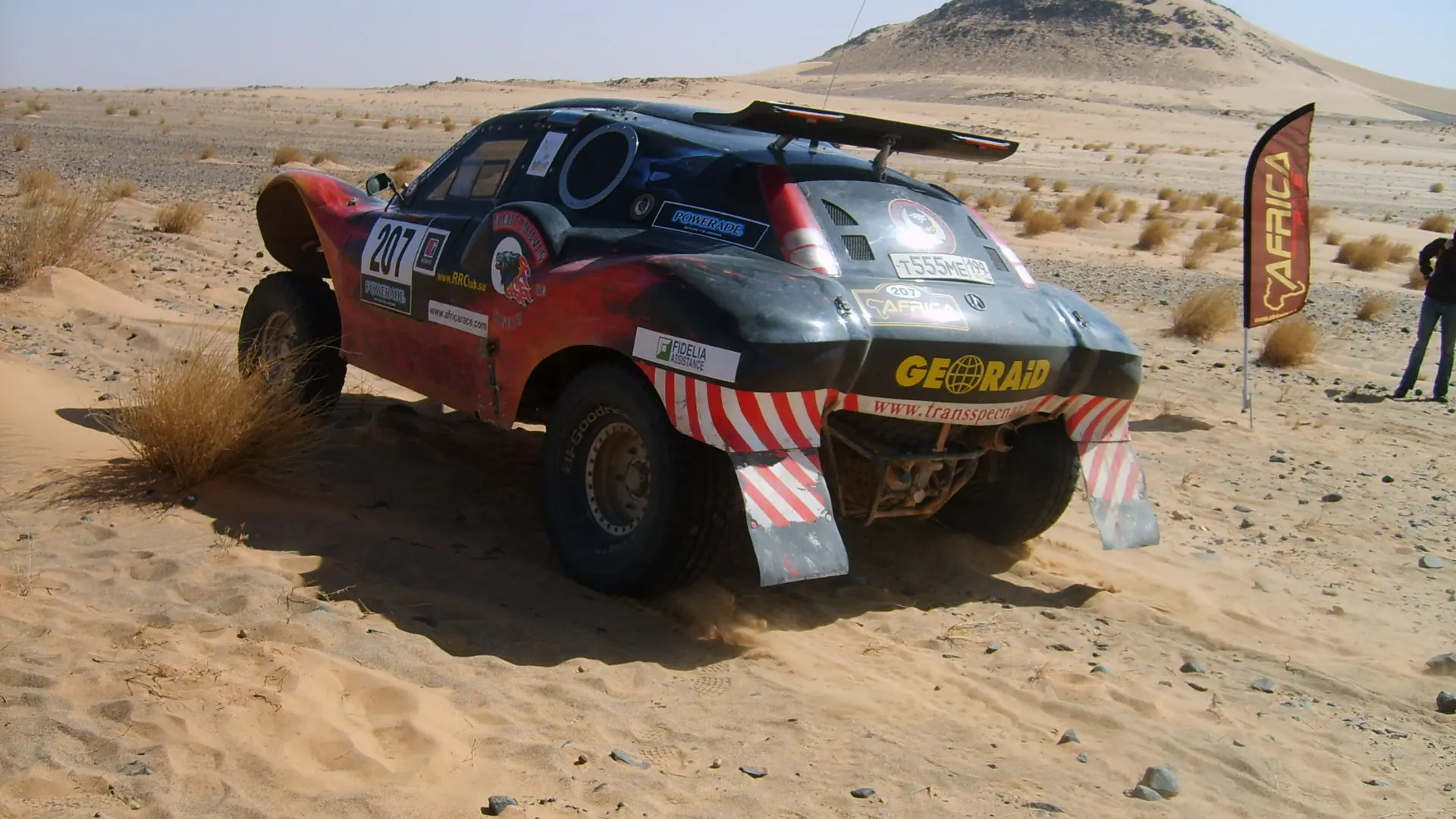
The Africa Eco Race is a two-week rally raid that runs from Tangier in Morocco, down through Western Sahara and Mauritania, to the shores of Lac Rose outside Dakar in Senegal. It was created after the Dakar Rally left Africa, and it keeps that classic finish alive for bikes, cars, side-by-sides, trucks and historic vehicles. Here’s where the name comes from, the history, the route stage by stage, the records and recent winners, the 2027 dates and how to follow it.
Africa Eco Race at a Glance
Total distance 6,168 km / 3,832 mi in 2026, including 3,837 km / 2,384 mi of timed special stages
Stages 12 over two weeks, with a rest day in Dakhla
Countries Morocco, Mauritania, Senegal including the Western Sahara coast through Dakhla
First run 2009 created in 2008 by Jean-Louis Schlesser and René Metge
Start and finish Tangier to Lac Rose the pink lake about 30 km / 19 mi northeast of central Dakar
Most wins 6 Jean-Louis Schlesser, cars, 2009–2014
Africa Race, Africa Eco Race or AER?
Same event. Early editions were often billed simply as the Africa Race, and you’ll still see that name around, but the full title is the Africa Eco Race, usually shortened to AER by teams and riders. Don’t confuse it with the Dakar Rally: the Dakar left Africa after its 2008 edition was canceled, and the Africa Eco Race was set up to keep the old road to Dakar running.
The “Eco” part is about how the organizers want the event to run. Competitors commit to not leaving harmful traces along the route, and the organization has used reusable meal kits and solar-equipped vehicles. Over the years it has backed solar-power projects in Mauritania, including for a school in Nouakchott and a library in Chinguetti, and planted 3,000 eucalyptus trees in Nouakchott in 2011. There’s also an experimental class (EXP) for vehicles running on alternative energy.
The organizers sum up the spirit as friendly, authentic and supportive, with a lighter rulebook than the big world championship events. That’s a big part of why so many privateers and amateur riders sign up.
Africa Eco Race History
The Africa Eco Race grew out of the old Paris–Dakar, the rally that made the run across the Sahara to Senegal famous from 1979 onward. When the Dakar was called off in 2008 and moved to another continent, two of its former winners decided the African route was too good to lose. Schlesser had won the Dakar car class twice and Metge three times, and they built a new event around the same idea: two weeks of desert, navigation and survival, finishing on the beach by Lac Rose.
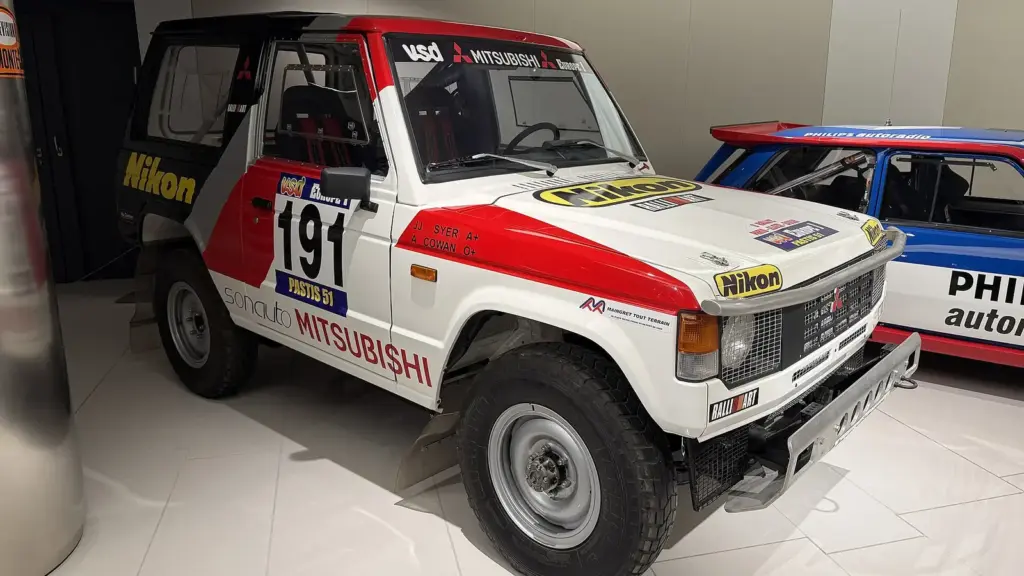
- 2008 The Dakar Rally is canceled over security concerns and then moves to South America. Former Dakar winners Jean-Louis Schlesser and René Metge create the Africa Race, working with Morocco, Mauritania and Senegal.
- 2009 The first edition runs to Dakar. Schlesser wins the car class in one of his own Schlesser-Renault buggies, and the De Rooy Iveco team wins the trucks.
- 2009–2014 Schlesser wins the car class six years in a row, still the record.
- 2011 Czech driver Tomáš Tomeček wins the truck class in a Tatra, the first of his five truck wins.
- 2012–2015 The rally starts from Saint-Cyprien in southern France, with a ferry crossing to Nador in Morocco.
- 2016–2018 The start moves to Monaco, with the boat sailing from Sète.
- 2021 There’s no race because of the COVID-19 pandemic. The event returns in 2022.
- 2024 Jacopo Cerutti wins the bike class on an Aprilia, then wins again in 2025. Tomeček takes his fifth truck title.
- 2025 The 16th edition starts in Monaco on December 28, 2024, and finishes at Lac Rose on January 12, 2025. A sandstorm forces the organizers to cancel Stage 9.
- 2026 The start moves to Tangier and the rally shifts to late January. The beach prologue is rained off and Stage 1 is canceled because of snow. Kevin Gallas wins the bikes by 41 seconds in a Yamaha one-two, and Gerrit Zuurmond wins the trucks for the second year running.
- 2027 The 18th edition is set for January 24 to February 6, again from Tangier to Lac Rose.
The Road to Lac Rose
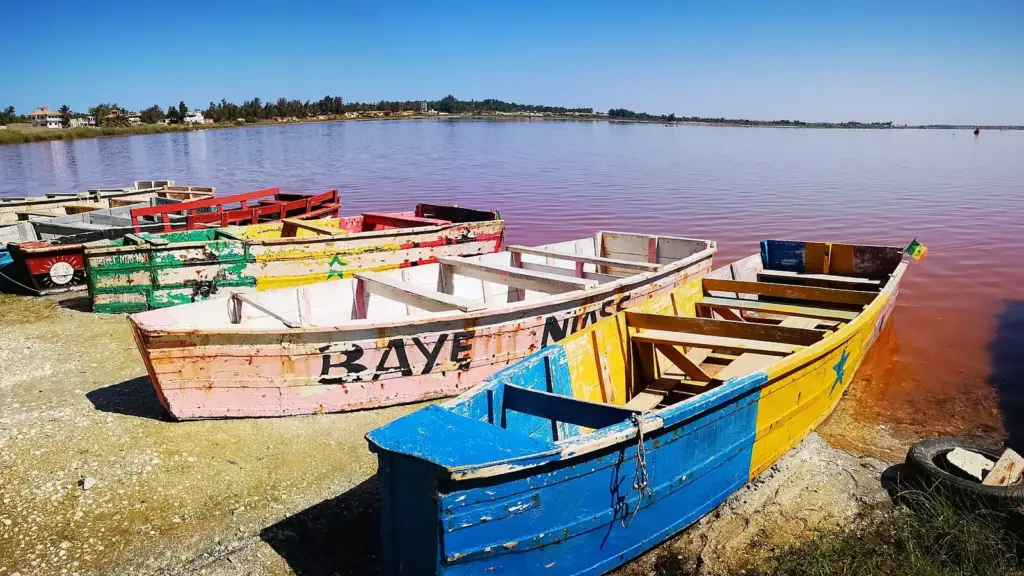
Every rally needs a finish line people remember, and this one has a pink lake. Lac Rose, or Lake Retba, sits just inland from the Atlantic northeast of Dakar, and its color comes from the very salty water. It was the traditional finish of the old Paris–Dakar, and the Africa Eco Race calls it its one and only finish line.
The final day is more celebration than fight. The last stage into Dakar is timed, but it doesn’t count toward the overall result, so the real racing is over by the time crews reach Senegal. In 2026 that meant everything came down to Stage 11 from Ouad Naga to Mpal, where the bike class was settled by 41 seconds.
Week 1
Morocco
Mountains, rocky tracks and dunes from Tangier south to the Atlantic coast and Dakhla.
Week 2
Mauritania
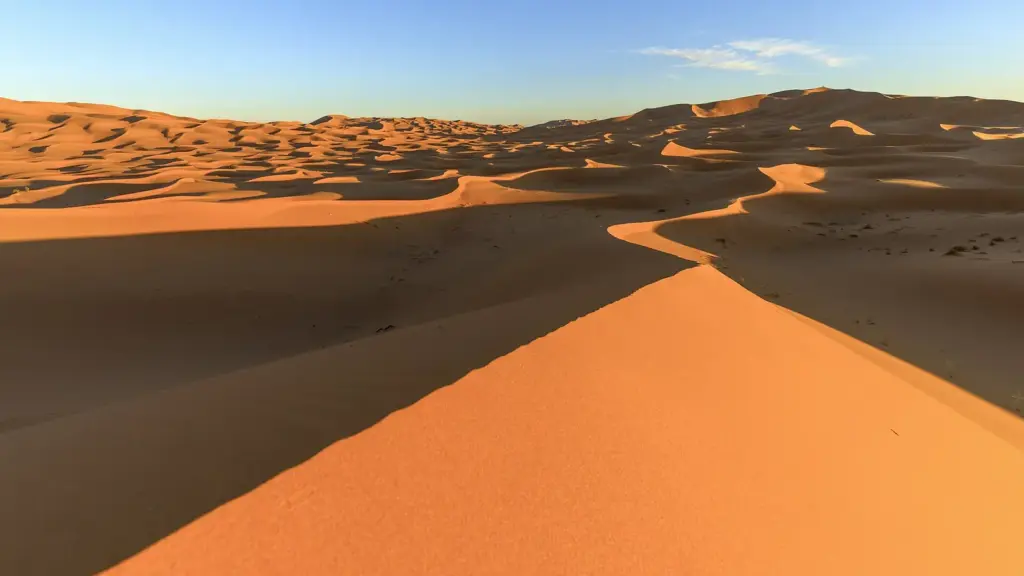
The big dunes and long, open sand stages, with marathon-style bivouacs deep in the desert.
Finale
Senegal
A short last run to Lac Rose, where the final podium sits on the shore of the lake.
The other thing that sets the AER apart is navigation. Long sand stages in Mauritania reward riders and co-drivers who can read the roadbook and the terrain, not just go fast, and a wrong heading in the dunes can cost far more time than a slow corner ever would.
The Africa Eco Race Route: Stage by Stage
There’s no lap and no track map here. The Africa Eco Race is a point-to-point journey of timed special stages linked by liaison sections, with crews sleeping in bivouacs along the way. The route changes every year, so here’s how the 2026 edition ran, which gives you a good idea of the rhythm. Distances are the special-stage lengths from the 2026 itinerary. For 2027 the organizers have only published the outline so far (Tangier, Meknès, Erfoud, M’Hamid, Assa, Laâyoune, Dakhla, then Mauritania and Senegal), with full distances due after the route reconnaissance at the end of November 2026.
Jan 25–26
Tangier
The planned beach prologue was rained off, and Stage 1 to Bousaid was canceled because of snow. Crews faced a detour liaison of nearly 1,000 km (620 mi) instead.
Stage 2
Bousaid to Tagounite
380 km (236 mi) of special stage as the route turns south toward the desert.
Stage 3
Tagounite to Assa
440 km (273 mi) of timed racing along the edge of the Sahara.
Stage 4
Assa to Khnifiss
The longest special of the rally at 483 km (300 mi), heading for the Atlantic coast.
Stage 5
Khnifiss to Dakhla
395 km (246 mi) of special and a long day overall, ending with the rest day in Dakhla.
Stage 6
Dakhla to Chami
A shorter 152 km (95 mi) special after the border crossing into Mauritania.
Stage 7
Chami to Aidzidine
462 km (287 mi) into the Mauritanian dunes. This is where the bike race started to shake out in 2026.
Stages 8–10
Aidzidine and Ouad Naga
A loop around Aidzidine (414 km / 257 mi), the run to Ouad Naga (426 km / 265 mi) and a loop from there (444 km / 276 mi). Three long days in the sand.
Stage 11
Ouad Naga to Mpal
The last stage that counts: 131 km (81 mi) of special into Senegal. It decided the 2026 bike class.
Stage 12
Mpal to Lac Rose
A ceremonial 21.5 km (13.3 mi) timed run that doesn’t count toward the overall result, then the podium by the lake.
Africa Eco Race Records and Past Winners
A rally raid has no lap record, and the route changes every year, so stage times can’t be compared from one edition to the next. What people do track is who wins, and how often. In 2026 David Gerard’s car winning margin was 1 hour 29 minutes, while the bike fight went to the last kilometers. Toyota Land Cruisers have been the ones to beat in the Historic class lately, winning it in both 2025 and 2026.
6 wins
Most car wins
Jean-Louis Schlesser won the car class every year from 2009 to 2014, driving his own buggies.
5 wins
Most truck wins
Tomáš Tomeček won the truck class in 2011, 2012, 2014, 2022 and 2024, driving Tatras.
41 seconds
Closest bike finish
Kevin Gallas beat Yamaha teammate Gautier Paulin by 41 seconds in 2026, after more than 39 hours of racing.
2 each
Most bike wins
Pål Anders Ullevålseter (2015, 2016), Alessandro Botturi (2019, 2020) and Jacopo Cerutti (2024, 2025).
| Class | 2026 winner | Vehicle |
|---|---|---|
| Bikes | Kevin Gallas | Yamaha |
| Cars | David Gerard / Pascal Delacour | MD Optimus |
| SSV | Martijn Van Den Broek / Mike Daas | Can-Am Maverick |
| Trucks | Gerrit Zuurmond / Tjeerd Van Ballegooij / Klaas Kwakkel | MAN |
| Historic | Jorge Pérez Companc / Ezequiel Pérez Companc | Toyota |
| Year | Bikes | Cars | Trucks |
|---|---|---|---|
| 2026 | Kevin Gallas (Yamaha) | David Gerard / Pascal Delacour (MD Optimus) | Gerrit Zuurmond and crew (MAN) |
| 2025 | Jacopo Cerutti (Aprilia) | Benoît Fretin / Cédric Duplé (Century) | Gerrit Zuurmond and crew (MAN) |
Classes and Categories at the Africa Eco Race
The Africa Eco Race is one big event rather than a series, but it’s really several races sharing the same route and bivouacs. If you know the Dakar Rally, the vehicle classes will look familiar; what’s different is the scale. In 2026, 172 crews started in Tangier and 124 finished in Dakar.
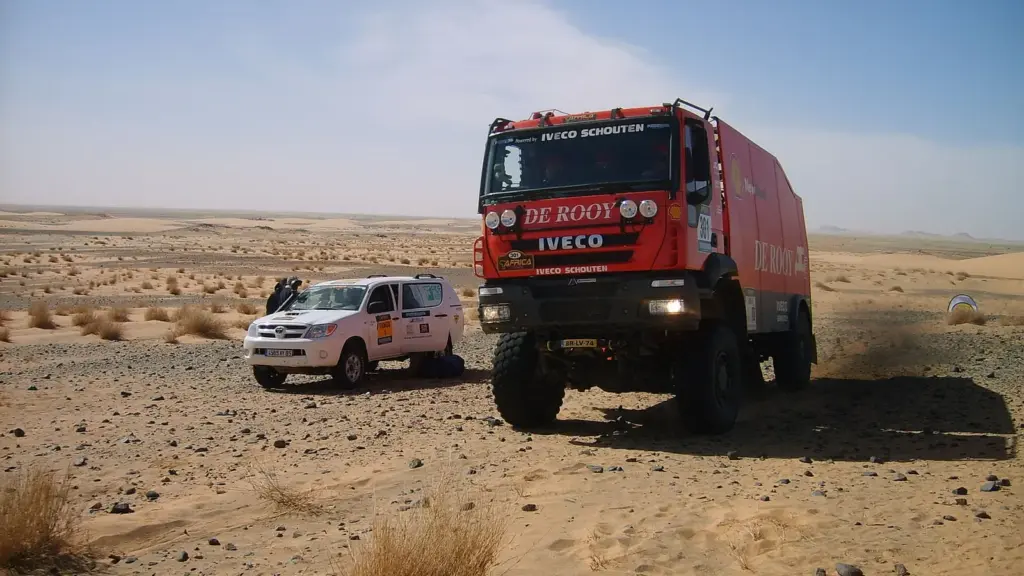
Against the clock
Modern race
Rally raid Bikes, quads, cars, SSV, trucks
The main competition: 12 timed stages for bikes (including electric), quads, T1/T2 cars, T3/T4 side-by-sides and T5 trucks. In 2026 it drew 105 motorcycles, 20 cars, 20 SSVs and lightweight prototypes, and five trucks at the start.
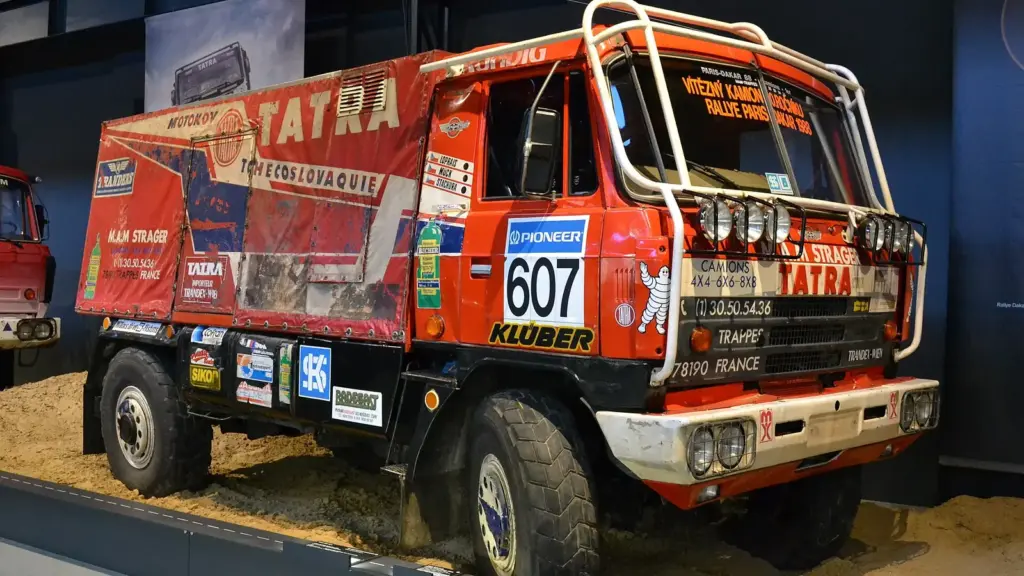
Regularity
Historic
Rally raid Vehicles from 1970 to 2007
For cars and trucks built between 1970 and 2007, split into groups by age. Since 2024 it has been scored as a regularity rally, so it rewards precision rather than flat-out speed. Twenty-two historic crews started in 2026, and 21 reached Dakar.
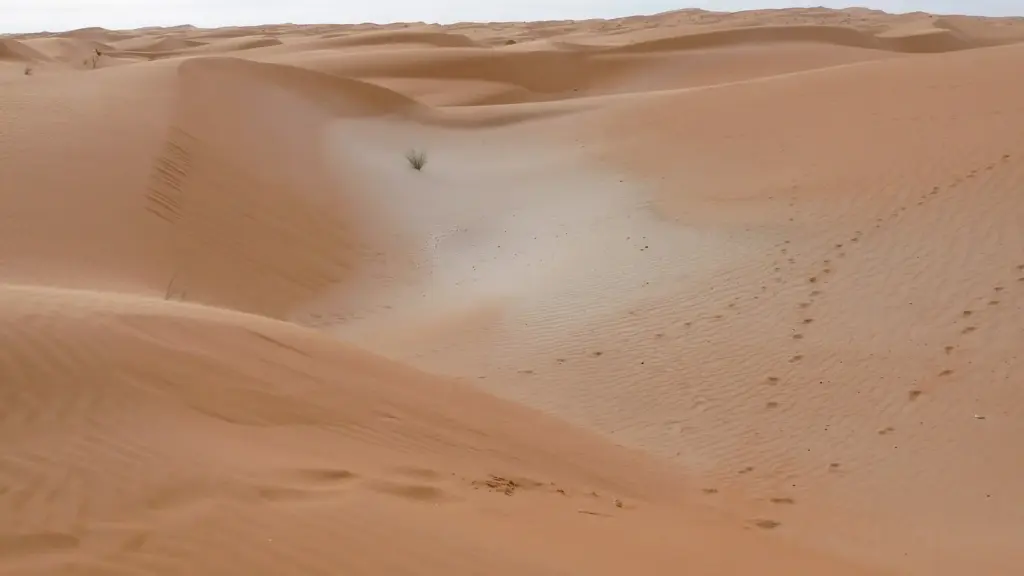
No clock
Raid
Rally raid Non-competitive
The whole route from Tangier to Lac Rose without the stopwatch, supervised by professionals. It was first run in 2022 for bigger motorcycles and is the gentlest way into the event.
Africa Eco Race Calendar: 2026 and 2027
The Africa Eco Race is a single two-week event each year rather than a season of rounds. In 2026 it moved to late January and early February; the 2025 edition had started just after Christmas. Here are the dates for the last edition and the next one.
2026 edition
| Dates | Event | Series | Status |
|---|---|---|---|
| Jan 20–22 | Boat crossing from Marseille to Tangier | Africa Eco Race | Done |
| Jan 25 | Start in Tangier (beach prologue canceled for rain) | Africa Eco Race | Done |
| Jan 26–Feb 6 | Stages 1–11, Morocco, Mauritania and Senegal | Africa Eco Race | Done |
| Feb 7 | Stage 12 and finish at Lac Rose, Dakar | Africa Eco Race | Done |
2027 edition
| Dates | Event | Series | Status |
|---|---|---|---|
| Jan 21–23 | Administrative and technical checks in Tangier | Africa Eco Race | Upcoming |
| Jan 24 | Official start in Tangier | Africa Eco Race | Upcoming |
| Jan 30 | Rest day in Dakhla | Africa Eco Race | Upcoming |
| Feb 6 | Final stage and podium at Lac Rose, Dakar | Africa Eco Race | Upcoming |
| TBA | Detailed route, stage distances and itinerary | Africa Eco Race | Details TBA |
Africa Eco Race Weather Along the Route
Since the race runs only in January and February, what matters isn’t the season but where you are on the map. Crews start in a Mediterranean winter and finish in the dry, warm tropics two weeks later. The figures below are January and February averages (1991–2020) from the Wikipedia climate tables for Errachidia, Dakhla, Nouakchott and Dakar. In Mauritania the bigger worry is wind: a sandstorm canceled a full stage in 2025.
Cool and wet
Tangier and northern Morocco
Late January is the rainy season on the Strait of Gibraltar, and it can get properly wintry inland. In 2026 rain washed out the Tangier prologue and snow canceled Stage 1 entirely.
16–18°C / 61–65°F
Inland Morocco (Errachidia)
Average January–February highs of 15.9–18.2°C (61–65°F) and cold nights of 2.0–4.6°C (36–40°F), with the record January low at −8.1°C (17°F). Dry, with 10–13 mm (0.4–0.5 in) of rain a month.
22°C / 72°F
Dakhla and the Atlantic coast
Mild and very dry: highs of about 22.4°C (72°F) and lows of 14–15°C (58–59°F) in January and February, with only 1.5–2.6 mm (under 0.1 in) of rain.
25–31°C / 77–87°F
Mauritania and Senegal
It warms up fast heading south. Nouakchott averages highs of 29.1–30.6°C (84–87°F) and lows around 15°C (58–60°F), and Dakar 25–26°C (77–79°F) by day and about 18°C (64–65°F) at night. Rain is close to zero.
Following the Africa Eco Race: Start, Finish and Tips
This isn’t an event with grandstands and ticket gates. Most of the route crosses remote desert, and the organizers don’t publish spectator zones the way a circuit or a WRC round would. The realistic places to see the vehicles are the start in Tangier and the finish at Lac Rose, and the rest of the time you follow along online.
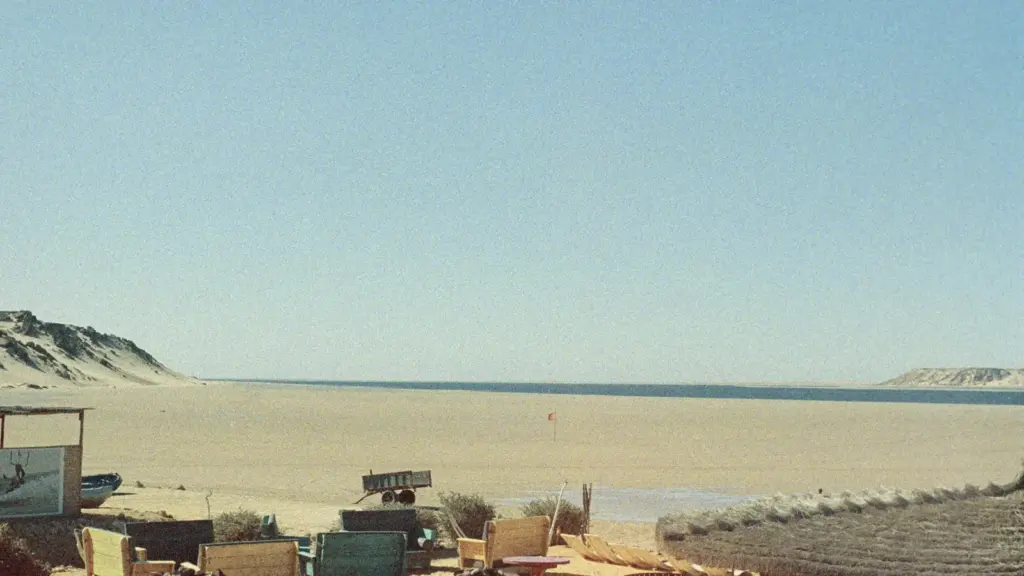
Where to see it
- Tangier. The 2027 edition starts here again, with administrative and technical checks from January 21 to 23 and the official start on January 24. A beach prologue was planned for the start in 2026 but was rained off.
- Dakhla. The rest day stop on the Atlantic coast, roughly halfway down the route, before the crossing into Mauritania.
- Lac Rose. The finish and final podium on the lake shore outside Dakar, on February 6, 2027.
- Live tracking. The official site runs live tracking during the race, along with daily results, photos and videos.
Getting there
Tangier has an international airport and ferry links across the Strait of Gibraltar from Spain, and competitors from Europe usually arrive by boat (in 2026 the organizers ran a crossing from Marseille). At the other end, Dakar is served by Blaise Diagne International Airport, and Lac Rose is about 30 km (19 mi) northeast of central Dakar by road.
Tips
Check the official channels close to the date, because start and finish arrangements can change and the detailed program comes out late. If you’re thinking about traveling along the route itself, read your government’s current travel advice for each country first; the stages run through remote areas where you shouldn’t go without support. And in Tangier in late January, pack a rain jacket.
Can You Enter the Africa Eco Race?
Yes, and that’s a big part of its appeal. The AER is built for privateers as much as factory teams, and entries for 2027 are open through the official site, where you’ll find the registration form, the fee schedule and the supplementary regulations. Bikes, quads, cars, side-by-sides and trucks can all enter the timed race, and the Historic class is there if you have an older 4×4 or truck from 1970 to 2007.
If you’d rather not race the clock, the Raid category lets you ride the whole route from Tangier to Lac Rose with professional supervision, no stopwatch involved. Either way, plan on serious preparation: a rally-ready vehicle, navigation skills, and the fitness to cope with two weeks of long desert days.
There’s no fixed venue to book for a track day, since the stages are open desert and the route changes every year. Many riders and drivers build up through shorter national rally raids and navigation rallies before taking on something this long.
Talk Africa Eco Race With Other Enthusiasts
Thinking about entering, following a friend on the live tracker or just love long-distance desert racing? Share what you’ve learned, ask questions and find people with the same plans in the AutoGathering community.
- Preparing for a rally raid
- Bikes for the AER
- Historic class builds
- Navigation and roadbooks
- Tangier start logistics
- Lac Rose finish photos
- Africa Eco Race vs Dakar
- Finding a ride or a team
Africa Eco Race FAQ
When is the 2027 Africa Eco Race?
The 18th Africa Eco Race runs from January 24 to February 6, 2027. It starts in Tangier, Morocco, and finishes at Lac Rose near Dakar, Senegal, after 12 stages.
Where does the Africa Eco Race start and finish?
Since 2026 it has started in Tangier, Morocco. Earlier editions started in France or Monaco and crossed to Morocco by boat. It always finishes at Lac Rose (Lake Retba), outside Dakar in Senegal.
Who won the 2026 Africa Eco Race?
Kevin Gallas won the bikes on a Yamaha by 41 seconds, David Gerard and Pascal Delacour won the cars in an MD Optimus, and Gerrit Zuurmond’s crew won the trucks in a MAN. Martijn Van Den Broek and Mike Daas won the SSV class.
How long is the Africa Eco Race?
The 2026 edition covered 6,168 km (3,832 mi) in total, including 3,837 km (2,384 mi) of timed special stages, over 12 stages and two weeks.
Is the Africa Eco Race the same as the Dakar Rally?
No. It’s a separate event, created after the Dakar Rally left Africa following the cancellation of its 2008 edition. It keeps the traditional finish at Lac Rose in Senegal.
Who founded the Africa Eco Race?
Jean-Louis Schlesser and René Metge, both former Dakar Rally winners, created it in 2008. The first edition ran in 2009, and Schlesser won the car class in each of the first six.
Can amateurs enter the Africa Eco Race?
Yes. Most of the field is made up of privateers. Besides the timed race there’s a Historic class for vehicles from 1970 to 2007 and a non-competitive Raid category that follows the full route without the clock.
Which countries does the Africa Eco Race cross?
Morocco, Mauritania and Senegal. The first week runs through Morocco and down the Atlantic coast to Dakhla, the second crosses the Mauritanian desert, and the finale is in Senegal.
Explore More Racing Circuits
The Africa Eco Race is one of eight venues in our African racing directory. For more rough-road rallying on the continent, the Safari Rally in Kenya is Africa’s round of the World Rally Championship, and for the event that started the run to Dakar, take a look at our Dakar Rally guide.
Photo credits
- Header image: Taguelmoust, CC BY-SA 3.0, cropped and resized.
- The Mitsubishi Pajero that ran the 1984…: 5225C, CC BY-SA 4.0, cropped and resized.
- Painted wooden boats on the shore of…: Abrahami, CC BY-SA 4.0, cropped and resized.
- The Erg Chebbi sand dunes near Erfoud,…: Thomas Fuhrmann, CC BY-SA 4.0, cropped and resized.
- The De Rooy Iveco race truck crossing…: Taguelmoust, CC BY-SA 3.0, cropped and resized.
- A Tatra 815 4x4 truck from the…: RomanM82, CC BY-SA 4.0, cropped and resized.
- Wind-rippled sand dunes in the Adrar region…: Ji-Elle, CC BY-SA 3.0, cropped and resized.
- The Dakhla lagoon at low tide, seen…: Trincerone, CC BY-SA 4.0, cropped and resized.