
Circuit Gilles Villeneuve
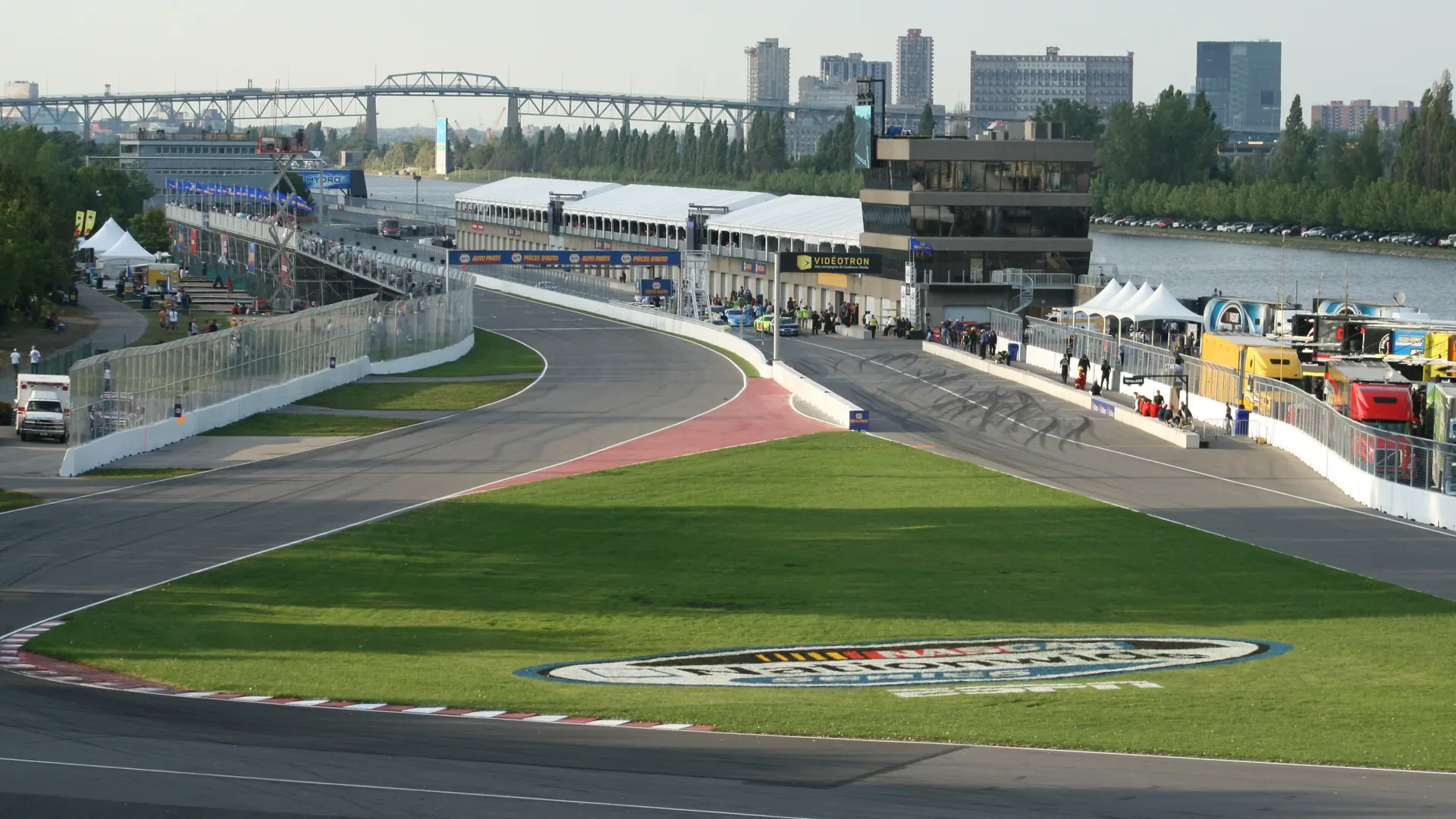
Circuit Gilles Villeneuve is the island racetrack in the middle of the St. Lawrence River, a subway ride from downtown Montreal, and home of the Formula 1 Canadian Grand Prix since 1978. It’s a stop-start lap of long straights, heavy braking and close walls, finished off by a chicane whose exit wall has caught out several world champions. Here’s the name, the history, a lap corner by corner, the records, what races there and how to visit, or ride it yourself on a bike.
Circuit Gilles Villeneuve at a Glance
Length 4.361 km / 2.710 mi current layout, used since 2002
Turns 14 from the Senna S to the Wall of Champions
Opened October 6, 1978 the first Canadian Grand Prix on the island
Location & owner Île Notre-Dame, Montreal owned by the City of Montreal, in Parc Jean-Drapeau
F1 contract Through 2035 promoted by Octane Racing Group
Race lap record 1:13.078 Valtteri Bottas, Mercedes, 2019
Why Is It Called Circuit Gilles Villeneuve?
When it opened in 1978, it was simply the Île Notre-Dame Circuit, named after the man-made island it sits on, built in the river for the Expo 67 world’s fair. That same year, Quebec’s own Gilles Villeneuve won the first Grand Prix held there in a Ferrari. After Villeneuve was killed in qualifying for the 1982 Belgian Grand Prix at Zolder, the track was renamed in his honor.
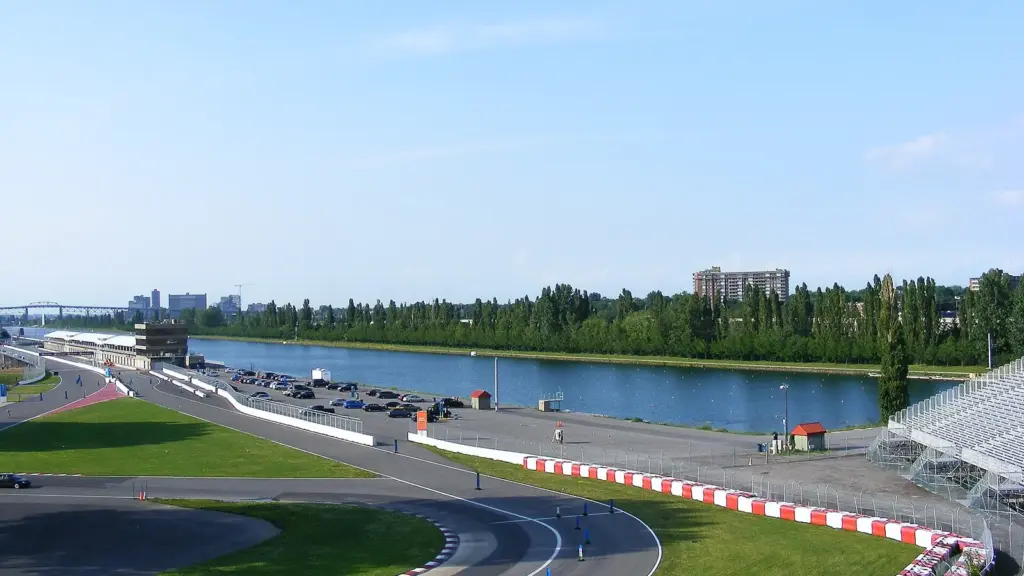
The track sits inside Parc Jean-Drapeau, the park that covers both Expo islands, and it runs right alongside the Olympic Basin, the rowing and canoe course built for the 1976 Montreal Olympics. The City of Montreal owns the circuit, while Octane Racing Group promotes the Grand Prix under an F1 contract that now runs through 2035.
You’ll also hear plenty of nicknames for parts of the lap. The most famous is the Wall of Champions, the wall on the exit of the final chicane, which once carried a “Bienvenue au Québec” (Welcome to Quebec) message.
Circuit Gilles Villeneuve History
The Canadian Grand Prix moved to Montreal from Mosport in 1978, onto a new circuit built on the roads of the old Expo 67 site. It has been part of F1 almost every year since, apart from a handful of gaps, and it has a habit of producing chaotic, unpredictable races. Michael Schumacher and Lewis Hamilton share the record for most wins here, with seven each.
- 1978 The circuit, designed by Roger Peart, opens on Île Notre-Dame. On October 8, Gilles Villeneuve wins the first Canadian Grand Prix held there.
- 1982 The track is renamed after Villeneuve’s death in May. At the June race, Riccardo Paletti is killed at the start when he hits Didier Pironi’s stalled Ferrari.
- 1987 No Grand Prix, after a sponsorship dispute between two breweries. Over these years the pits move to their current spot before the final chicane.
- 1991 Nigel Mansell’s Williams fails on the last lap while he’s leading, handing the win to Nelson Piquet.
- 1995 Jean Alesi wins for Ferrari on his birthday, the only Grand Prix win of his career.
- 1999 Damon Hill, Michael Schumacher, Jacques Villeneuve and Ricardo Zonta all crash into the same wall at the final chicane, and the Wall of Champions gets its name.
- 2002–06 Champ Car races in Montreal. NASCAR’s second-tier series and Grand-Am sports cars follow from 2007 to 2012.
- 2009 The Grand Prix drops off the F1 calendar for a year, then returns in 2010.
- 2011 Jenson Button wins after more than four hours, including a long rain delay: the longest race in F1 history.
- 2018–19 A new paddock and pit building opens, with garages for 13 teams.
- 2020–21 The race is canceled for two years because of COVID-19, returning in 2022.
- 2025 George Russell wins from pole for Mercedes in June. F1 extends its Montreal contract through 2035.
- 2026 The Grand Prix moves to May for the first time and becomes a sprint weekend. Russell wins the sprint, and Kimi Antonelli wins the Grand Prix on May 24.
The Wall of Champions
Every lap ends the same way: flat out down the Casino straight, a hard stop, and a quick flick through the final chicane, with a concrete wall lining the exit. Get it perfect and you carry speed past the pits and set up a good lap. Clip the curb a little too hard or run a few inches wide, and you’re in the wall.
T13–14
Final chicane
A quick flick at the end of the fastest part of the lap, right before the start/finish straight.
1999
Four drivers, one wall
Hill, Schumacher, Villeneuve and Zonta all hit it in the same race; three of them were world champions.
Inches
Margin for error
Drivers take as much curb as they dare on the exit, and the wall is right there waiting.
The wall earned its nickname at the 1999 Grand Prix, when three world champions, Damon Hill, Michael Schumacher and home hero Jacques Villeneuve, plus Ricardo Zonta all crashed into it. It has claimed plenty more big names since, and it’s still the first place everyone looks when a car goes missing on the last lap.
Circuit Gilles Villeneuve Track Guide: A Lap, Corner by Corner
The lap is 4.361 km with 14 turns, and it’s really a series of straights joined by chicanes and one big hairpin. That makes it hard on brakes and rewards cars with good traction and straight-line speed. The track is also a public road for most of the year, so grip is low at the start of the weekend and improves as rubber goes down. About half the lap, from the hairpin to just past the pits, runs alongside the Olympic Basin.
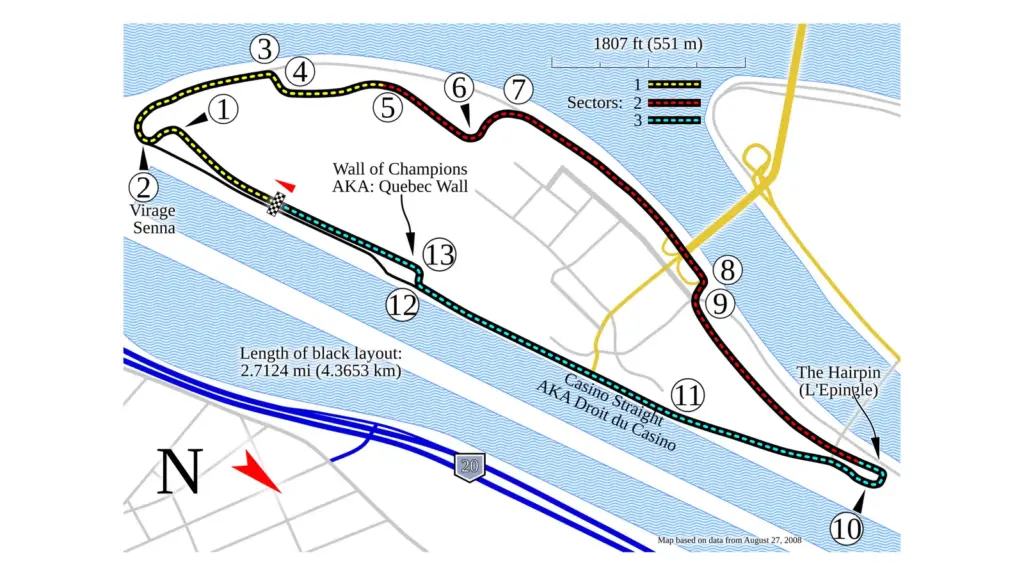
T1–2
Senna S (Virage Senna)
The first corners after the start, named for Ayrton Senna. On lap one the whole field squeezes through here, and contact is common.
T3–4
Turns 3 and 4
A quick chicane that takes you away from the start area and toward the far end of the island.
T5
Turn 5
A fast kink that leads into the next braking zone. Clean exits matter on a track that’s all about traction.
T6–7
Turns 6 and 7
Another chicane, close to the walls, at the far end of the lap from the pits.
T8–9
Pont de la Concorde
A chicane near the Concorde Bridge, followed by a short straight that sets up the run to the hairpin.
T10
L’Épingle (the Hairpin)
The slowest corner on the lap and a prime overtaking spot. Big crowds fill the grandstands here, and it’s where cars brake from high speed down to a crawl.
Casino
Droit du Casino
The long back straight past the Casino de Montréal, the longest flat-out run on the lap. Expect slipstreaming and passing into the final chicane.
T13–14
Final chicane
The Wall of Champions corner. A hard stop, a quick change of direction and a wall on the exit, right before the pits.
Circuit Gilles Villeneuve Lap Records
Only laps set in a race count as official lap records. The current records date from 2019, and the 2026 F1 cars haven’t come close: Russell’s 2026 pole was 1:12.578, and the fastest race lap was Antonelli’s 1:14.210.
1:13.078
F1 race lap record
Valtteri Bottas set it in a Mercedes W10 during the 2019 Canadian Grand Prix.
1:10.240
Fastest lap ever
Sebastian Vettel’s pole lap for Ferrari in 2019. It was set in qualifying, so it isn’t the official record.
1:20.238
CART / Champ Car
Dario Franchitti’s lap from 2002, the first year Champ Car raced in Montreal.
1:23.535
Formula 2
Alex Dunne set the FIA Formula 2 record during the 2026 Grand Prix weekend.
Races and Events at Circuit Gilles Villeneuve
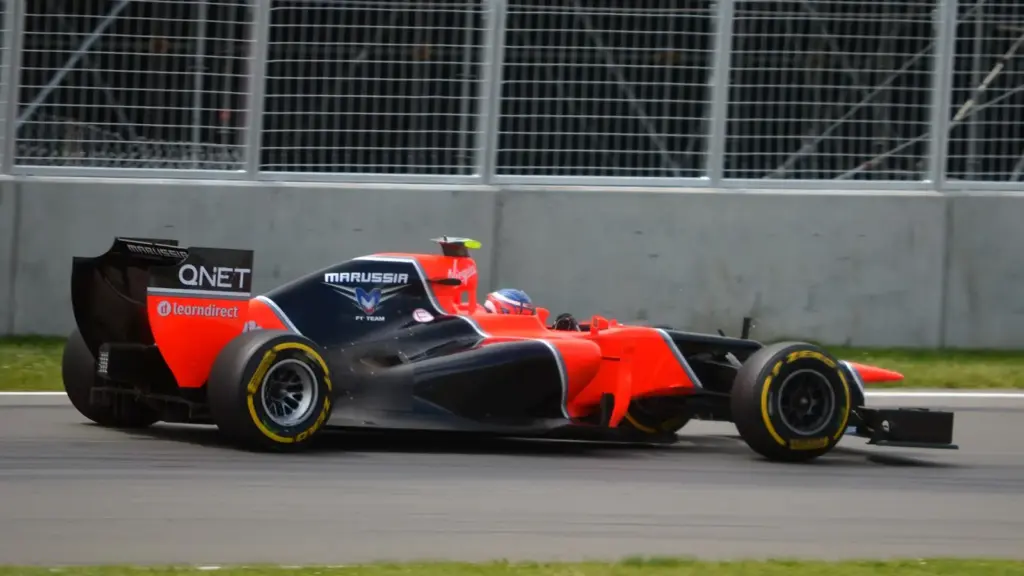
Today the circuit hosts one big race weekend a year: the Formula 1 Canadian Grand Prix and its support races. In the past it has also hosted Champ Car (2002–2006), NASCAR’s second-tier series and Grand-Am sports cars (2007–2012).
May
Formula 1 Canadian Grand Prix
Formula 1 Sprint weekend
The main event. The 2026 race moved to May 22–24 and became a sprint weekend: George Russell won the sprint, and Kimi Antonelli won the Grand Prix ahead of Lewis Hamilton and Max Verstappen. The 2027 race is May 21–23.
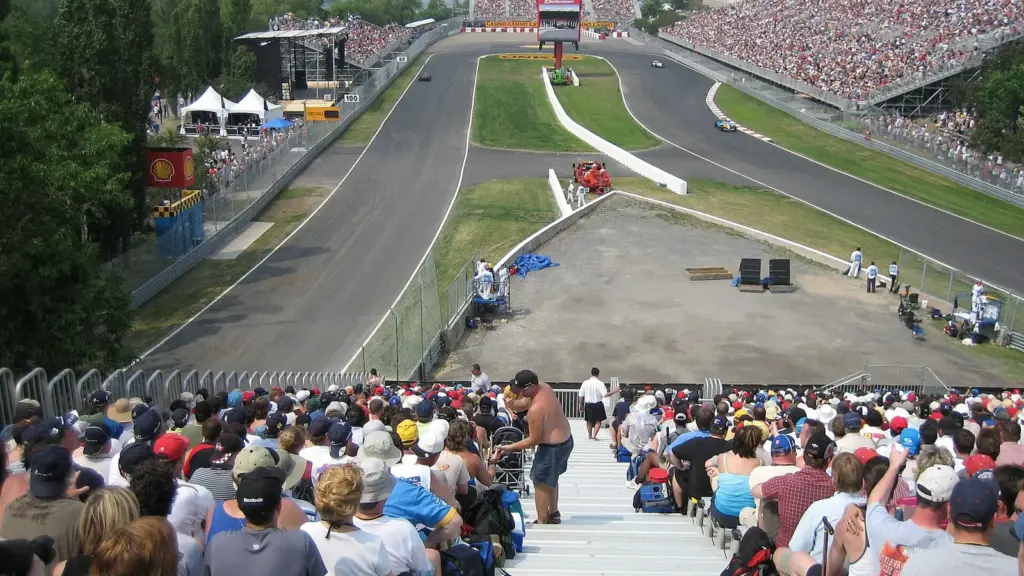
Grand Prix weekend
F2 and F1 Academy
Formula 2 F1 Academy
The support bill gives you plenty to watch beyond F1. In 2026 it included FIA Formula 2 for the first time, plus the F1 Academy series for women drivers. Past years have also featured Ferrari Challenge and Porsche Carrera Cup North America.
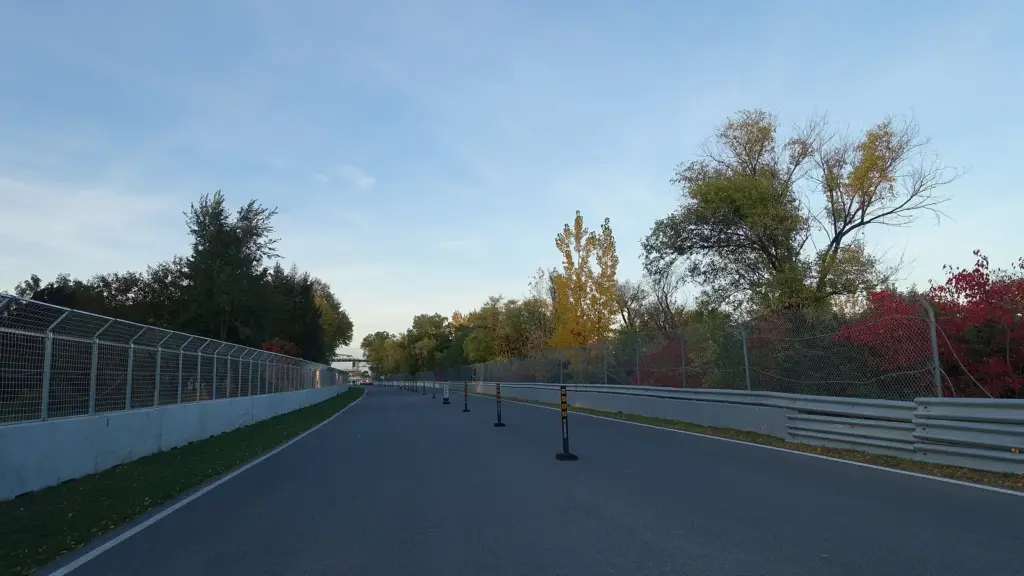
April to November
The island season
Public access Cycling and running
Away from race weekend, the circuit is part of Parc Jean-Drapeau and open to the public, usually from mid-April to mid-November. Cyclists, runners and skaters share it with cars, and it’s one of Montreal’s favorite training loops.
Circuit Gilles Villeneuve Race Calendar: 2026 and 2027
The Grand Prix is the only major race weekend on the island, so the calendar is short. The 2027 date comes from the official F1 calendar released in September 2026; support series are usually confirmed closer to the race.
2026 season
| Dates | Event | Series | Status |
|---|---|---|---|
| May 22–24 | Formula 1 Canadian Grand Prix | Formula 1 (sprint weekend) | Done |
| May 22–24 | Grand Prix support races | Formula 2 and F1 Academy | Done |
| Until Nov 15 | Public access season | Cycling, running and driving on the circuit | Open |
2027 season
Circuit Gilles Villeneuve Weather by Season
Montreal has four very distinct seasons. The figures below are 1991–2020 averages for Montreal–Trudeau airport from Environment and Climate Change Canada. Out on the island, wind off the river can make it feel cooler than downtown.
24–27°C / 75–80°F
Summer · Jun–Aug
Warm and humid, with highs of 24–27°C (75–80°F), lows of 14–17°C (57–62°F) and about 84–94 mm (3.3–3.7 in) of rain a month, often in thunderstorms. The Grand Prix ran in June until 2025.
13–21°C / 55–70°F
Fall · Sep–Nov
Highs drop from about 21°C (70°F) in September to 6°C (43°F) in November, and October is the wettest month at about 103 mm (4.1 in). The public season on the track ends in mid-November.
−5 to −1°C / 23–30°F
Winter · Dec–Feb
Proper Canadian winter: highs below freezing and lows around −13°C (9°F) in January, with plenty of snow. The circuit is closed to the public.
2–19°C / 36–67°F
Spring · Mar–May
A big warm-up, from about 2°C (36°F) in March to 19°C (67°F) in May. Grand Prix weekend now falls in late May, when lows are still around 8°C (47°F), so bring a warm layer.
Visiting Circuit Gilles Villeneuve: Tickets, Metro and Tips
Montreal makes for an easy Grand Prix trip: the track is on an island next to downtown, the whole city gets into it, and you can get there by subway.
Tickets
Tickets are sold through the official Grand Prix site, gpcanada.ca. There are general-admission areas plus numbered grandstands around the lap, including seats at the hairpin, the final chicane and along the pit straight. The hairpin and the final chicane are the classic spots for action, while the pit-straight stands give you the start and the pit stops.
Getting there
Take Metro Line 4 (Yellow) to Jean-Drapeau station, then walk to the main gate. River shuttles also run from Longueuil and the Old Port, and there are Bixi bike-share stations by the metro exit. Don’t plan to drive on race weekend: parking is only available with a pass bought in advance.
Tips
The site is cashless, so bring a card or phone. Wear comfortable shoes, because getting between grandstands on a narrow island means a lot of walking, and pack a rain jacket for late-May showers. The Casino de Montréal sits right beside the hairpin end of the track if you want something to do after the racing.
Can You Drive Circuit Gilles Villeneuve?
Yes, at road speeds. From about April 15 to November 15 the circuit is open to the public, usually from 6 a.m. to 10 p.m. In summer it runs one way, with the left lane for cyclists, runners and in-line skaters and the right lane for cars. It’s a very popular cycling loop, so if you drive it, take it slow and watch for riders. There’s no public track-day program for racing speeds.
For a lap at full speed, head to a screen. Montreal is in the official F1 games and in iRacing, and community-made versions exist for Assetto Corsa. A few sim laps are a good way to learn just how little room there is on the exit of the final chicane.
Talk Montreal With Other Enthusiasts
Heading to the Canadian Grand Prix, picking a grandstand or planning a ride around the island? Share what you know, ask questions and find people going the same weekend in the AutoGathering community.
- Canadian Grand Prix trips
- Best grandstands
- Getting there by metro
- Cycling the circuit
- Wall of Champions moments
- Montreal travel tips
- Sim racing lap times
- F1 Academy and support races
Circuit Gilles Villeneuve FAQ
How long is Circuit Gilles Villeneuve?
The circuit is 4.361 km (2.710 miles) long with 14 turns, on Île Notre-Dame in Montreal.
When is the 2027 Canadian Grand Prix?
May 21–23, 2027, as round 7 of the F1 season. It’s a sprint weekend again.
Who won the 2026 Canadian Grand Prix?
Kimi Antonelli won for Mercedes on May 24, 2026, ahead of Lewis Hamilton and Max Verstappen. George Russell won the sprint.
What is the Wall of Champions?
The wall on the exit of the final chicane. It got its name in 1999, when Damon Hill, Michael Schumacher, Jacques Villeneuve and Ricardo Zonta all crashed into it.
What is the lap record at Circuit Gilles Villeneuve?
The race lap record is 1:13.078, set by Valtteri Bottas in 2019. The fastest lap ever is Sebastian Vettel’s 1:10.240 pole lap the same year.
How do you get to the Canadian Grand Prix?
Take Metro Line 4 (Yellow) to Jean-Drapeau station. River shuttles and bike-share are other options, and parking is only available with a pass bought in advance.
Can you drive or bike on Circuit Gilles Villeneuve?
Yes. From about mid-April to mid-November it’s open to the public, with lanes for cyclists, runners and cars.
Why is it named after Gilles Villeneuve?
Villeneuve won the first Grand Prix held there in 1978. The circuit was renamed in his honor after he was killed in 1982.
Explore More Racing Circuits
Circuit Gilles Villeneuve is one of 40 circuits in our North American racing directory. If you’re in Quebec, Circuit Mont-Tremblant is a scenic permanent track about two hours north of Montreal, and Circuit Trois-Rivières hosts street racing along the river.
Photo credits
- Header image: Tsunami330, CC BY-SA 3.0, cropped and resized.
- Map of Circuit Gilles Villeneuve on Île…: Will Pittenger, CC BY-SA 3.0, cropped and resized.
- Circuit Gilles Villeneuve running alongside the Olympic…: abdallahh, CC BY 2.0, cropped and resized.
- A Marussia Formula 1 car turning into…: Nic Redhead from Birmingham, UK, CC BY-SA 2.0, cropped and resized.
- Fans in the grandstand above the hairpin…: magicfab, CC BY 2.0, cropped and resized.
- The circuit open as a public road…: Guilhem Vellut from Annecy, France, CC BY 2.0, cropped and resized.