
Tsukuba Circuit
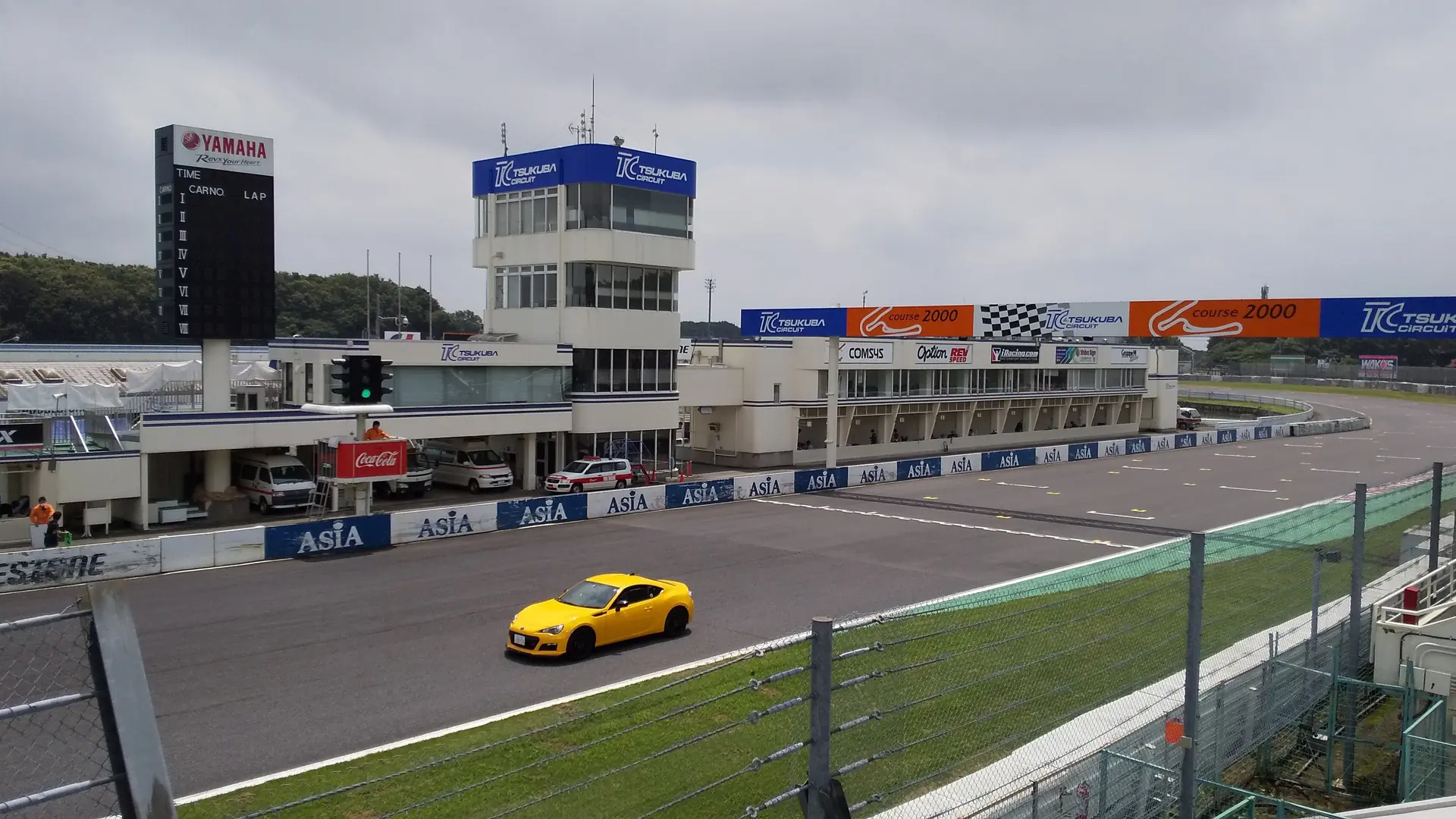
Tsukuba Circuit is the short, flat track in the farmland north of Tokyo that Japanese car culture uses as its stopwatch. For decades, magazines, video series and tuning shops have proved what a car can do with a “Tsukuba time” around its 2 km Course 2000. Here’s everything you’ll want to know before you watch a race, book a session or lap it in Gran Turismo: the name, the history, a corner-by-corner lap, the lap records, what races there and how to visit.
Tsukuba Circuit at a Glance
Length 2.045 km / 1.271 mi Course 2000 car layout; 2.070 km / 1.286 mi with the motorcycle chicane
Turns 12 for cars, run clockwise; bikes use a chicane after the Dunlop corner
Longest straight 437 m / 1,434 ft the back straight, where top speeds are measured
Opened June 22, 1970 the first permanent circuit in the Kanto region around Tokyo
Location & owner Shimotsuma, Ibaraki run by the Japan Auto Sports Center (JASC), about 60 km (37 mi) north of central Tokyo
Fastest lap 43.304 Kamui Kobayashi, Super Formula car, 2016 (not in a race)
Tsukuba Circuit, TC2000 and Course 1000
In Japanese it’s 筑波サーキット (Tsukuba Circuit), and the name confuses a lot of first-time visitors because the track isn’t in the city of Tsukuba. It sits in Shimotsuma, in what was Chiyokawa village when the circuit opened. There are several theories about the name, but the one usually given is simple: Mount Tsukuba is the symbol of the area, and the name was easy for the public to remember.
You’ll also see two course names. The main 2.045 km track is Course 2000, often written TC2000, and the much shorter Course 1000 (TC1000) next to it is the circuit’s beginner-friendly track. The main course got its “2000” name around 2000–2001, when Course 1000 opened on the site of an old minibike track.
The circuit is run by the Japan Auto Sports Center (JASC), founded in 1966 and now a general incorporated foundation. It’s a working circuit more than a stadium: most days it’s busy with license holders, motorcycle sessions, karts and club racing rather than big professional events.
Tsukuba Circuit History
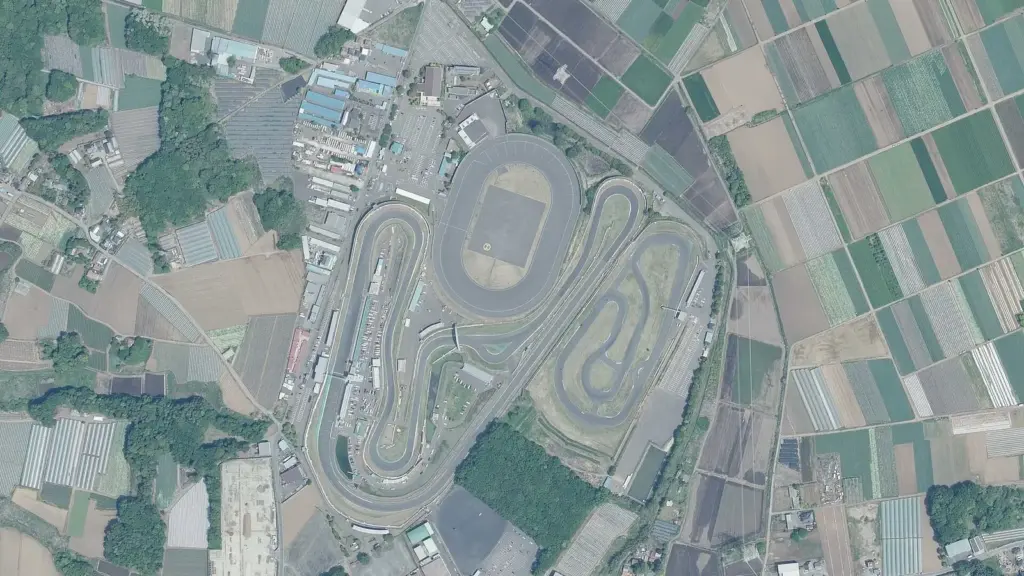
Tsukuba was built to give drivers and riders around Tokyo a track of their own, and it has stayed true to that. It hosted national championships such as touring cars and Formula 3 for years, but its real legacy is grassroots: club racing, motorcycle racing, endurance races for amateurs and the car-magazine tests that turned a 2 km lap into a national benchmark.
- 1968 Construction starts on farmland in Chiyokawa village, now part of Shimotsuma.
- 1970 The circuit opens on June 22 with demonstration races for cars and motorcycles, becoming Japan’s third permanent circuit after Suzuka and Fuji and the first in the Kanto region.
- 1971 The Tokyo Production Race series begins, the start of decades of grassroots racing here.
- 1985 A night endurance race begins, one of the roots of Japan’s production-car endurance racing. The Japanese Touring Car Championship visits from 1985 to 1994.
- 1989 A major renovation brings a new control tower and stands, and the Media Roadster endurance race for journalists in Mazda MX-5s begins.
- 1990 A chicane for motorcycles is added after the Dunlop corner, and Formula Toyota starts racing here.
- 1994 All-Japan Formula 3 becomes a regular visitor until 2004.
- 2001 Course 1000 opens, and the main track becomes Course 2000.
- 2016 Kamui Kobayashi laps a Super Formula car in 43.304 seconds, the fastest lap the circuit has ever seen.
- 2019 The FIA Intercontinental Drifting Cup is held at Tsukuba.
- 2023 The Media Roadster race runs its last 4-hour edition here before moving to Fuji. In January, “Fire” Ando becomes the first to break 50 seconds on street-legal semi-slick tires.
- 2026 Attack Tsukuba draws 172 cars in February, and the All Japan Road Race Championship runs a one-day round on June 21.
The Tsukuba Lap Time
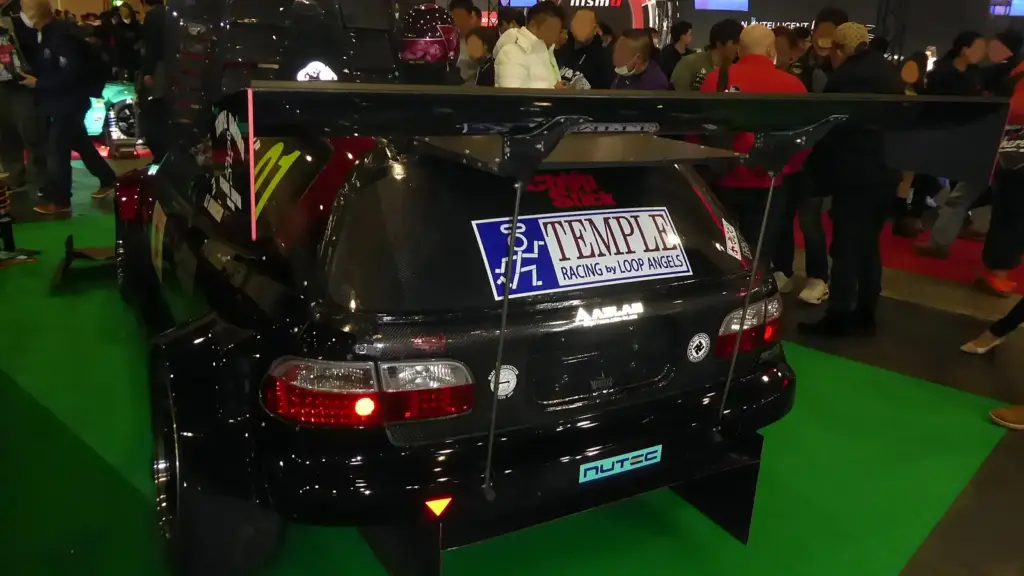
Most famous circuits are known for a corner. Tsukuba is known for a number. Because it’s close to Tokyo, short, flat and cheap to rent, it became the main test track for Japanese car media such as Best Motoring and Video Option, which ran its own Tsukuba Super Lap. If a tuning shop wanted to prove its car was fast, it brought it here, and fans learned to compare everything from hot hatches to heavily tuned Skylines by their Tsukuba time.
49.445
Time attack on slicks
The HKS TRB-03, a heavily modified Toyota 86, set this lap in March 2018 on racing slicks.
49.897
Street-tire barrier
“Fire” Ando and the Escort Racing Mitsubishi Lancer Evolution IX became the first to break 50 seconds on semi-slick street tires in January 2023.
59.3
Production car
A 2020 Nissan GT-R NISMO driven by Tsugio Matsuda in December 2019, in a test run by Nissan.
That tradition lives on in time attack, a format that grew out of those Japanese tuning-media events. Each February, Attack Tsukuba brings out purpose-built cars chasing tenths in the cold winter air, and lap times are argued about online for months afterward. Keep in mind that the tires matter: records on full racing slicks and records on street-legal semi-slicks are usually treated as different categories.
Tsukuba Circuit Track Guide: A Lap, Corner by Corner
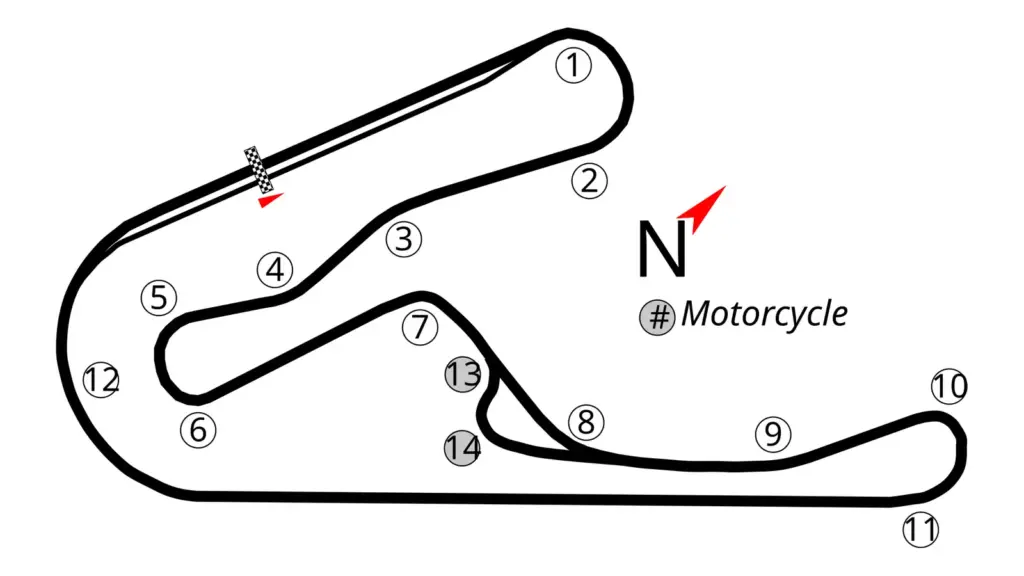
Course 2000 runs clockwise and fits a lot into 2 km: two hairpins, a set of S-curves, one fast sweeper and two straights. It’s mostly flat, so the lap is about braking points, traction out of slow corners and nerve in the final corner. Here’s a lap in a car, with the corner names you’ll hear in Japanese videos.
Start
Home straight
A 282 m (925 ft) run past the pits and control tower. The track rises at the end of the straight, the biggest elevation change on a mostly flat lap.
T1–2
1st corner
A long right that tightens from a 55 m radius to 35 m as it heads downhill. Brake hard, be patient and let the corner come to you.
T3–4
S-curves
A quick left-right that links the first corner to the infield. Get the line right and you carry speed into the hairpin; get it wrong and you’re fighting the car through both.
T5–6
1st hairpin
A slow hairpin with the steepest banking on the circuit. Slow in, then get on the power early for the run to the Dunlop corner.
T7
Dunlop corner
A roughly 90-degree right under the Dunlop arch. Motorcycles turn into their chicane just after it; cars carry on through the fast left.
T8–9
80R and the fast left
An 80R left that opens into a 170R curve, the quick sweep cars use instead of the bike chicane. It takes commitment and sets up the second hairpin.
T10–11
2nd hairpin
The most important corner on the lap. It feeds the 437 m back straight, so a clean exit here is worth time all the way to the final corner. It’s also the best place to pass.
Straight
Back straight
The longest straight at Tsukuba and where top speeds are measured. Use it to breathe, because the last corner is the fast one.
T12
Final corner
A long, high-speed right of about 90–100 m radius, the only truly fast corner on the circuit. Brake in a straight line, trust the grip and run out wide onto the home straight.
Tsukuba Circuit Lap Records
Many of Tsukuba’s famous times weren’t set in races at all. Here are the ones people ask about, from a Super Formula car to a road car, so you can see how they compare on the same 2.045 km. For time attack records, see the Tsukuba time section above.
43.304
Fastest lap ever
Kamui Kobayashi in a Super Formula SF14 in December 2016, during a special demonstration event rather than a race.
52.149
Race lap record (F3)
Fábio Carbone in a Dallara F304 in 2004, the final season of All-Japan F3 at Tsukuba, as listed in the circuit’s race records.
58.726
Touring car record
Kazuyoshi Hoshino in a Nissan Skyline GT-R (BNR32) in the Japanese Touring Car Championship in 1992.
59.3
Production car
Tsugio Matsuda in a 2020 Nissan GT-R NISMO in 2019, beating the roughly 1:00.07 of the Porsche 911 GT3 RS (997).
Races and Events at Tsukuba Circuit
Tsukuba doesn’t host top national series such as Super Formula or Super GT; those run at bigger tracks such as Fuji and Motegi. What you get instead is a packed calendar of time attack, national motorcycle racing and club events, plus license sessions almost every day. Here’s what usually runs, with 2026 results and 2027 dates where they’ve been announced.
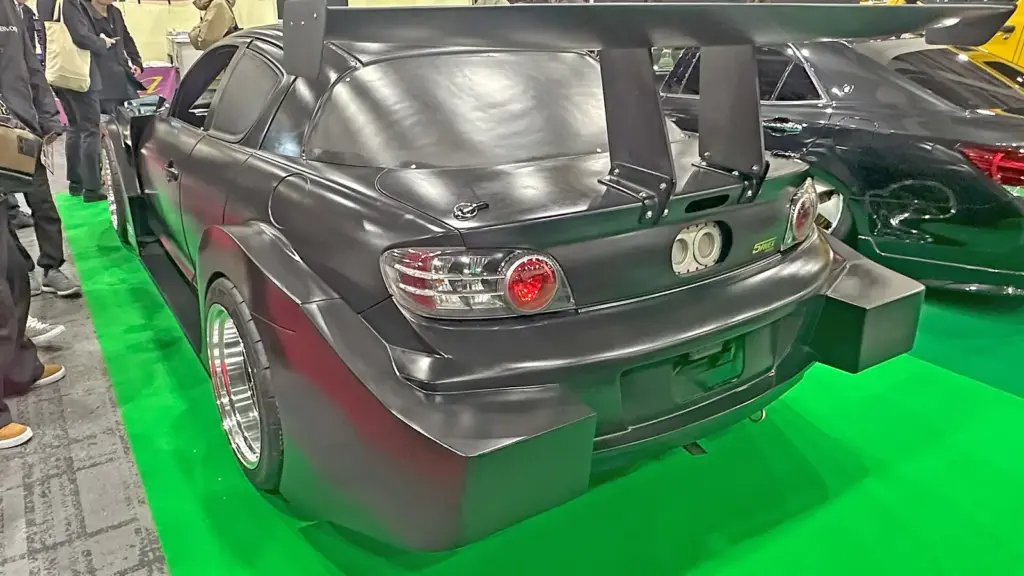
February
Attack Tsukuba
Time attack Tuner cars
Japan’s best-known time attack event, held each February when the air is cold. The 2026 edition on February 14 drew 172 cars, and Kunihiko Bando set the fastest time of the day, 52.568. Attack Tsukuba 2027 is set for February 13.
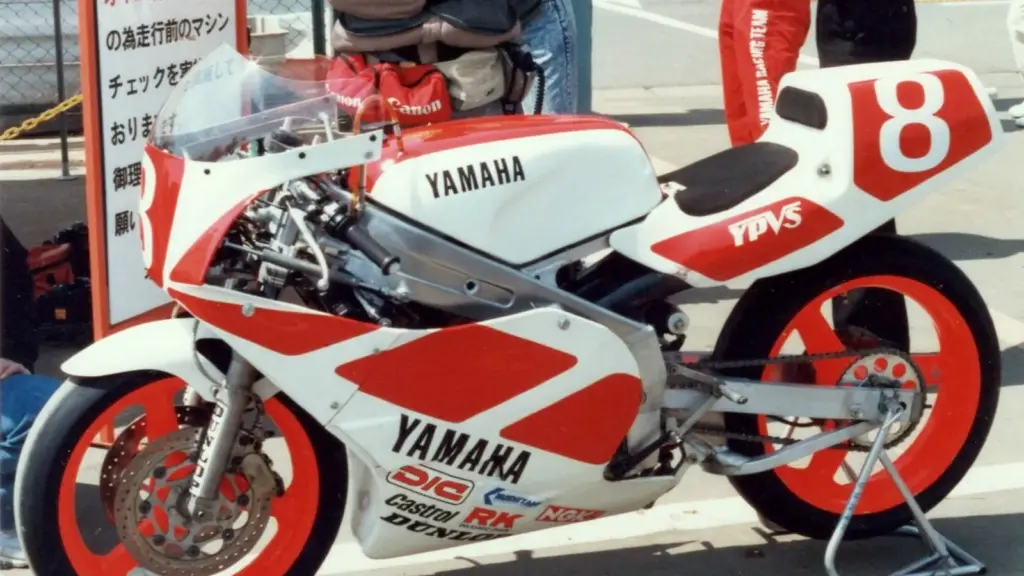
June
All Japan Road Race Championship
All Japan Road Race J-GP3 JP-SPORT
Japan’s national motorcycle championship runs a one-day round here for its smaller classes. On June 21, 2026, Hiroki Ono won J-GP3 and Kazuhide Ichihara won JP-SPORT, with former World Superbike star Noriyuki Haga second as a guest. The 2027 round is provisionally set for June 20.
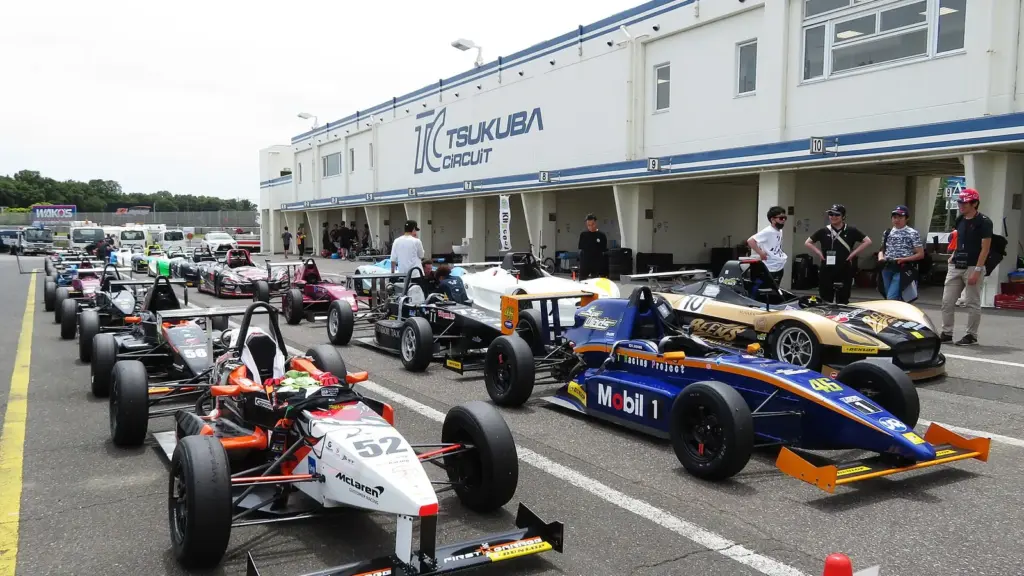
All year
Club and regional racing
Super FJ Club racing
Most weekends belong to grassroots racing: JAF regional Super FJ single-seaters, the circuit’s own car and motorcycle series and amateur endurance races. It’s where many Japanese drivers and riders start out, and the paddock is easy to wander.
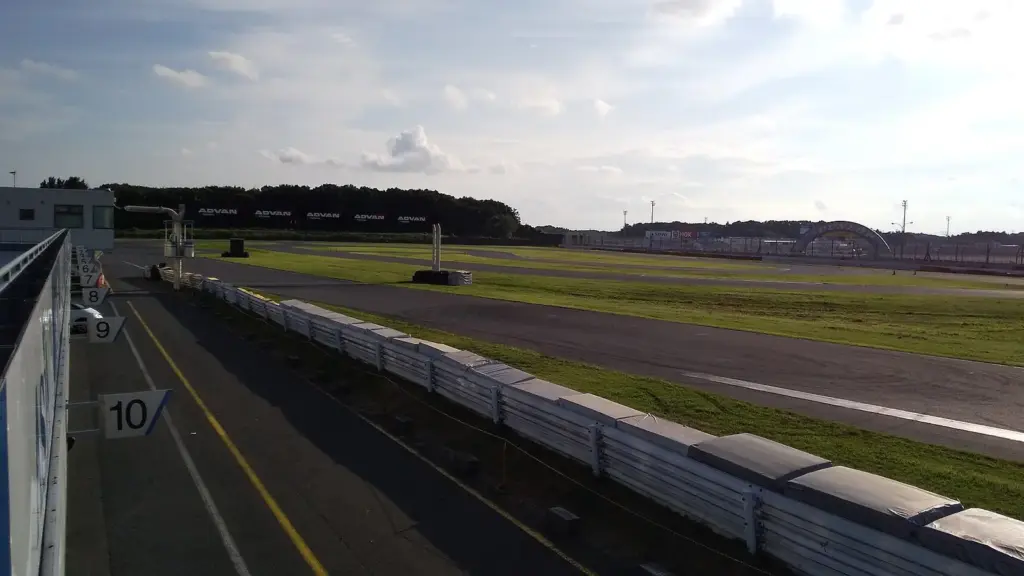
All year
Course 1000, karts and mini-bikes
Track days Karting Mini-bikes
The short Course 1000 hosts beginner sessions for cars and bikes, karts and mini-bike racing, and spectators watch from the pit roof. The circuit also hosts mini-bike events such as the HRC Dunlop Cup endurance race, held on September 22, 2026.
Tsukuba Circuit Race Calendar: 2026 and 2027
Here are the headline public events at Tsukuba. The circuit’s own car and motorcycle series, JAF regional races and license sessions fill most other days, and their dates are posted on the official Japanese-language calendar. Dates marked TBA haven’t been announced yet.
2026 season
| Dates | Event | Series | Status |
|---|---|---|---|
| Feb 14 | Attack Tsukuba 2026 | Time attack | Done |
| Jun 21 | All Japan Road Race Championship, Round 4 | J-GP3 and JP-SPORT motorcycles | Done |
| Jun 21 | Ninja Team Green Cup | Kawasaki one-make motorcycle racing | Done |
| Sep 22 | HRC mini-bike endurance (Dunlop Cup) | Mini-bike endurance | Done |
2027 season
| Dates | Event | Series | Status |
|---|---|---|---|
| Feb 13 | Attack Tsukuba 2027 | Time attack | Upcoming |
| Jun 20 | All Japan Road Race Championship, Round 3 | J-GP3 and JP-SPORT motorcycles, provisional | Upcoming |
| TBA | Circuit car and motorcycle series rounds | Club and regional racing | Date TBA |
Tsukuba Circuit Weather by Season
Tsukuba has four clear seasons: cold, dry winters, a humid summer and a wet late summer and fall. The numbers below are 1991–2020 averages from the Japan Meteorological Agency station in the city of Tsukuba (Tateno), the nearest one to the circuit, which gets about 1,326 mm (52 in) of rain a year.
14–23°C
Spring · Mar–May
Daily highs of 14–23°C (56–73°F) and lows of 2–12°C (36–54°F), with 95–130 mm (3.8–5.1 in) of rain a month. March mornings can still be near freezing, so bring layers.
25–31°C
Summer · Jun–Aug
Daily highs of 25–31°C (77–87°F) and lows of 17–22°C (63–72°F), with 118–135 mm (4.6–5.3 in) of rain a month. It’s hot and humid, and June and July bring the rainy season. Bring water, sunscreen and a hat for the June road race.
16–27°C
Fall · Sep–Nov
Daily highs fall from 27°C (80°F) in September to 16°C (61°F) in November, with lows of 5–19°C (41–65°F). September and October are the wettest months at about 190 mm (7.5 in), thanks to typhoons; November is drier and pleasant.
9–12°C
Winter · Dec–Feb
Daily highs of 9–12°C (49–53°F) and lows of −3 to −1°C (27–31°F), with only about 50 mm (2 in) of rain a month. It’s cold, dry and clear, which is exactly why Attack Tsukuba runs in February: cold, dense air helps engines make more power.
Visiting Tsukuba Circuit: Getting There, Tickets and Tips
Tsukuba is an easy day trip from Tokyo if you have a car, and a bit of an adventure if you don’t. Most information, including the event calendar, is on the official Japanese-language website, so a translation app helps.
Getting there
- By car. The circuit is about 60 km (37 miles) north of central Tokyo. Bando IC on the Ken-O Expressway is about 9 km (6 miles) away, and Yawara IC on the Joban Expressway is about 25 km (16 miles), roughly 30 minutes. Parking is free.
- By train. Take the Kanto Railway Joso Line to Sōdō station, then a 15- to 20-minute taxi ride. Ishige and Shimotsuma stations also work, and on major race days there’s a free shuttle from Ishige.
- The address. 159 Muraoka-otsu, Shimotsuma, Ibaraki 304-0824 (茨城県下妻市村岡乙159).
Tickets and where to watch
On ordinary days it’s cheap to watch: entry is free on weekdays and ¥500 on weekends and holidays when there’s no race event. Race-day prices are set by each event. The circuit has stands at several key spots:
- Main stand. About 444 seats over the home straight, the pits and the start.
- 1st hairpin stand. About 306 seats looking at the slowest corner and the braking zone before it.
- Dunlop stand. About 300 seats by the Dunlop arch, where bikes dive into their chicane.
- Final corner stand. About 400 seats at the one fast corner, a great spot for time attack.
Tips
Bring cash for food and entry, and try the Drivers’ Salon restaurant, known for its motsu-ni (simmered offal) set meal. Summer is hot and humid, and fall can bring heavy typhoon rain, so check the forecast. If you’re going for Attack Tsukuba in February, dress for the cold.
Can You Drive Tsukuba Circuit?
Yes, but it works differently from a typical track day. To drive your own car or ride your own bike in the circuit’s sessions, you join its license system. A Family license covers the family sessions on Course 2000 plus Course 1000, while the Tsukuba license adds the faster sport sessions. Car and motorcycle licenses are separate. Getting started costs ¥15,300 (entry fee, insurance, admin and the card) plus a prorated annual fee, and then you pay for each session you run.
Course 1000 is where beginners start: it’s short, slow and safe, and it’s also used for karts and mini-bikes. Karts can also run on Course 2000 if you hold a JAF or SL kart license and are 15 or older, with rental karts available through the on-site kart service. The license system and most paperwork are in Japanese, so overseas visitors should go through a Japanese-speaking friend, club or track-day organizer.
On a screen, Tsukuba is one of the most familiar tracks in racing games. It’s in Gran Turismo 7 and has appeared in several earlier Gran Turismo titles, it was in the early Forza Motorsport games, and iRacing includes both Course 2000 and Course 1000 with its membership. It’s a good place to learn, because the short lap makes it easy to compare times.
Talk Tsukuba With Other Enthusiasts
Chasing a Tsukuba time in a sim, planning a trip to Attack Tsukuba or trying to get a license as a visitor? Share what you’ve learned, ask questions and compare lap times in the AutoGathering community.
- Tsukuba lap times
- Attack Tsukuba results
- Time attack builds
- Getting a Tsukuba license
- Visiting from Tokyo
- Motorcycle sessions
- Gran Turismo and iRacing hotlaps
- Japanese car culture
Tsukuba Circuit FAQ
How long is Tsukuba Circuit?
Course 2000 is 2.045 km (1.271 miles) long for cars, with 12 turns. Motorcycles use a chicane that makes it 2.070 km (1.286 miles). The separate Course 1000 is about 1 km long.
Why are Tsukuba lap times so famous?
Tsukuba is close to Tokyo, short and affordable, so Japanese car magazines and video series such as Best Motoring and Video Option used it as their test track for decades. A “Tsukuba time” became the standard way to compare cars and tuned builds.
What is the fastest lap at Tsukuba?
The fastest lap ever is 43.304 seconds, set by Kamui Kobayashi in a Super Formula car in 2016 during a special event. In time attack, the HKS TRB-03 ran 49.445 on slicks in 2018.
What is the fastest production car at Tsukuba?
A 2020 Nissan GT-R NISMO lapped in 59.3 seconds in 2019 with Tsugio Matsuda driving, in a test run by Nissan.
Is Tsukuba Circuit in Tsukuba city?
No. It’s in Shimotsuma, Ibaraki, in what used to be Chiyokawa village. The name refers to nearby Mount Tsukuba, the symbol of the area.
When is Attack Tsukuba?
Attack Tsukuba is held every February. The 2026 event ran on February 14, and the 2027 event is set for February 13.
How do I get to Tsukuba Circuit from Tokyo?
Driving is easiest: it’s about 60 km north of central Tokyo, near the Ken-O and Joban expressways. By train, take the Kanto Railway Joso Line to Sōdō station and then a taxi.
Can you drive your own car at Tsukuba Circuit?
Yes, through the circuit’s license system. A Family or Tsukuba license costs ¥15,300 to start plus an annual fee, and then you pay per session. Beginners usually start on Course 1000.
Explore More Racing Circuits
Tsukuba is one of 28 tracks in our Asian racing circuit directory. If you’re touring the tracks north of Tokyo, Mobility Resort Motegi, home of Super GT and MotoGP in Japan, is in neighboring Tochigi.
Photo credits
- Header image: なおっつ, CC BY-SA 4.0, cropped and resized.
- Aerial photo of Tsukuba Circuit surrounded by…: 国土交通省 (MLIT), Attribution, cropped and resized.
- A Honda Civic built for Tsukuba time…: Tokumeigakarinoaoshima, CC BY-SA 4.0, cropped and resized.
- Track map of Tsukuba Circuit Course 2000…: Ronny Astrada (Indonesia), CC BY-SA 3.0, cropped and resized.
- A Yamaha TZ250 road racing motorcycle on…: Sasa21, CC BY-SA 4.0, cropped and resized.
- Super FJ single-seaters lined up in the…: カップメーン, CC0, cropped and resized.
- The short Course 1000 at Tsukuba Circuit,…: なおっつ, CC BY-SA 4.0, cropped and resized.
- A Mazda RX-8 built for Tsukuba time…: Tokumeigakarinoaoshima, CC0, cropped and resized.