
Circuit de la Sarthe
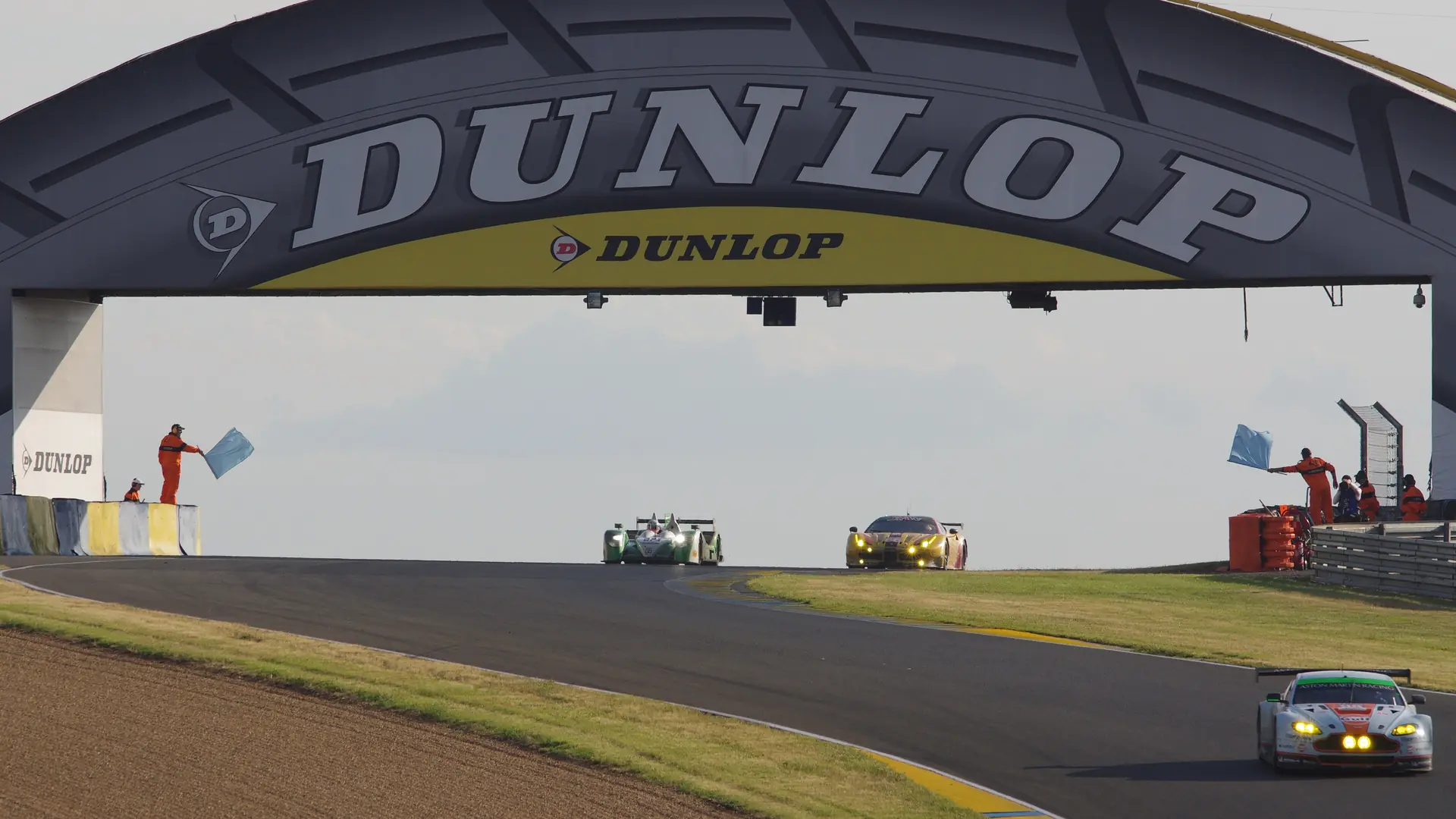
The Circuit de la Sarthe is the 13.6 km mix of closed public roads and permanent track on the edge of Le Mans that has hosted the 24 Hours of Le Mans since 1923. Next door, the shorter Bugatti Circuit hosts the French MotoGP Grand Prix. Here’s the name, the history, the Mulsanne Straight, a lap section by section, the records, what races there and how to visit.
Circuit de la Sarthe at a Glance
Length 13.626 km / 8.467 mi 24 Hours layout, used since 2018
Turns 38 run clockwise, much of it on public roads
Bugatti Circuit 4.185 km / 2.600 mi permanent track with 14 turns
First race May 26, 1923 the first 24 Hours of Le Mans
Location & owner Le Mans, Sarthe run by the Automobile Club de l’Ouest (ACO)
Race lap record 3:17.297 Mike Conway, Toyota, 2019
Circuit de la Sarthe, Le Mans or the Bugatti Circuit?
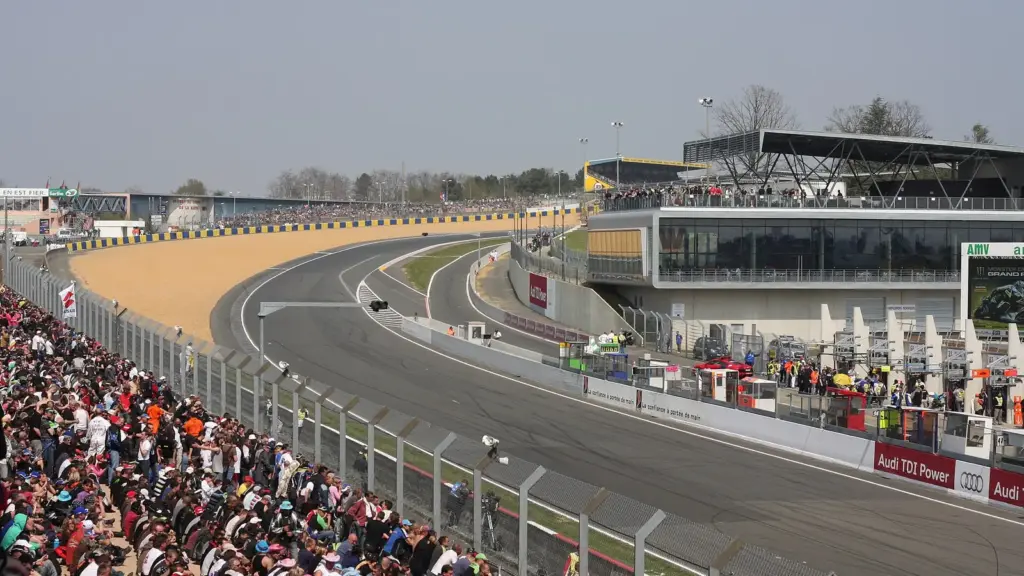
They’re all at the same place, but they aren’t the same track. The Circuit de la Sarthe is the long 24 Hours layout, named after the Sarthe department in western France where Le Mans sits. Most people simply call it Le Mans, or La Sarthe. The Bugatti Circuit, named after Ettore Bugatti, is the permanent 4.185 km track that shares the pit straight and the first corners, and it’s used for motorcycle racing and most other events during the year.
Many of the section names are famous on their own: the Dunlop Bridge, Tertre Rouge, the Hunaudières (better known in English as the Mulsanne Straight), Mulsanne Corner, Indianapolis, Arnage, the Porsche Curves and the Ford Chicanes. Several of them are named after the villages and roads the circuit runs through, and a few after the brands that sponsored or shaped them.
The track is run by the Automobile Club de l’Ouest (ACO), the club that created the 24 Hours and still organizes it.
Circuit de la Sarthe History
Le Mans has been a racing town since the very first Grand Prix in 1906, and the 24 Hours of Le Mans has run here since 1923. The course has changed many times, mostly for safety, but the basic idea hasn’t: close a loop of public roads south of the city, add a permanent section by the pits, and race around the clock.
- 1906 The ACF Grand Prix, the first race ever called a Grand Prix, runs on a huge road course east of Le Mans, and Ferenc Szisz wins for Renault.
- 1923 The first 24 Hours of Le Mans runs on May 26–27 on a course of public roads south of the city.
- 1955 The worst accident in motorsport history: Pierre Levegh’s Mercedes crashes into the crowd opposite the pits, killing him and more than 80 spectators. The pit area is rebuilt and widened the next year.
- 1965–66 The permanent Bugatti Circuit is completed and officially opened.
- 1966–69 Ford wins four in a row, starting with the famous 1966 one-two-three over Ferrari. 1969 is the last traditional Le Mans start, where drivers ran across the track to their cars; Jacky Ickx walks in protest and still wins.
- 1971–72 Armco finally separates the pits from the track, and the Porsche Curves bypass the old Maison Blanche section.
- 1988 Roger Dorchy’s Peugeot-powered WM P88 is timed at 405 km/h (252 mph) on the Mulsanne Straight, the fastest speed ever recorded at the race.
- 1990 Two chicanes are added to the Mulsanne Straight, after the FIA stops approving straights longer than 2 km.
- 2000–14 Audi wins 13 times in 15 years, bringing diesel and then hybrid power to the top step.
- 2018 Toyota finally wins Le Mans, the first of five straight victories.
- 2023–25 Ferrari wins the centenary race in 2023 and repeats in 2024 and 2025.
- 2026 Jorge Martín wins the French MotoGP Grand Prix on May 10 in an all-Aprilia podium. On June 13–14, the No. 7 Toyota of Mike Conway, Kamui Kobayashi and Nyck de Vries wins the 24 Hours, Toyota’s sixth win, in front of 350,105 fans. In June the new M24 museum opens at the circuit.
The Mulsanne Straight: Les Hunaudières
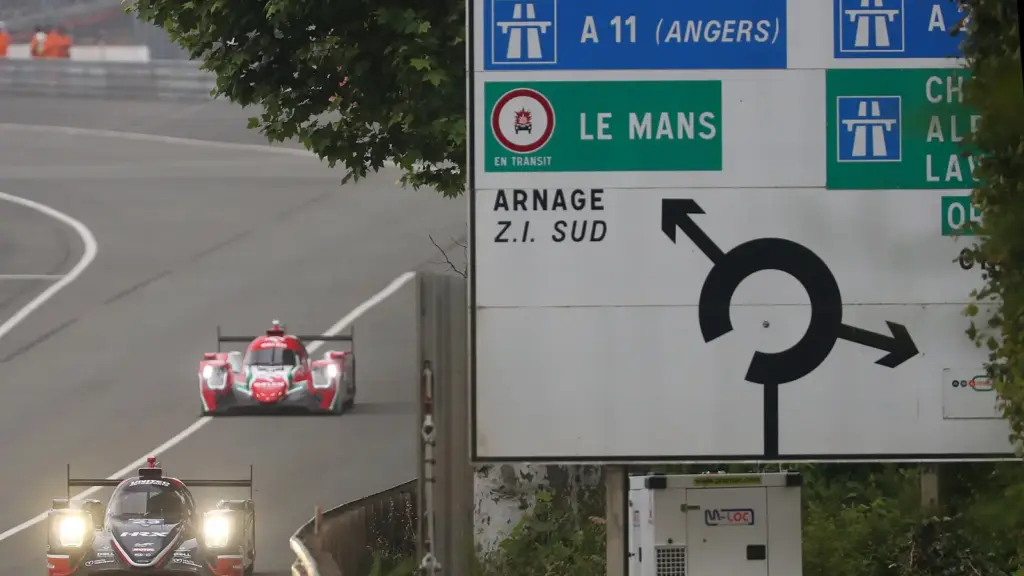
The Mulsanne Straight is a normal French departmental road, the RD338, for most of the year. During race week it’s closed and becomes the fastest part of the lap, running from Tertre Rouge almost to the village of Mulsanne. The French call it the Ligne Droite des Hunaudières, after the area it runs through.
~6 km
Before 1990
The Hunaudières ran about 6 km without a break, the longest straight in top-level racing.
405 km/h
The record
Roger Dorchy’s WM P88 was timed at 252 mph in 1988, a speed no Le Mans car has matched since.
351.8 km/h
In 2026
Earl Bamber’s Cadillac set the top speed of the 2026 race, about 219 mph, even with the two chicanes.
Two chicanes have broken it into three parts since 1990, but it’s still where Le Mans cars hit their highest speeds, and drivers spend a big chunk of every lap flat out here. The real-world setting is what makes it special: trees, roadside restaurants and road signs flash past just as they would on a drive through the countryside.
Le Mans Track Guide: A Lap, Section by Section
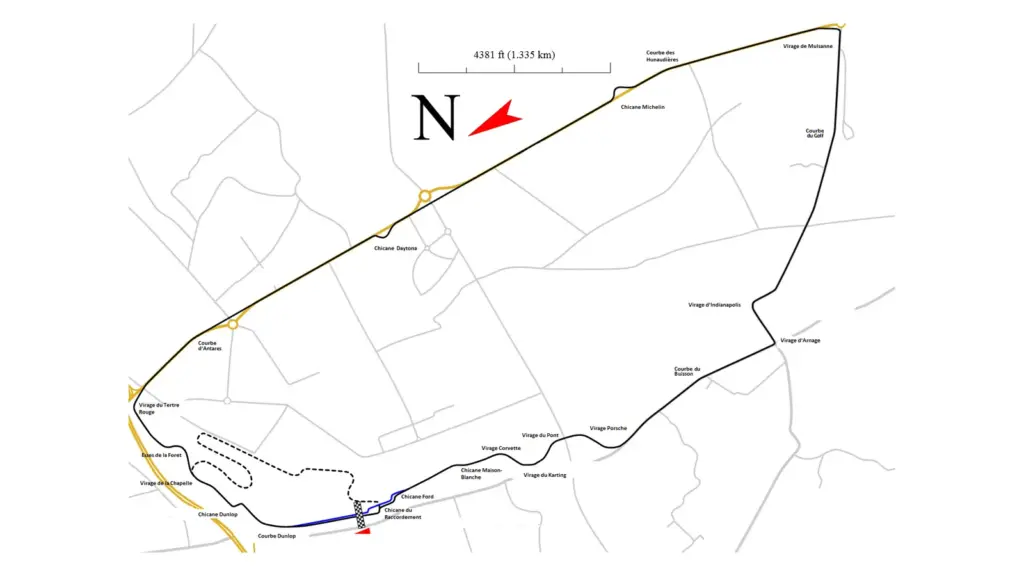
At 13.626 km and 38 turns, the Circuit de la Sarthe is too long to take corner by corner, so here it is section by section. The lap runs clockwise, starting on the permanent section by the pits, heading out onto the closed public roads, and returning through the Porsche Curves.
S1
Pit straight and Dunlop Curve
The lap starts on the permanent section shared with the Bugatti Circuit. A fast right-hander sweeps you uphill toward the Dunlop Chicane.
S2
Dunlop Chicane and Bridge
A tight chicane before you crest the hill and pass under the Dunlop Bridge, one of the most photographed spots in racing.
S3
The Esses
A downhill left-right through the trees. The rhythm here sets up your exit onto the public roads.
S4
Tertre Rouge
A fast right onto the Hunaudières. Your exit speed here is carried all the way down the straight, so it’s one of the most important corners on the lap.
S5
Mulsanne Straight and chicanes
Long flat-out runs broken by two chicanes. Heavy braking, quick changes of direction and then back to full throttle.
S6
Mulsanne Corner
A slow right at the end of the straight, at the village of Mulsanne. A classic place to see cars brake from top speed.
S7
Indianapolis
A very fast run through the woods leads to a fast right kink and then the banked left-hander called Indianapolis.
S8
Arnage
The slowest corner on the lap, a tight right. It’s a key place for slower and faster classes to sort themselves out.
S9
Porsche Curves
A fast sequence on the permanent section that rewards commitment and punishes mistakes. Many races have been decided by incidents here.
S10
Ford Chicanes
The last two chicanes before the pits, then you’re back on the main straight to start another lap.
Le Mans Lap Records
Today’s Hypercars are slower than the hybrid prototypes of the late 2010s by design, so the records still belong to that era. For reference, the 2026 pole was 3:22.564 (Dries Vanthoor, BMW) and the fastest race lap 3:25.041.
3:17.297
Race lap record
Mike Conway set the race lap record in a Toyota TS050 Hybrid during the 2019 24 Hours on the current layout.
3:14.791
Fastest lap ever
Kamui Kobayashi’s 2017 qualifying lap in a Toyota TS050 Hybrid, on the slightly different layout used before 2018.
405 km/h
Top speed record
Roger Dorchy’s WM P88 on the Mulsanne Straight in 1988, before the chicanes were added.
1:29.324
Bugatti Circuit (MotoGP)
Fabio Quartararo’s 2025 pole lap is the fastest motorcycle lap of the Bugatti Circuit.
Races and Events at Le Mans
The full Circuit de la Sarthe is only used a few times a year: for the 24 Hours of Le Mans, its support races such as the Road to Le Mans, and the Le Mans Classic. The Bugatti Circuit is busy all season with MotoGP, the 24 Heures Motos, the 24 Heures Camions truck race, club events and track days.

June
24 Hours of Le Mans
24 Hours of Le Mans FIA WEC
The reason the track exists, and the centerpiece of the FIA World Endurance Championship. Hypercars, LMP2 and GT3 cars share the track for 24 hours. The 2026 race went to Toyota, and the 2027 race week runs June 9–13.
May
French MotoGP Grand Prix
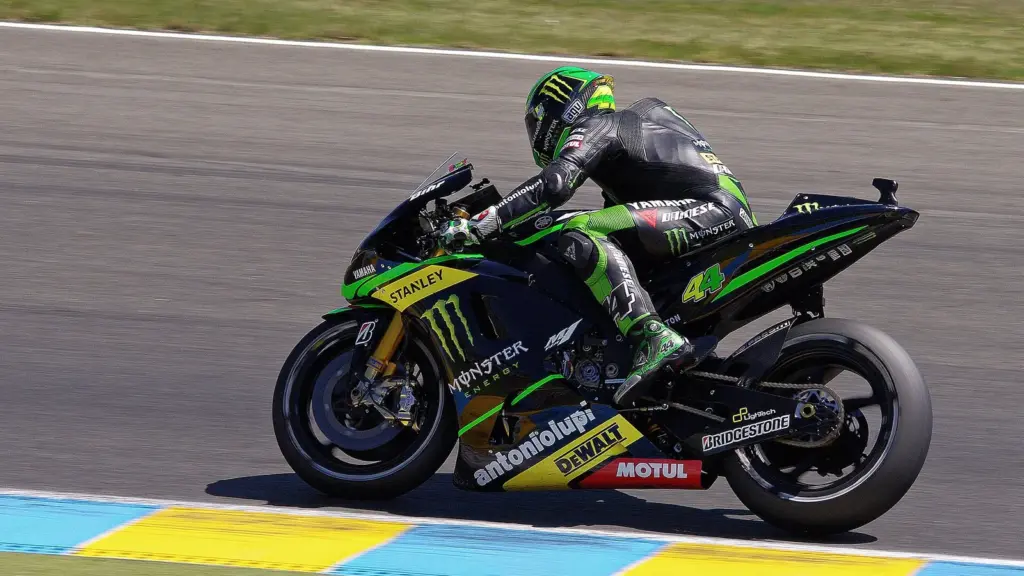
MotoGP Bugatti Circuit
MotoGP races on the Bugatti Circuit, and the French Grand Prix is contracted to stay here until 2031. Jorge Martín won in 2026; the 2027 race is May 14–16.
April
24 Heures Motos
FIM EWC Endurance motorcycles
The motorcycle 24-hour race on the Bugatti Circuit opens the Endurance World Championship. YART Yamaha won in April 2026, and the 50th edition is planned for April 2027.
July
Le Mans Classic
Historic racing Le Mans Classic
Historic Le Mans cars return to the full circuit. It’s now held every year, alternating between Le Mans Legend (1976–2015 cars) and Le Mans Classic Heritage (1923–1975 cars). Heritage runs July 1–4, 2027.
Le Mans Race Calendar: 2026 and 2027
Here are the big public events at Le Mans. The 24 Hours week includes scrutineering in the city, test and qualifying days and the race itself on the weekend. Dates marked TBA haven’t been announced yet, so check the official sites before you book.
2026 season
| Dates | Event | Series | Status |
|---|---|---|---|
| Apr 18–19 | 24 Heures Motos | FIM EWC (Bugatti Circuit) | Done |
| May 8–10 | French MotoGP Grand Prix | MotoGP (Bugatti Circuit) | Done |
| Jun 10–14 | 24 Hours of Le Mans | FIA WEC, Road to Le Mans | Done |
| Jul 2–5 | Le Mans Classic Legend | Historic racing | Done |
2027 season
| Dates | Event | Series | Status |
|---|---|---|---|
| Apr 8–11 | 24 Heures Motos (50th edition) | FIM EWC (Bugatti Circuit) | Upcoming |
| May 14–16 | French MotoGP Grand Prix | MotoGP (Bugatti Circuit) | Upcoming |
| Jun 9–13 | 24 Hours of Le Mans (race week) | FIA WEC | Upcoming |
| Jul 1–4 | Le Mans Classic Heritage | Historic racing | Upcoming |
| TBA | 24 Heures Camions | Truck racing (Bugatti Circuit) | Date TBA |
Le Mans Weather by Season
Le Mans has a mild, Atlantic-influenced climate. The figures below are Météo-France 1991–2020 averages for the city. Race week in June is usually pleasant by day, but the temperature drops a lot overnight.
13–20°C / 56–68°F
Spring · Mar–May
Highs rise from about 13°C (56°F) in March to 20°C (68°F) in May, with lows of 4–10°C (39–49°F). The 24 Heures Motos in April and MotoGP in May can be cool and showery.
24–26°C / 74–79°F
Summer · Jun–Aug
June averages a high of about 24°C (74°F) and a low near 13°C (55°F), with around 55 mm (2.2 in) of rain. Nights at the track feel colder than you expect, and a passing shower is common during the 24 Hours.
12–22°C / 53–72°F
Fall · Sep–Nov
September is still warm at about 22°C (72°F), cooling to 12°C (53°F) in November, when rain picks up.
8–10°C / 47–49°F
Winter · Dec–Feb
Mild but damp, with highs of 8–10°C (47–49°F) and lows around 2–3°C (36–37°F). December is the wettest month.
Visiting Le Mans: Tickets, Camping and Where to Watch
Going to the 24 Hours is a pilgrimage for a lot of fans, and it’s more festival than race. Tickets for 2027 go on sale to Club ACO members from November 3, 2026, and to everyone from November 6 through the official 24 Hours site, with general admission, grandstand, paddock and camping options.
Where to watch
- Dunlop Bridge and the Esses. The classic view of cars cresting the hill under the bridge, plus the Dunlop Chicane.
- Tertre Rouge. Watch cars fire out onto the Mulsanne Straight. It’s also near one of the main campsites.
- Mulsanne Corner and Arnage. Heavy braking and slow corners, reached by shuttle or a long trip out on the public roads.
- Porsche Curves. Fast, committed driving on the permanent part of the track.
- The Village. The fan zone behind the main grandstands, with the Ferris wheel, shops and screens.
Camping and getting there
Camping is a huge part of the experience, with official campsites such as Houx, Arnage and Tertre Rouge sold through the 24 Hours site. If you’re coming from Paris, the TGV from Montparnasse takes about an hour, then tram T1 toward Antarès takes you to the circuit’s east entrance. Free park-and-ride lots are available if you drive.
Tips
Bring warm layers and rain gear for the night, ear protection, and a radio or app to follow Radio Le Mans. Leave time for the new M24 museum at the circuit, which has more than 120 vehicles; adult tickets are €20, or €24 including a visit of the circuit.
Can You Drive the Le Mans Circuit?
Partly, yes. The Mulsanne Straight and the roads out to Mulsanne and Arnage are public roads outside race week, so you can drive them at normal speeds, minus the chicanes and with speed limits and traffic. It’s a fun pilgrimage, but stick to the rules: the police know exactly why tourists are there.
For real track time, the ACO runs track days on the Bugatti Circuit for Club ACO members and owners’ clubs, and the Porsche Experience Center Le Mans, next to the circuit, offers driving programs on its own 2.9 km handling track.
Le Mans is easy to find in games: it’s in Gran Turismo 7, iRacing, Forza Motorsport (2023) and Le Mans Ultimate, the official game of the WEC and the 24 Hours.
Talk Le Mans With Other Enthusiasts
Planning your first 24 Hours, picking a campsite or heading to the Le Mans Classic? Share what you know, ask questions and find people going the same weekend in the AutoGathering community.
- 24 Hours of Le Mans trips
- Camping at Le Mans
- Best viewing spots
- Le Mans Classic
- MotoGP at Le Mans
- Driving the Mulsanne
- Le Mans Ultimate lap times
- M24 museum
Le Mans Circuit FAQ
How long is the Le Mans circuit?
The Circuit de la Sarthe used for the 24 Hours is 13.626 km (8.467 miles) long with 38 turns. The permanent Bugatti Circuit is 4.185 km (2.600 miles).
Is the Le Mans track on public roads?
Yes. A large part of the lap, including the Mulsanne Straight, uses the RD338 and other public roads that are open to traffic outside race week.
Who won the 2026 24 Hours of Le Mans?
The No. 7 Toyota of Mike Conway, Kamui Kobayashi and Nyck de Vries won on June 14, 2026. It was Toyota’s sixth Le Mans win.
When is the 2027 24 Hours of Le Mans?
The 2027 race week runs June 9–13, 2027, with the race on the weekend.
What is the lap record at Le Mans?
The race lap record is 3:17.297, set by Mike Conway in a Toyota in 2019. The fastest lap ever is Kamui Kobayashi’s 3:14.791 in qualifying in 2017.
How fast do cars go on the Mulsanne Straight?
Today’s Hypercars reach about 340–350 km/h (210–220 mph). The record is 405 km/h (252 mph), set in 1988 before the chicanes were added.
How do you get to Le Mans from Paris?
Take the TGV from Paris Montparnasse, about an hour, then tram T1 toward Antarès to reach the circuit.
What is the Bugatti Circuit?
It’s the permanent 4.185 km track at Le Mans that shares the pit straight with the 24 Hours circuit. It hosts the French MotoGP Grand Prix, the 24 Heures Motos and other events.
Explore More Racing Circuits
Le Mans is one of 40 circuits in our European racing directory. If you’re touring France, Magny-Cours is a few hours’ drive to the southeast, and the Circuit Paul Ricard is in the south near Marseille.
Photo credits
- Header image: Mark Seymour from UK, CC BY 2.0, cropped and resized.
- LMP2 cars on the Mulsanne Straight next…: United Autosports, CC BY-SA 2.0, cropped and resized.
- Map of the 13.626 km Circuit de…: Willag, CC BY-SA 3.0, cropped and resized.
- Hypercars racing side by side during the…: Mickael Le rouzic, CC BY 4.0, cropped and resized.
- A Yamaha MotoGP bike on the Bugatti…: Matthieu PELLETIER from France, CC BY 2.0, cropped and resized.
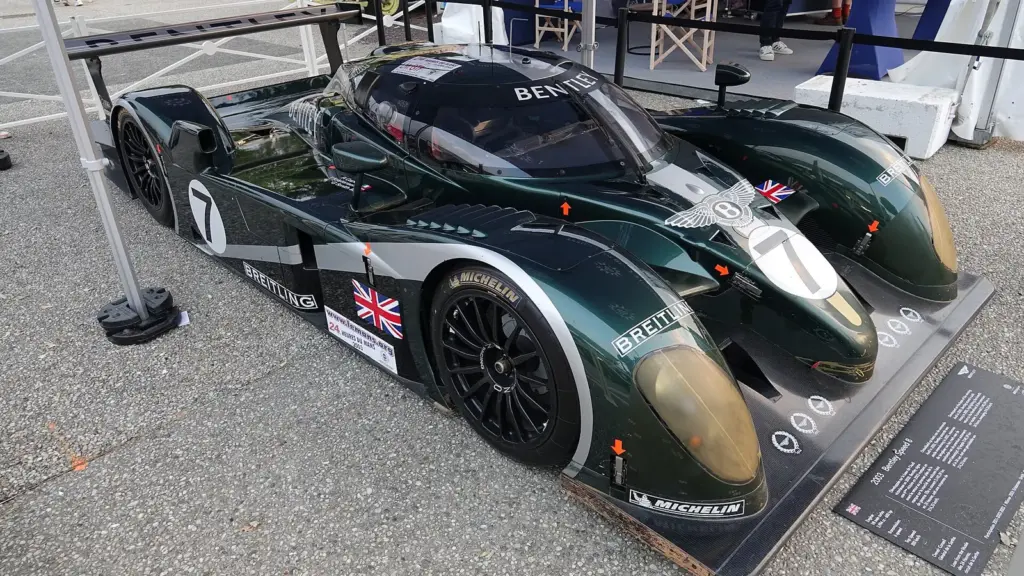
- A Bentley Speed 8 Le Mans prototype…: Y.Leclercq©, CC BY-SA 4.0, cropped and resized.
- Spectators watching endurance motorcycles on the Bugatti…: bibi95, CC BY 2.0, cropped and resized.