
Indianapolis Motor Speedway
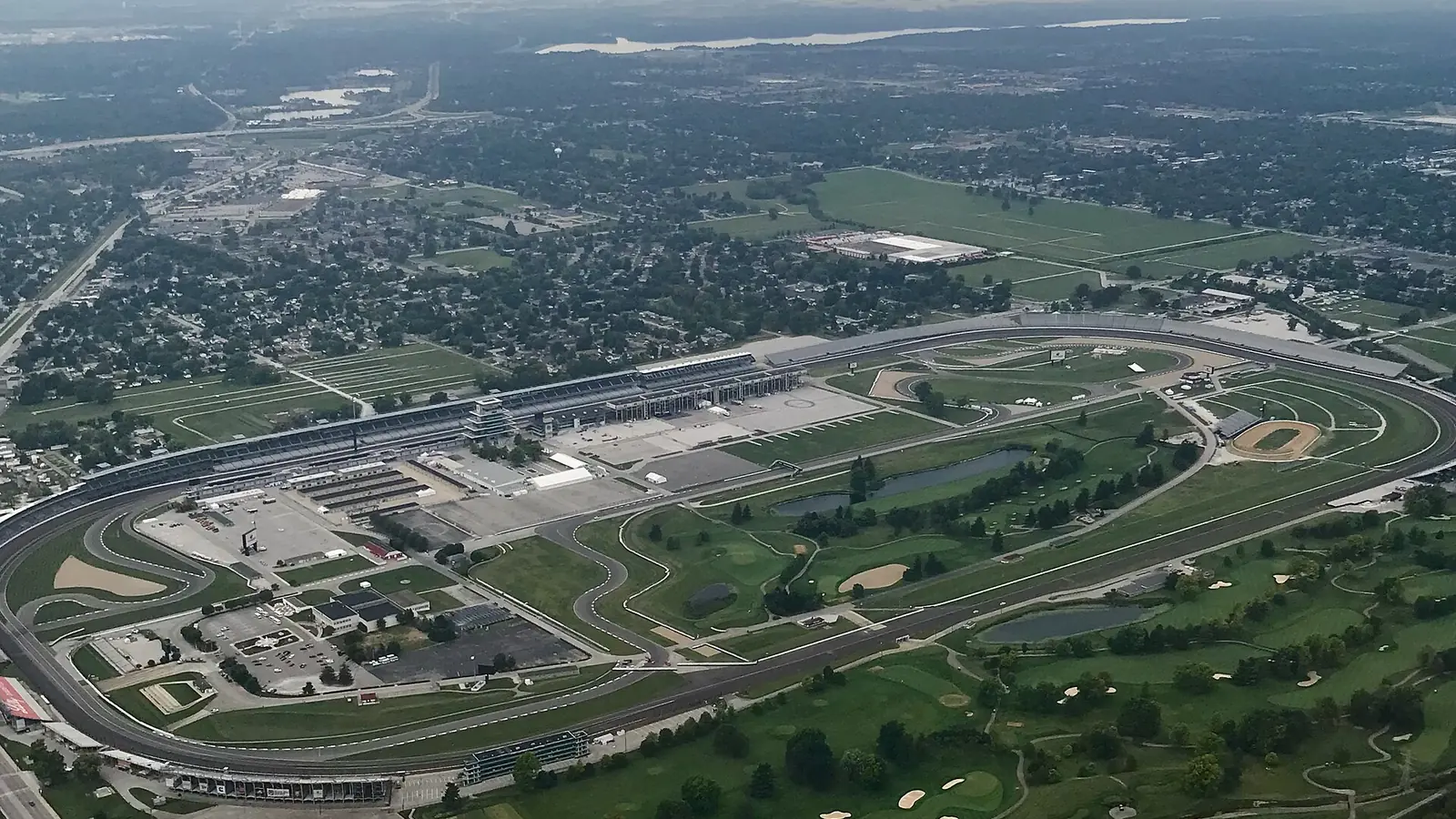
Indianapolis Motor Speedway is the 2.5-mile rectangle of an oval in the town of Speedway, Indiana, where the Indy 500 has run since 1911 and a single yard of original bricks still marks the finish line. It also has a 14-turn road course in the infield, so NASCAR, IMSA, GT cars and vintage racers all get a turn. Here’s what you’ll want to know before you buy a ticket for May, plan a NASCAR weekend or fire it up in iRacing: the name, the history, how a lap works, the records, the calendar and how to visit.
Indianapolis Motor Speedway at a Glance
Length 4.023 km / 2.5 mi oval; the infield road course is 3.925 km / 2.439 mi
Turns 4 on the oval 14 on the clockwise road course used since 2014
Banking 9°12′ in all four corners; the straights are flat
Opened 1909 first Indianapolis 500 on May 30, 1911
Location & owner Speedway, Indiana about 10 km / 6 mi west of downtown Indianapolis, owned by Penske Entertainment
Race lap record 379.97 km/h / 236.103 mph Eddie Cheever, Indy 500, 1996 (oval)
Indianapolis Motor Speedway, IMS or the Brickyard?
All three are the same place. The official name has never changed since 1909, most people shorten it to IMS or just “Indy,” and the nickname “the Brickyard” comes from the 3.2 million paving bricks laid over the original crushed-stone-and-tar surface at the end of 1909. The track bills itself as the “Racing Capital of the World,” and the Indy 500 has carried the tagline “The Greatest Spectacle in Racing” for decades.
Here’s a detail that trips people up: the Speedway isn’t technically in Indianapolis. It sits in the town of Speedway, a small enclave surrounded by the city, about 6 miles (10 km) west of downtown at 4790 W. 16th St.
The place comes with its own vocabulary, too. The Indy 500 winner drinks milk, a habit Louis Meyer started after his third win in 1936; today drivers pick whole, 2% or skim before the race. Winners’ faces go on the Borg-Warner Trophy, which debuted the same year. “Back Home Again in Indiana” is sung before the start, a tradition since 1946. And “kissing the bricks” started with NASCAR, not IndyCar: Dale Jarrett and crew chief Todd Parrott did it after winning the 1996 Brickyard 400, and now every winner does.
Indianapolis Motor Speedway History
IMS was built as a proving ground for the car companies springing up around Indianapolis in 1909, and it’s been racing ever since. The original owners figured one big race a year would draw better than lots of small ones, and that’s how the 500 was born. Since then the Speedway has survived two world wars, a near collapse in the 1940s and three changes of ownership, and it has added NASCAR, Formula 1, MotoGP and sports cars along the way.
- 1909 Carl Fisher, James Allison, Arthur Newby and Frank Wheeler build the track as a testing and racing ground for Indiana’s car industry. Ground is broken on March 15; the first event is a motorcycle meet on August 14. The crushed-stone surface breaks up badly during the first car races in August, and five people are killed, so 3.2 million bricks go down that fall.
- 1911 The first Indianapolis 500 runs on May 30. Ray Harroun wins at an average of 74.602 mph (120.06 km/h).
- 1927 World War I flying ace Eddie Rickenbacker buys the Speedway.
- 1942–1945 Racing stops during World War II and the track falls into disrepair. On November 14, 1945, Terre Haute businessman Tony Hulman buys it, beginning 74 years of Hulman-George family ownership.
- 1950–1960 The Indy 500 counts toward the Formula 1 World Championship, even though almost no F1 regulars make the trip.
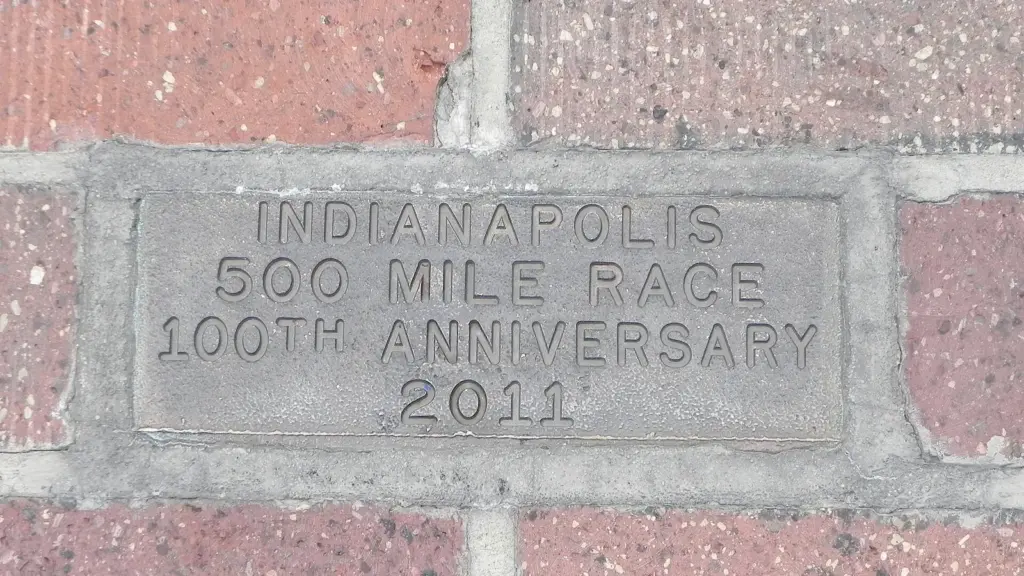
- 1961 The last exposed bricks are paved over, except for a 3-foot strip at the start/finish line: the Yard of Bricks.
- 1994 NASCAR arrives. Jeff Gordon wins the first Brickyard 400 on August 6, and he goes on to win the race five times.
- 2000–2007 Formula 1 returns with the United States Grand Prix on a road course that uses part of the oval, run clockwise.
- 2008–2015 MotoGP races on the Speedway’s motorcycle layout.
- 2014 The road course is reworked into today’s 14-turn layout, and IndyCar starts racing on it every May with what is now the Sonsio Grand Prix.
- 2020 Penske Corporation completes its purchase of IMS, the IndyCar Series and IMS Productions on January 6. In 2025 Fox Corporation buys a one-third stake in Penske Entertainment.
- 2021–2023 NASCAR’s Cup race moves to the road course. IMSA returns in 2023, and the Brickyard 400 goes back to the oval in 2024.
- 2025 Álex Palou becomes the first Spaniard to win the Indy 500, and the Speedway’s museum reopens in April after a renovation of more than $60 million.
- 2026 Felix Rosenqvist wins the 110th Indy 500 by 0.0233 seconds over David Malukas, the closest finish in the race’s history, with a record 70 lead changes. Corey Heim wins the Brickyard 400 in his first start there.
The Brickyard Oval: Four Corners and a Yard of Bricks
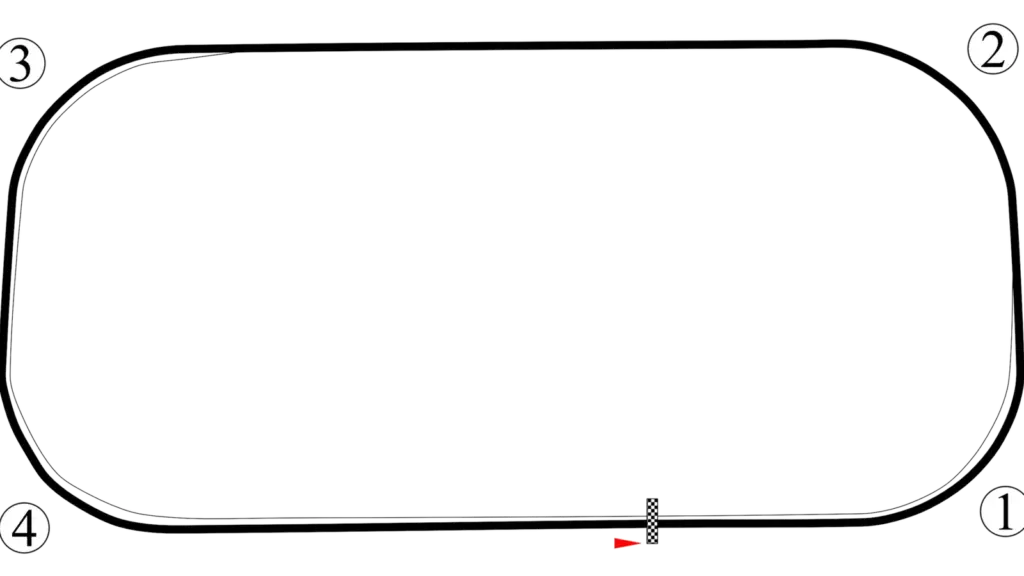
From the air, IMS looks less like an oval and more like a rounded rectangle, and that shape is the whole story. Instead of two long sweeping ends, you get four separate 90-degree corners, each banked at just 9 degrees and 12 minutes, linked by flat straights. At 230 mph (370 km/h) in an Indy car, every one of those corners is a commitment: you lift or brush the brakes only if you have to, and the car has to be perfectly balanced in all four, because they’re identical on paper but not in the wind.
9°12′
Banking
Every corner has the same gentle banking. That’s mild compared with NASCAR superspeedways, so Indy cars rely on downforce, not the track, to get around.
4 × 0.25 mi
Identical corners
Each corner is a quarter mile (402 m), joined by two 5/8-mile (1,006 m) straights and two 1/8-mile (201 m) “short chutes.”
36 in
The Yard of Bricks
A 3-foot (91 cm) strip of the 1909 bricks still crosses the start/finish line. Everything else was paved over by 1961.
Then there are the bricks. When the original crushed-stone surface fell apart in 1909, the owners laid 3.2 million bricks from five Indiana brickmakers. Asphalt gradually covered them, and since 1961 only the Yard of Bricks at the finish line is left. It’s where winners kneel to kiss the track, right below the Pagoda, the tiered control tower that looms over the front stretch.
Indianapolis Motor Speedway Track Guide: Oval and Road Course
On the oval, cars run counter-clockwise: down the front stretch, through four nearly identical corners and back. It sounds simple, but at Indy-car speeds a whole lap takes about 40 seconds, and the difference between a good and a bad one is measured in hundredths through the corners. Here’s how a lap breaks down, plus a quick look at the road course IndyCar, IMSA and GT cars use.
FS
Front Stretch
A 5/8-mile run past the Pagoda, the pits and the biggest grandstands, crossing the Yard of Bricks. In the 500 this is where you set up a pass, using the tow from the car ahead.
T1
Turn 1
The most famous corner in American racing. You arrive at the end of the longest flat-out stretch, and the start of the race funnels 33 cars into it three wide. The museum and golf course sit in the infield beyond it.
SC
South Short Chute
Just 1/8 mile (201 m) to get the car straight before Turn 2. Most drivers barely unwind the wheel.
T2
Turn 2
A twin of Turn 1 that leads onto the back straight. A good exit here is what sets up a pass into Turn 3.
BS
Back Stretch
The other 5/8-mile straight, lined with fewer grandstands. Watch for cars pulling out of the tow to try a pass before Turn 3.
T3
Turn 3
Another quarter-mile, 9°12′ corner. It feels different from Turn 1 because of the wind and the grandstand shadows, and the Snake Pit concert stage is in the infield nearby.
NC
North Short Chute
The short link between Turns 3 and 4, where cars often run nose to tail late in a stint.
T4
Turn 4
The last corner onto the front stretch. Get it right and you can slingshot past someone at the line; get it wrong and you’ll lose the tow all the way down the straight.
RC
Road course (14 turns)
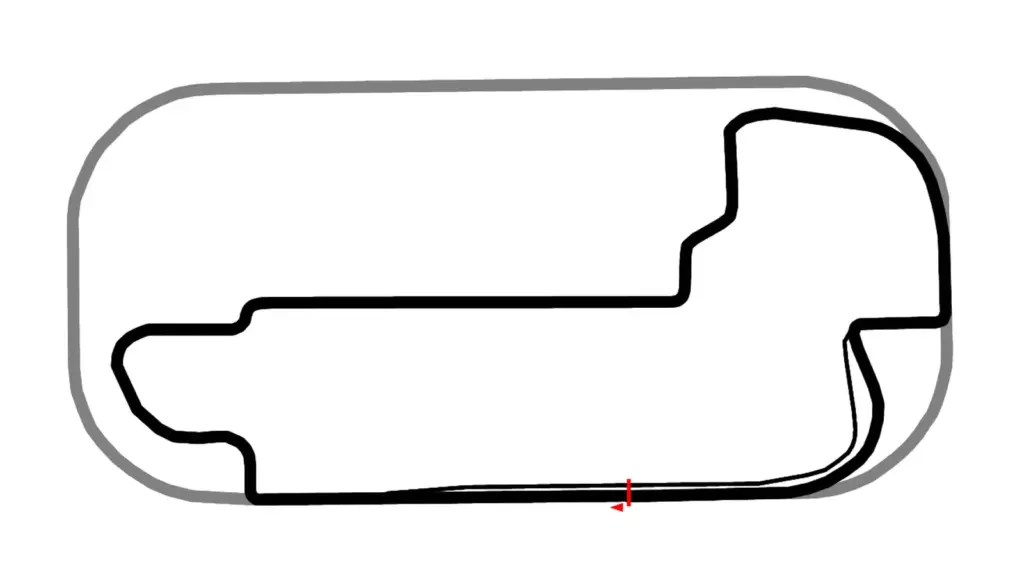
The infield road course runs clockwise. You brake hard into Turn 1 at the end of the front stretch, wind through the infield, use the oval’s back straight for the big braking zone into Turn 7 (the main passing spot) and rejoin the oval near its Turn 1 before the final sweeper onto the front stretch.
The road course
The 2.439-mile (3.925 km), 14-turn road course runs clockwise inside the oval, using the front stretch and part of the oval near Turn 1. The gray outline on the map is the oval; the black line is the road course, with the start/finish line marked in red.
Indianapolis Motor Speedway Lap Records
Indy’s oval records are measured in miles per hour, and the big ones are almost 30 years old: rule changes after 1996 slowed the cars, so Arie Luyendyk’s numbers have outlived several generations of Indy cars. For context, Álex Palou took pole for the 2026 race at 232.248 mph (373.77 km/h). In NASCAR, Kevin Harvick’s 2014 qualifying lap of 188.889 mph (303.99 km/h) is still the Cup record, and in the old Formula 1 days Rubens Barrichello set a race lap of 1:10.399 in a Ferrari F2004 in 2004 on the former Grand Prix layout.
379.97 km/h / 236.103 mph
Indy 500 race lap record
Eddie Cheever set the fastest lap ever recorded during the Indy 500, a 38.119-second lap, in the 1996 race.
382.21 km/h / 237.498 mph
Qualifying record
Arie Luyendyk’s single lap in 1996 qualifying, with a four-lap average of 236.986 mph (381.39 km/h). Both still stand.
385.05 km/h / 239.260 mph
Fastest lap ever
Also Luyendyk in 1996, but in practice, so it’s unofficial. Nobody has gone faster at Indy since.
1:09.3888
Road course race lap record
Josef Newgarden in a Team Penske IndyCar in 2017, on today’s 14-turn layout.
Races and Events at Indianapolis Motor Speedway
IMS runs a busy season from May to October, built around the Indy 500. If you’re new to the series, our guides to the IndyCar Series and the NASCAR Cup Series explain the basics. Here’s what usually runs, with 2026 results and 2027 dates for reference.
May
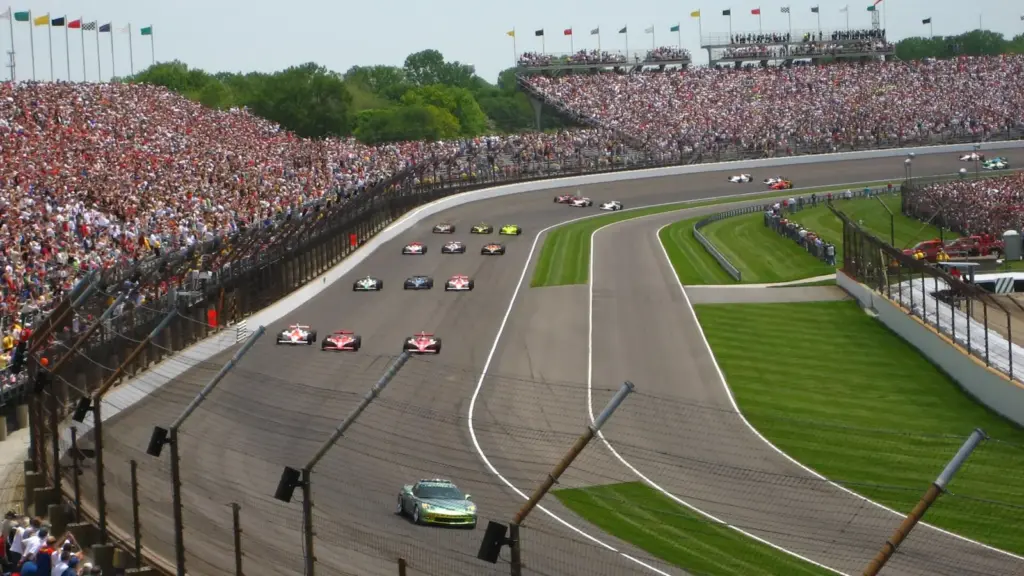
Indianapolis 500
IndyCar Series Indy NXT
The race everything else revolves around. Practice, qualifying, Carb Day and Legends Day fill most of May, and the 500 runs on the Sunday of Memorial Day weekend. In 2026 Felix Rosenqvist won the 110th running by 0.0233 seconds, the closest finish ever.
May
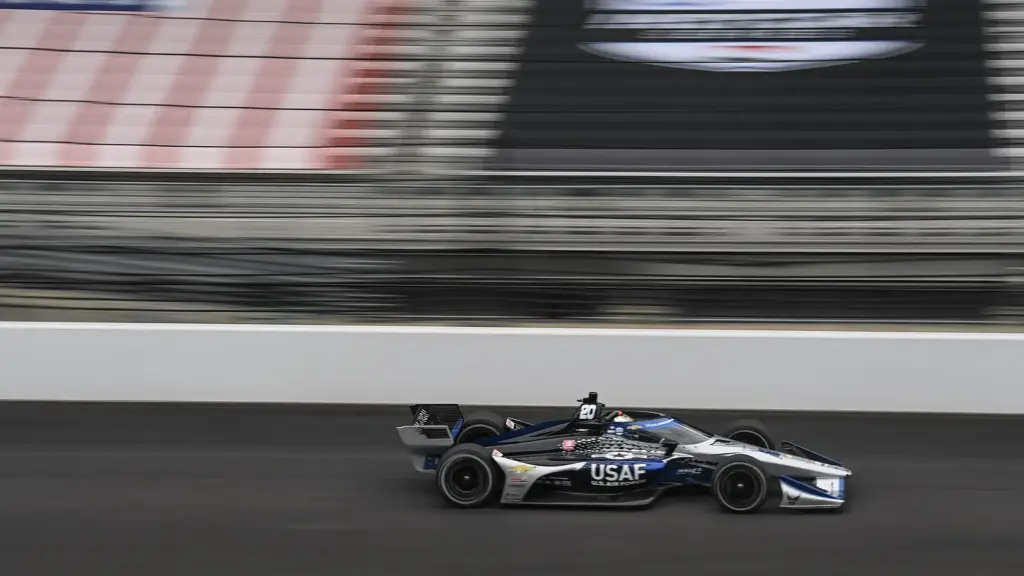
Sonsio Grand Prix
IndyCar Series Road course
IndyCar’s road-course race opens the Month of May. Christian Lundgaard won the 2026 edition on May 9 for Arrow McLaren, with Álex Palou on pole. The 2027 race weekend is May 14–15.
July
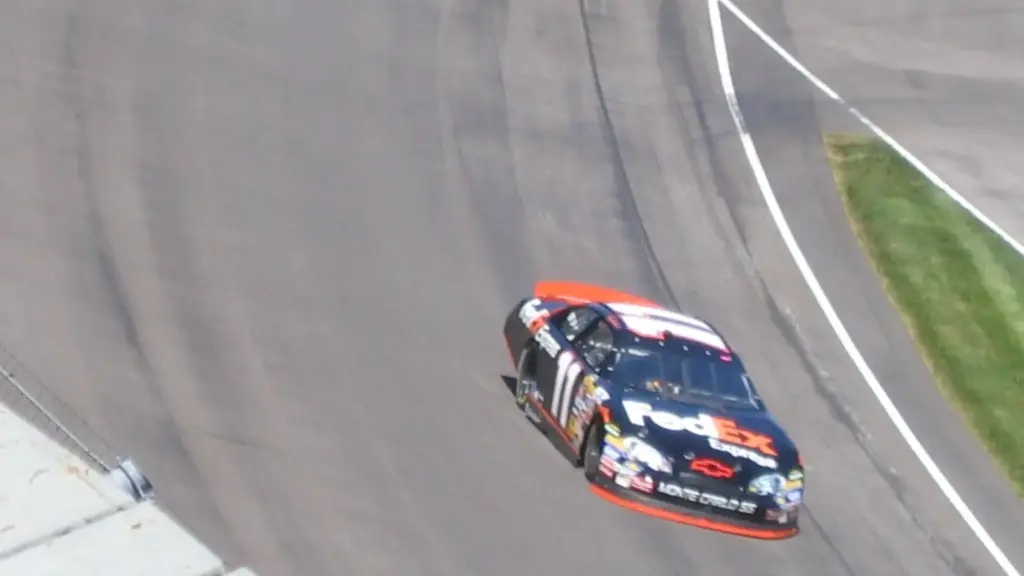
Brickyard 400
NASCAR Cup Series O’Reilly Auto Parts Series
NASCAR has raced here since 1994 and went back to the oval in 2024 after three years on the road course. Corey Heim won on July 26, 2026, beating Christopher Bell by 0.287 seconds. Next year’s Brickyard weekend is July 23–25, 2027.
September–October
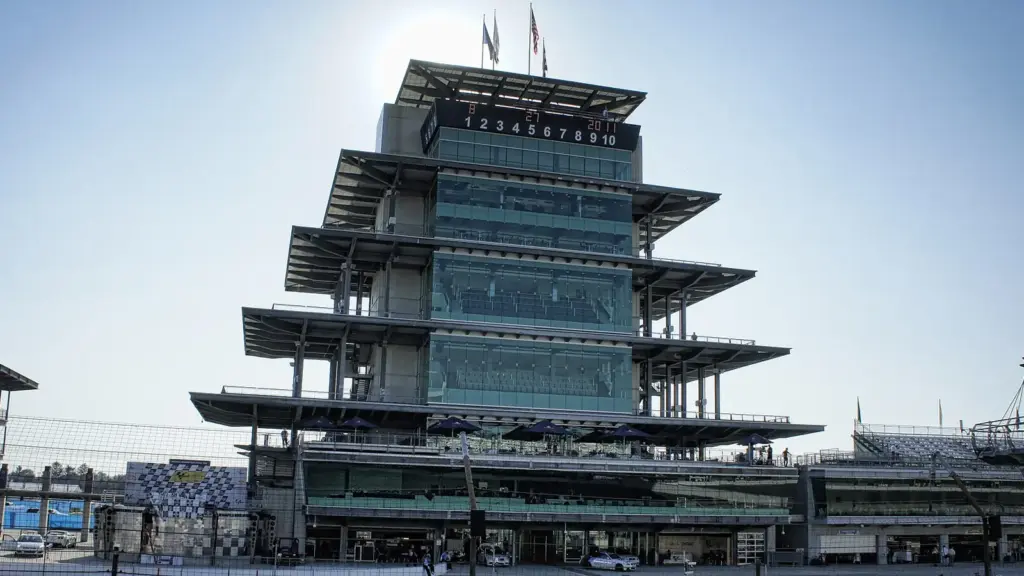
IMSA Battle on the Bricks and the Indianapolis 8 Hour
IMSA Intercontinental GT Challenge
Sports cars take over the road course in the fall. BMW M Team WRT won the 2026 IMSA race on September 20, and Ayhancan Güven’s GMG Racing Porsche won the Indianapolis 8 Hour on October 11. In 2027 they run September 17–19 and October 1–3.
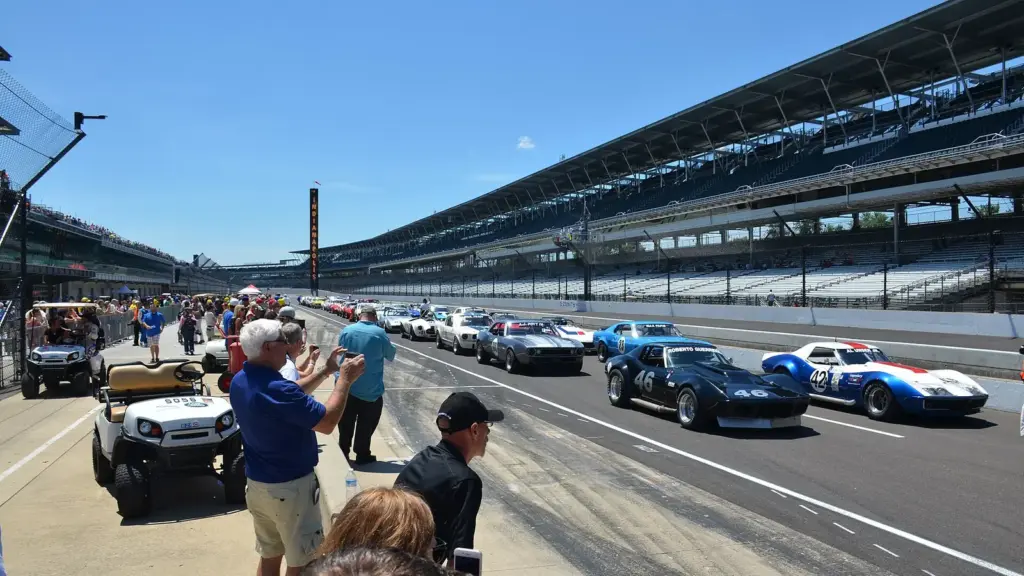
June
Brickyard Vintage Racing Invitational
SVRA Historic racing
Hundreds of historic race cars run the road course, with exhibition laps on the oval. The 2026 event ran June 20–21, and the 2027 weekend is June 12–13.
Indianapolis Motor Speedway Race Calendar: 2026 and 2027
Here are the big race weekends at IMS, so you can plan a trip around the racing you want to see. The 2026 season wrapped up with the Indianapolis 8 Hour in October, and IMS has already published its 2027 dates. Always check the official schedule before you book, because times and support races get added closer to each event.
2026 season
| Dates | Event | Series | Status |
|---|---|---|---|
| May 9 | Sonsio Grand Prix | IndyCar Series | Done |
| May 24 | 110th Indianapolis 500 | IndyCar Series | Done |
| Jun 20–21 | Brickyard Vintage Racing Invitational | SVRA historic racing | Done |
| Jul 26 | Brickyard 400 | NASCAR Cup Series | Done |
| Sep 20 | IMSA Battle on the Bricks | IMSA WeatherTech SportsCar Championship | Done |
| Oct 9–11 | Indianapolis 8 Hour | Intercontinental GT Challenge, GT World Challenge America | Done |
2027 season
| Dates | Event | Series | Status |
|---|---|---|---|
| May 14–15 | Sonsio Grand Prix | IndyCar Series | Upcoming |
| May 18–30 | Indianapolis 500 (practice, qualifying and race) | IndyCar Series | Upcoming |
| Jun 12–13 | Brickyard Vintage Racing Invitational | Historic racing | Upcoming |
| Jul 23–25 | Brickyard 400 weekend | NASCAR Cup Series | Upcoming |
| Sep 17–19 | IMSA Battle on the Bricks | IMSA WeatherTech SportsCar Championship | Upcoming |
| Oct 1–3 | Indianapolis 8 Hour | Intercontinental GT Challenge | Upcoming |
Indianapolis Motor Speedway Weather by Season
Central Indiana has proper seasons: cold winters, warm and stormy springs, hot and humid summers and a mild, dry fall. The numbers below are the National Weather Service’s 1991–2020 normals for Indianapolis, and the one thing to remember is that May, the biggest month at the Speedway, can swing from a jacket morning to a sunburn afternoon.
11–23°C
Spring · Mar–May
Daily highs of 11–23°C (52–73°F) and lows of 1–12°C (33–54°F). May is one of the wettest months, at about 121 mm (4.75 in), and rain has cut the Indy 500 short seven times, most recently in 2007. Pack a rain jacket and a warm layer for practice days.
28–30°C
Summer · Jun–Aug
Daily highs of 28–30°C (82–85°F) and lows of 17–19°C (63–66°F). It’s humid, and afternoon thunderstorms are common, with June the wettest month of the year at about 126 mm (4.95 in). Brickyard 400 fans should plan for heat: hats, sunscreen and plenty of water.
11–26°C
Fall · Sep–Nov
Daily highs fall from 26°C (78°F) in September to 11°C (52°F) in November, with lows from 14°C (57°F) down to 2°C (35°F). It’s the most comfortable stretch of the year, which suits the IMSA race in September and the 8 Hour in early October.
2–5°C
Winter · Dec–Feb
Daily highs of 2–5°C (36–41°F) and lows of −6 to −3°C (21–26°F), with about 65 cm (25.5 in) of snow a year. There’s no racing, but the museum stays open every day except Thanksgiving and Christmas.
Visiting Indianapolis Motor Speedway: Tickets, Coolers and Tips
IMS is huge. It has around a quarter of a million permanent seats and covers more than 559 acres, and on Indy 500 race day the crowd inside is bigger than most cities. That’s a big part of the fun, but it means planning ahead pays off more here than almost anywhere else.
Where to watch
- Turn 1. Watch the start funnel into the first corner and see the cars at their limit. Higher rows let you see more of the oval, which is flat enough that you can’t see the whole thing from anywhere.
- The front stretch. Seats near the Pagoda put you over the pits and the Yard of Bricks, where the finish, the pit stops and the victory celebrations happen.
- Turns 3 and 4. Good for watching passes set up on the back straight and the run back to the line.
- The infield. General admission gets you into the infield and, on Indy 500 morning, the Snake Pit electronic music concert near Turn 3 (18 and over, with a separate wristband; Zedd headlined in 2026).
- Road-course weekends. For IMSA, the 8 Hour and the vintage races, the crowds are smaller, so you can wander between viewing spots and the paddock.
Coolers, tickets and the Month of May
Unlike most big stadiums, IMS lets you bring your own cooler, as long as it’s no bigger than 18 × 14 × 14 inches (46 × 36 × 36 cm). No glass, no drones and no selfie sticks, and wagons aren’t allowed on race day. Race-day parking inside IMS lots has to be bought in advance, and expect to wait up to a couple of hours to leave a lot after the 500. If you can’t make race day, practice, qualifying weekend, Carb Day (the final practice and a concert) and Legends Day are cheaper and much more relaxed.
Getting there and the museum
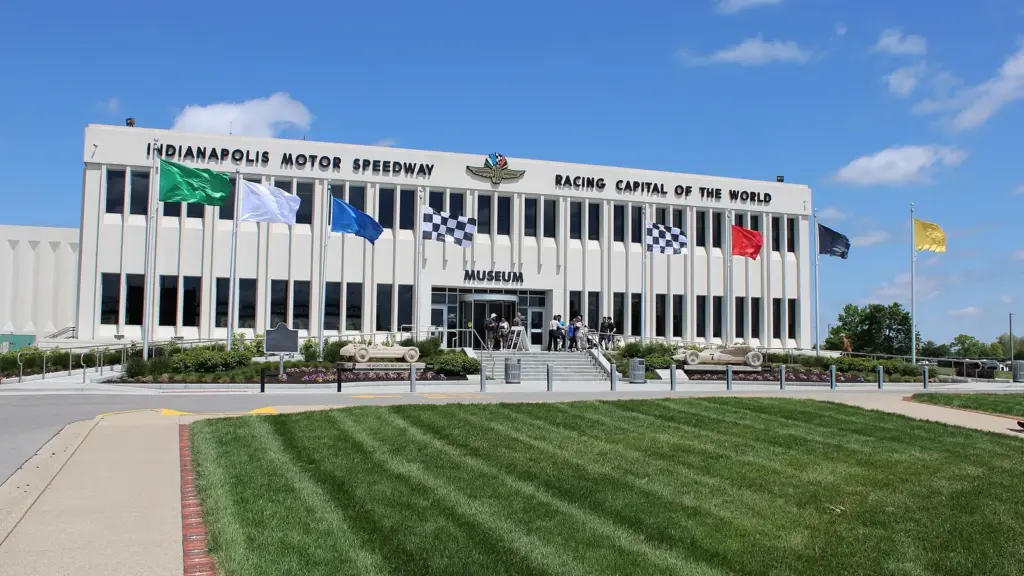
Indianapolis International Airport is about 19 km (12 miles) away, roughly 20 to 30 minutes by car outside race traffic. The weather in May can be anything from chilly and wet to hot and humid, so bring layers, sunscreen and a rain jacket. Whatever day you come, leave time for the IMS Museum in the infield between Turns 1 and 2. It reopened in April 2025 after a major renovation, it’s open daily, and from there you can book a bus lap of the track or a golf-cart tour that includes a stop at the Yard of Bricks when the track is free.
Can You Drive Indianapolis Motor Speedway?
Not like a club road course. IMS doesn’t rent the oval out for open track days the way many tracks in this directory do, so for most people the way on is as a passenger. The Indy Racing Experience, which the Speedway links to from its own site, offers rides in a two-seat Indy car and drives in cars that once raced in the 500. Prices and dates change by season, so check before you plan around it.
The cheaper options: the museum’s track tours take you around the oval at a much more relaxed pace, with a stop to kneel at the Yard of Bricks on the golf-cart version. And you can play golf inside the track at Brickyard Crossing, the Pete and Alice Dye course with four holes in the infield.
On a screen, iRacing has laser-scanned versions of both the oval and the road course, updated in 2022, so you can try those 9°12′ corners at full speed without a seven-figure budget.
Talk Indianapolis Motor Speedway With Other Enthusiasts
Planning your first 500, picking seats for the Brickyard 400 or trying to find the best cooler strategy? Share what you’ve learned, ask questions and find people going the same weekend in the AutoGathering community.
- Indy 500 trip planning
- Best seats and viewing spots
- Snake Pit and infield tips
- Brickyard 400 weekend
- IMS Museum and track tours
- Two-seater ride experiences
- iRacing setups and lap times
- Month of May meetups
Indianapolis Motor Speedway FAQ
How long is Indianapolis Motor Speedway?
The oval is 2.5 miles (4.023 km) long, so the Indy 500 is 200 laps. The infield road course is 2.439 miles (3.925 km) with 14 turns.
How banked are the turns at Indianapolis?
All four turns are banked at 9 degrees, 12 minutes, and the straights are flat. That’s mild next to NASCAR superspeedways such as Daytona or Talladega.
Why is it called the Brickyard?
In 1909 the track was paved with 3.2 million bricks after the original crushed-stone surface broke up. They were covered with asphalt over the years, and since 1961 only a 3-foot strip, the Yard of Bricks, remains at the start/finish line.
Is Indianapolis Motor Speedway in Indianapolis?
Not technically. It’s in the town of Speedway, Indiana, which is surrounded by Indianapolis, about 6 miles (10 km) west of downtown.
Who won the 2026 Indy 500?
Felix Rosenqvist won the 110th Indianapolis 500 on May 24, 2026, beating David Malukas by 0.0233 seconds, the closest finish in the race’s history.
What is the fastest lap ever at Indianapolis?
Arie Luyendyk lapped at 239.260 mph (385.05 km/h) in practice in 1996. His official qualifying record of 237.498 mph and Eddie Cheever’s race lap record of 236.103 mph, both also from 1996, still stand.
Can you bring a cooler to the Indy 500?
Yes. Coolers and bags up to 18 × 14 × 14 inches (46 × 36 × 36 cm) are allowed, hard or soft sided. Glass, drones and selfie sticks are not, and wagons aren’t allowed on race day.
When is the 2027 Indy 500?
IMS lists the 2027 Indy 500 events from May 18 to May 30, 2027, with the race on the Sunday of Memorial Day weekend. The Sonsio Grand Prix is May 14–15 and the Brickyard 400 weekend is July 23–25.
Explore More Racing Circuits
Indianapolis Motor Speedway is one of 40 tracks in our North American racing circuit directory. If you’re in town for the weekend, Lucas Oil Indianapolis Raceway Park, home of the NHRA U.S. Nationals, is only a few miles west in Brownsburg.
Photo credits
- Header image: Kimaz2412, CC BY 2.0, cropped and resized.
- Map of the Indianapolis Motor Speedway 2.5-mile…: Will Pittenger, Public domain, cropped and resized.
- The field lined up for the start…: The359, CC BY-SA 3.0, cropped and resized.
- An IndyCar on the straightaway during the…: Tech Sgt. Ryan Conroy, Public domain, cropped and resized.
- A NASCAR Cup Series Chevrolet at Indianapolis…: David Kelly, CC BY-SA 2.0, cropped and resized.
- The starting field for the 2016 SVRA…: Doctorindy, CC BY-SA 4.0, cropped and resized.
- The commemorative 100th-anniversary brick set into the…: Doctorindy, CC BY-SA 3.0, cropped and resized.
- The Indianapolis Motor Speedway Museum building in…: Michael Barera, CC BY-SA 4.0, cropped and resized.
- The Pagoda control tower at Indianapolis Motor…: rbnlsn, CC BY 2.0, cropped and resized.
- Map of the 14-turn Indianapolis Motor Speedway…: Beanboy89 at English Wikipedia, CC BY-SA 3.0, cropped and resized.