
Daytona International Speedway
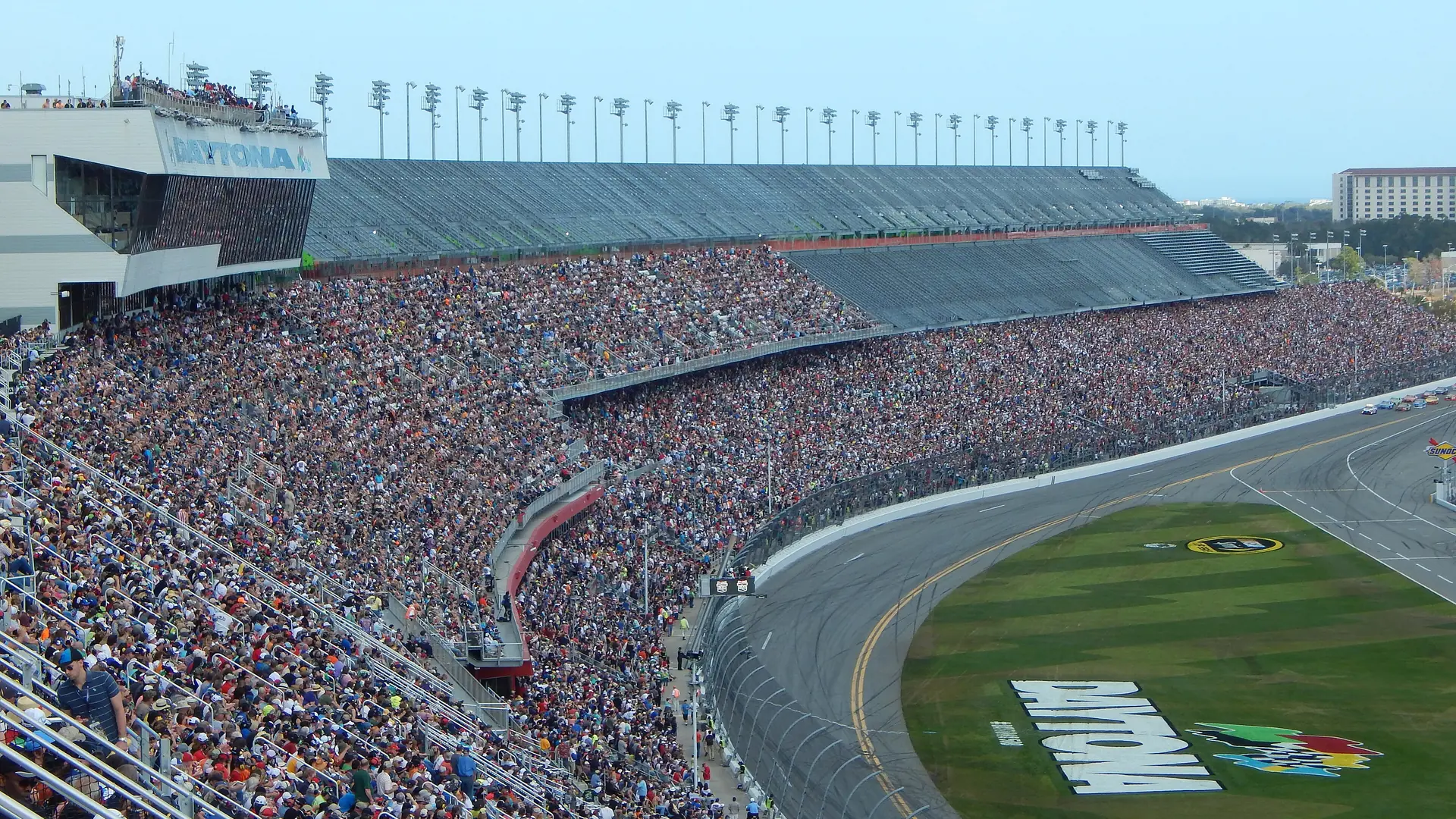
Daytona International Speedway is the 2.5-mile tri-oval in Daytona Beach, Florida, with 31-degree banking so steep you can barely walk up it. Every year it opens the racing season twice: the Rolex 24 sports car race in January, then the Daytona 500 in February, with motorcycles taking over for Bike Week in March. Here’s what you’ll want to know before you buy tickets, plan a Speedweeks trip or try it in iRacing: the name, the history, how a lap works on the oval and the road course, the records, the calendar and how to visit.
Daytona at a Glance
Length 4.023 km / 2.5 mi tri-oval; the sports car road course is 5.729 km / 3.56 mi
Turns 4 on the oval 12 on the road course used for the Rolex 24
Banking 31° in the turns; 18° in the tri-oval and 3° on the backstretch
Opened February 22, 1959 with the first Daytona 500
Location & owner Daytona Beach, Florida owned by NASCAR, next to Daytona Beach International Airport
Race lap record 43.682 sec Erik Jones, NASCAR Cup Series, 2020 (oval)
Daytona, the World Center of Racing
Most people just say Daytona, and the track calls itself the “World Center of Racing,” a slogan you’ll see written across the grandstand. Its biggest race, the Daytona 500, goes by “The Great American Race,” and the winner lifts the Harley J. Earl Trophy. The weeks of racing leading up to it in February are known as Speedweeks.
The name comes from the beach. Long before the speedway, cars raced on the hard-packed sand: 15 world land speed records were set there, and from 1936 to 1958 a Beach-Road Course ran about two miles down State Road A1A and two miles back up the beach. NASCAR raced there from 1948 until the speedway replaced it, and the Daytona 200 motorcycle race started on the beach in 1937.
NASCAR founder Bill France Sr. began planning a permanent track in 1953. Today NASCAR owns the speedway, which sits on a 447-acre site leased from the City of Daytona Beach. The 180-acre infield even has its own 29-acre lake, Lake Lloyd, which has hosted powerboat races.
Daytona International Speedway History
Daytona was built because the beach races were getting too big and too fast for the sand. It cost $3 million and opened in February 1959, and it has been the center of American stock car racing ever since. Along the way it added sports cars, motorcycles, Supercross and some of the most famous finishes in racing.
- 1957 Ground is broken on November 25, after Bill France Sr. spends four years planning a track to replace the Beach-Road Course.
- 1959 The first Daytona 500 runs on February 22. Lee Petty and Johnny Beauchamp cross the line side by side, and it takes three days of studying photos and newsreel footage before Petty is declared the winner.
- 1961 The Daytona 200 motorcycle race moves from the beach to the speedway.
- 1962 Dan Gurney wins the first Daytona Continental, a three-hour sports car race. In 1966 it becomes a 24-hour race, won by Ken Miles and Lloyd Ruby in a Ford GT40.
- 1979 The Daytona 500 is the first 500-mile race shown live flag to flag on network TV. A last-lap crash between Cale Yarborough and Donnie Allison turns into a fistfight in the infield, and Richard Petty wins.
- 1987 Bill Elliott qualifies at 210.364 mph (338.55 km/h). NASCAR brings in restrictor plates for 1988 to slow the cars, and pack racing becomes Daytona’s signature.
- 1998 Dale Earnhardt finally wins the 500 on his 20th try, and lights are installed for the July race.
- 2001 Dale Earnhardt is killed in a last-lap crash in the Daytona 500, a turning point for safety in NASCAR.
- 2010 Asphalt breaks up between Turns 1 and 2 during the 500, stopping the race for nearly three hours, and the track is repaved that year.
- 2016 The $400 million Daytona Rising project is finished, rebuilding the frontstretch grandstand with about 101,500 seats.
- 2019–2020 NASCAR merges with International Speedway Corporation and takes ownership of the track. In 2020 NASCAR’s Cup Series races on the road course for the first time.
- 2026 Porsche Penske wins its third straight Rolex 24, Tyler Reddick wins the Daytona 500 for 23XI Racing, and Ryan Preece takes his first Cup win in the August race.
The 31-Degree Banking at Daytona
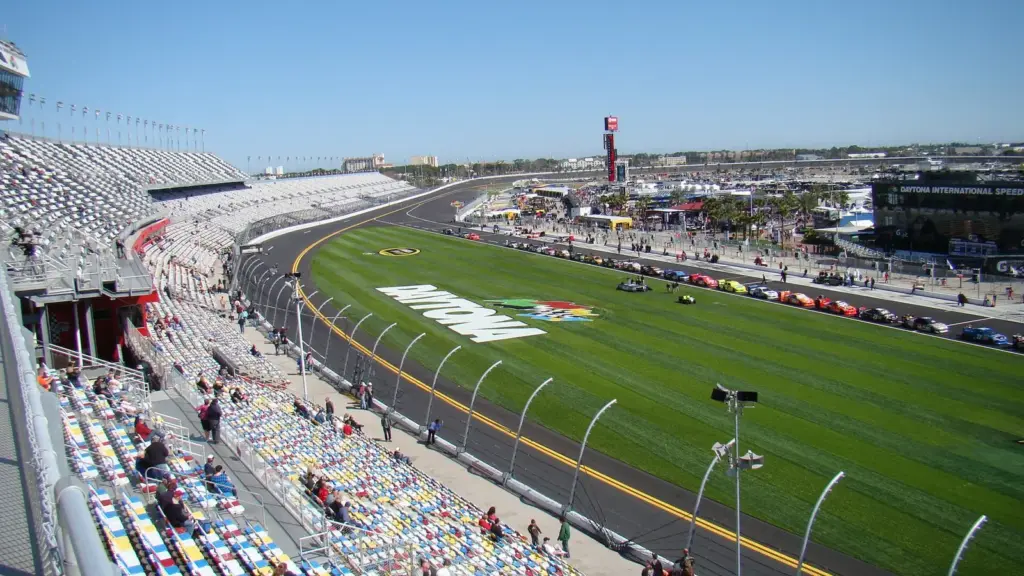
The banking is what makes Daytona Daytona. It lets stock cars run the whole lap without lifting, so a NASCAR race here is less about braking and corners and more about the draft. Cars run nose to tail and side by side in big packs, pushing each other to go faster than any one car could alone.
31°
Turn banking
The four turns are banked at 31 degrees, steep enough that walking up them feels like climbing a hill.
18°
The tri-oval
The kink in the frontstretch is banked at 18 degrees, so stock cars stay flat out through it.
3°
The backstretch
The 3,000-foot (914 m) Superstretch is almost flat. The frontstretch is 3,800 feet (1,158 m).
That speed is deliberately limited. After Bill Elliott’s 210 mph qualifying lap in 1987, NASCAR required restrictor plates from 1988, and today’s cars use a tapered spacer instead, with about 510 horsepower and a 7-inch spoiler. For the August 2026 race NASCAR tried 465 horsepower and a 4-inch spoiler to cut down on fuel saving. The result is close racing with dozens of lead changes, and the multi-car pileups fans call “the Big One.”
Daytona Track Guide: Oval and Road Course
Daytona has two main layouts. NASCAR races on the 2.5-mile (4.023 km) tri-oval, run counter-clockwise. The Rolex 24 uses a road course that combines most of the banking with an infield section and a chicane on the backstretch, and the motorcycle races use a similar 3.51-mile (5.649 km) layout. Here’s how both work, with the names you’ll hear on TV.
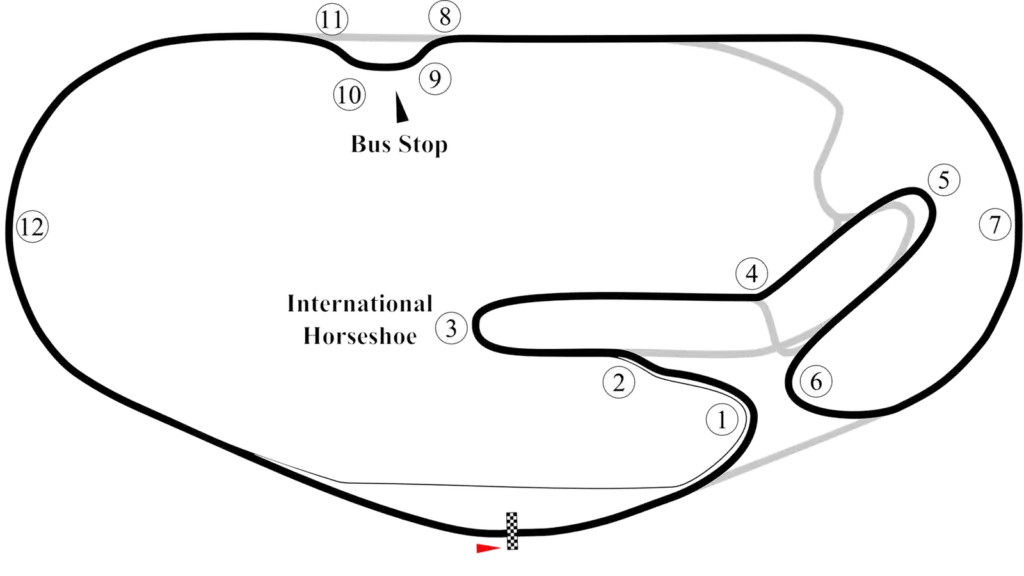
T1–2
Turns 1 and 2
At the end of the frontstretch, cars dive into the 31-degree banking. In a NASCAR pack, the high line and the low line both work, and drivers look for a push from behind to move forward.
BS
Superstretch
The 3,000-foot (914 m) backstretch is where drivers line up runs for a pass, tucking in behind the car ahead before pulling out.
T3–4
Turns 3 and 4
Another 31-degree sweep. On the last lap, this is where drivers set up the move they’ll make on the way to the line.
TO
Tri-oval
The 18-degree bend in the 3,800-foot (1,158 m) frontstretch, past the start/finish line. Plenty of Daytona 500s have been decided by a few feet here.
RC1
Road course Turn 1
In the Rolex 24, cars leave the banking after the tri-oval and brake hard for a flat, sweeping left into the infield.
IH
International Horseshoe
A long, slow right-hander in the infield, followed by a quick kink and the West Horseshoe before cars climb back onto the banking.
BUS
Bus Stop
A chicane in the middle of the backstretch that breaks up the long flat-out run. It’s the big braking zone and a key passing spot in the Rolex 24.
NS
Back onto the oval
After the Bus Stop, cars use the oval’s Turns 3 and 4 and the tri-oval to complete the 3.56-mile (5.729 km), 12-turn lap.
Daytona Lap Records
Daytona’s records are a mix of eras. The fastest lap anyone has turned on the tri-oval is unofficial: Colin Braun hit 222.971 mph (358.84 km/h) in a Daytona Prototype during a 2013 test. For comparison, Kyle Busch took pole for the 2026 Daytona 500 at 183.651 mph (295.56 km/h). On two wheels, Josh Herrin holds the long motorcycle course record at 1:47.879, set on a Ducati Panigale V2 in 2025.
338.55 km/h / 210.364 mph
Qualifying record
Bill Elliott’s 42.783-second lap in February 1987. Restrictor plates arrived the next year, so the record still stands.
43.682 sec
Cup race lap record
Erik Jones set the official NASCAR Cup Series race lap record on the oval in 2020.
1:32.656
Fastest road course lap
Pipo Derani in a Cadillac GTP car in 2024 Rolex 24 qualifying, the fastest lap on the modern road course.
1:33.724
Road course race lap record
Álex Palou in a Cadillac DPi-V.R during the 2022 Rolex 24.
Races and Events at Daytona
Daytona’s calendar is packed into the first part of the year, from the Rolex 24 in January through Speedweeks and Bike Week, with NASCAR returning in August and car shows and festivals in between. If you’re new to stock car racing, our NASCAR Cup Series guide explains the basics. Here’s what runs, with 2026 results and 2027 dates.
January
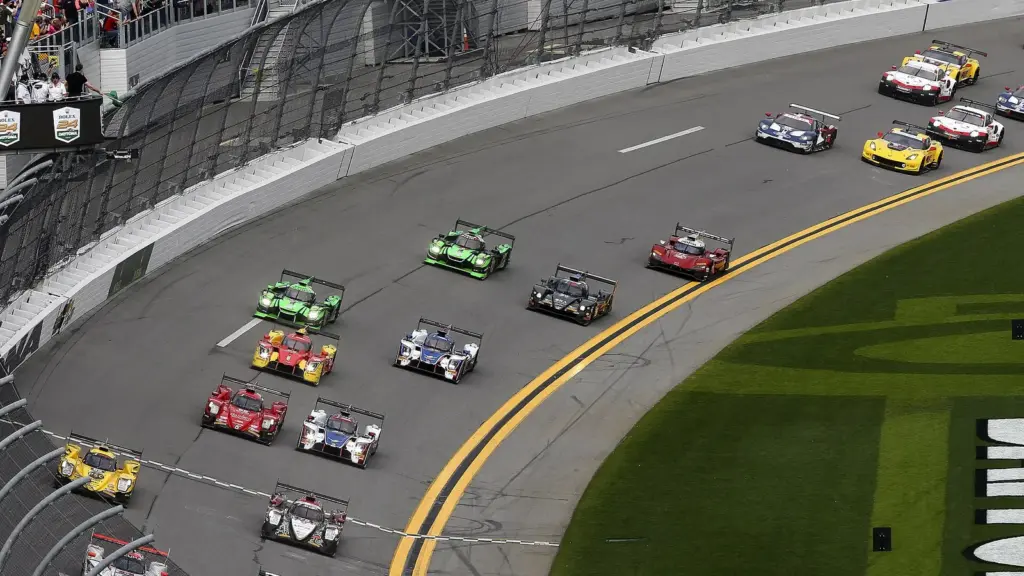
Rolex 24 at Daytona
IMSA WeatherTech SportsCar Championship
The IMSA season opener, 24 hours on the road course. In 2026 the #7 Porsche Penske 963 of Nasr, Andlauer and Heinrich won by 1.569 seconds, the team’s third straight win. The 2027 race weekend is January 28–31, with the start on January 30.
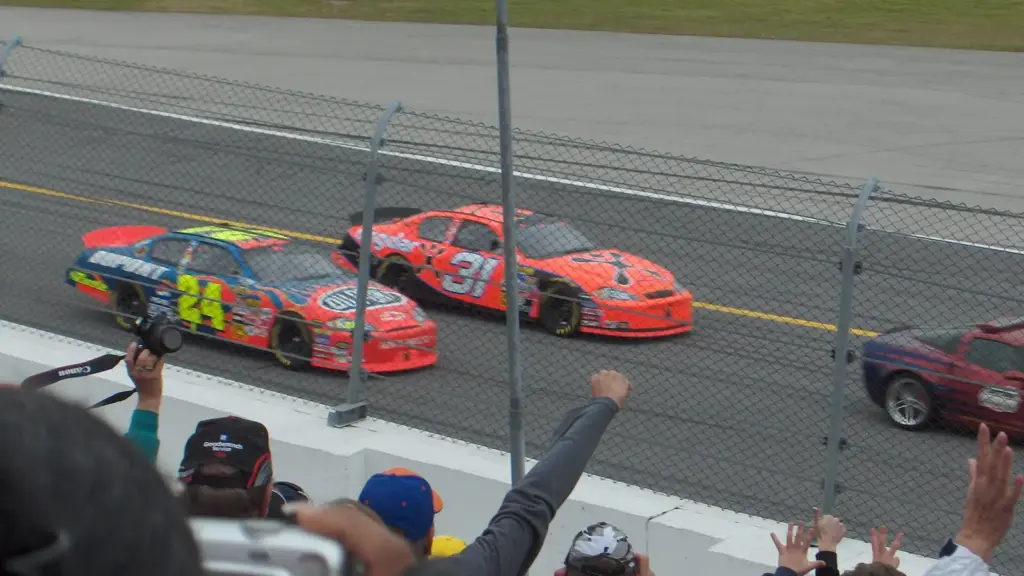
February
Daytona 500
NASCAR Cup Series Speedweeks
The biggest race in NASCAR and the first points race of the season. Tyler Reddick won the 2026 race on February 15, passing Chase Elliott just before the line. The 2027 Daytona 500 is on Sunday, February 21.
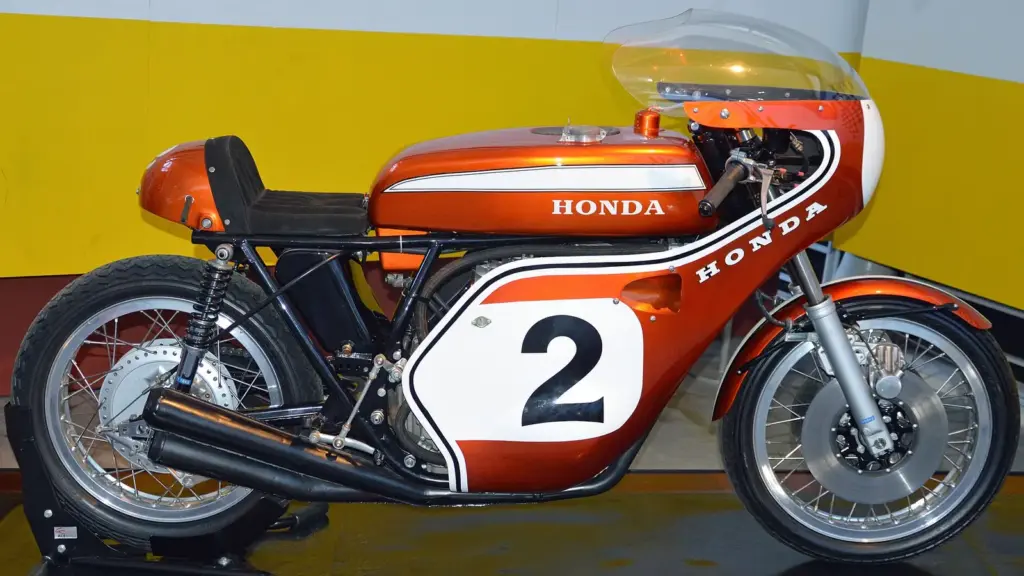
March
Daytona 200 and Bike Week
MotoAmerica Supersport
Daytona’s motorcycle classic runs during Bike Week. Josh Herrin won the 2026 race on March 7, his fourth in a row and fifth overall, and Kayla Yaakov became the first woman on the podium. The 2027 race is March 11–13.
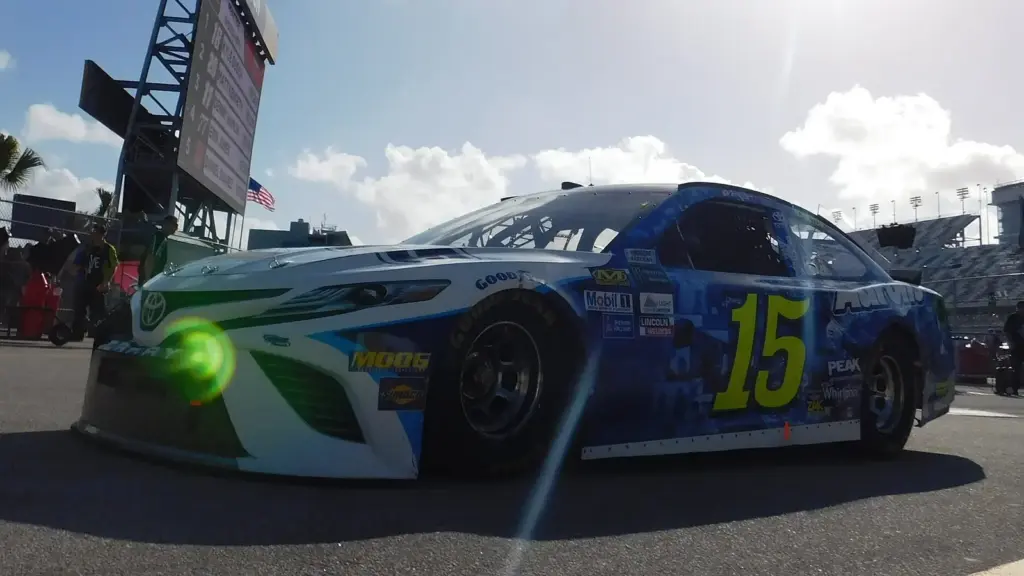
August
Coke Zero Sugar 400
NASCAR Cup Series Regular-season finale
The last race of NASCAR’s regular season. Ryan Preece won the 2026 race on August 29 for his first Cup victory, grabbing the last spot in the Chase. The 2027 race is on Saturday, August 28.
All year
Supercross, Turkey Run and More
Supercross Car shows
Daytona Supercross builds a dirt track in the infield every spring (Eli Tomac won his eighth Daytona race in 2026). The Turkey Run car show fills the infield over Thanksgiving weekend, and Speedweeks brings the Clash and support races in February.
Daytona Race Calendar: 2026 and 2027
Here are the big public weekends at Daytona, so you can plan a trip around the racing you want to see. The 2026 racing season is over, but the speedway still has historic racing, the Turkey Run and karting before the year ends, and the 2027 dates are already set. Always check the official schedule before you book.
2026 season
| Dates | Event | Series | Status |
|---|---|---|---|
| Jan 24–25 | Rolex 24 at Daytona | IMSA WeatherTech SportsCar Championship | Done |
| Feb 15 | Daytona 500 | NASCAR Cup Series | Done |
| Feb 28 | Daytona Supercross | AMA Supercross | Done |
| Mar 7 | Daytona 200 | MotoAmerica Supersport | Done |
| Aug 29 | Coke Zero Sugar 400 | NASCAR Cup Series | Done |
| Nov 11–15 | HSR Classic 24 Hour | Historic racing | Upcoming |
| Nov 25–29 | Turkey Run | Car show and swap meet | Upcoming |
| Dec 27–30 | Daytona Kart Week | Karting | Upcoming |
2027 season
| Dates | Event | Series | Status |
|---|---|---|---|
| Jan 22–24 | Roar Before the Rolex 24 | IMSA test and qualifying | Upcoming |
| Jan 28–31 | Rolex 24 at Daytona (race starts Jan 30) | IMSA WeatherTech SportsCar Championship | Upcoming |
| Feb 13 | The Clash at Daytona | NASCAR Cup Series exhibition | Upcoming |
| Feb 21 | Daytona 500 | NASCAR Cup Series | Upcoming |
| Mar 6 | Daytona Supercross | AMA Supercross | Upcoming |
| Mar 11–13 | Daytona 200 | MotoAmerica Supersport | Upcoming |
| Aug 28 | Coke Zero Sugar 400 | NASCAR Cup Series | Upcoming |
Daytona Weather by Season
Daytona Beach has a humid subtropical climate: mild, dry winters and hot, stormy summers. The numbers below are NOAA 1991–2020 normals for Daytona Beach International Airport, right next to the track, and the big takeaway is that the season’s headline races in January and February fall in the driest, most comfortable part of the year.
21–22°C
Winter · Dec–Feb
Daily highs of 21–22°C (69–72°F) and lows of 9–11°C (49–52°F). It’s the driest time of year, at about 59–69 mm (2.3–2.7 in) a month, which is perfect for the Rolex 24 and the Daytona 500. Bring a jacket for the overnight hours of the 24.
24–29°C
Spring · Mar–May
Daily highs of 24–29°C (76–85°F) and lows of 13–19°C (55–66°F), with 57–94 mm (2.2–3.7 in) of rain a month. Bike Week and the Daytona 200 in March usually get warm, sunny days.
31–32°C
Summer · Jun–Aug
Daily highs of 31–32°C (89–90°F) and lows of 22–23°C (72–74°F). It’s hot and humid, with afternoon thunderstorms and 153–176 mm (6.0–6.9 in) of rain a month. Plan on rain delays for the August race.
25–31°C
Fall · Sep–Nov
Highs drop from 31°C (87°F) in September to 25°C (76°F) in November. September is the wettest month at about 182 mm (7.2 in), and hurricane season runs through November 30, so keep an eye on forecasts.
Visiting Daytona: Seats, Coolers and Tips
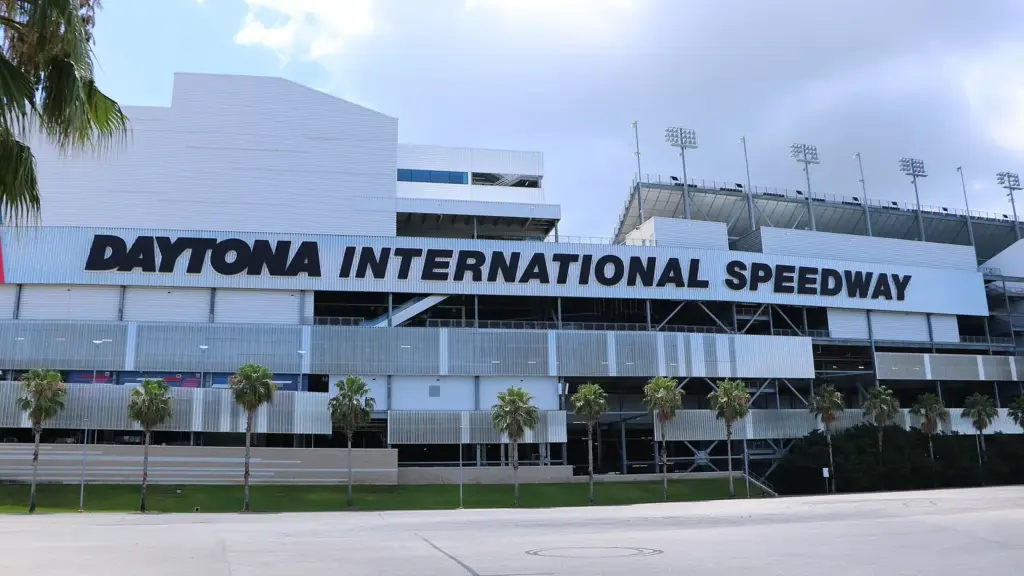
Since the Daytona Rising rebuild, Daytona has felt more like a stadium than a racetrack. About 101,500 seats line a frontstretch that’s nearly a mile long, all with backs and armrests, reached through five entrances called injectors, with 40 escalators and 17 elevators. There are no grandstands on the backstretch anymore.
Where to watch
- High in the frontstretch. Upper rows let you see the whole tri-oval and follow the packs all the way around, which matters more here than being close.
- Near the start/finish line. Daytona finishes are often decided by inches, and the tri-oval seats put you right on top of them.
- The infield. With an infield pass you can get into the Fanzone for driver Q&As and autographs, and on race day the pre-race concert and the start/finish line walk.
- Rolex 24. For the sports car race, wander the infield, watch cars dive off the banking into Turn 1 or brake for the Bus Stop, and stay up for the night laps.
Coolers, tickets and parking
You can bring one soft-sided cooler per person, up to 14 × 14 × 14 inches (36 × 36 × 36 cm); hard coolers aren’t allowed. Up to two bags per person (18 × 18 × 14 inches) are fine, along with sealed food and drinks, but no glass, umbrellas, selfie sticks, folding chairs or drones. Tickets are mobile only through the NASCAR Tracks app, and the track is cashless. Some parking lots are free, and camping is available in and around the infield on race weekends.
Getting there and tours
Daytona Beach International Airport is right next to the speedway, and Orlando is about 89 km (55 miles) away, where I-4 meets I-95 in Daytona Beach. On non-race days, a one-hour Speedway Tour costs $25 for adults and $20 for kids 5–12, and includes the Motorsports Hall of Fame of America outside Turn 4. A longer VIP tour runs on Tuesdays and Thursdays for $55.
Can You Drive Daytona International Speedway?
Yes, in a stock car. The NASCAR Racing Experience runs drives at Daytona on scheduled dates through the year, where you drive a race car solo on the oval for anywhere from about 5 to 48 minutes of track time, plus ride-alongs with a pro driver if you’d rather sit in the passenger seat. Reservations are needed for drives, and prices vary, so check the dates and packages before you plan a trip.
It’s not a place you can usually bring your own car for an open track day, so the stock-car experiences and the speedway tours are the realistic ways onto the banking.
On a screen, iRacing has both the oval and the 3.56-mile road course, and Daytona is in Gran Turismo 7. If you grew up in an arcade, Sega’s Daytona USA from 1994 borrowed the name too.
Talk Daytona With Other Enthusiasts
Going to your first Daytona 500, camping for the Rolex 24 or riding in for Bike Week? Share what you’ve learned, ask questions and find people going the same weekend in the AutoGathering community.
- Daytona 500 trip planning
- Best seats in Daytona Rising
- Rolex 24 overnight tips
- Infield camping
- Bike Week and the Daytona 200
- Stock car driving experiences
- iRacing setups and lap times
- Speedweeks meetups
Daytona International Speedway FAQ
How steep is the banking at Daytona?
The turns are banked at 31 degrees, the tri-oval at 18 degrees and the backstretch at just 3 degrees.
How long is Daytona International Speedway?
The tri-oval is 2.5 miles (4.023 km) long, so the Daytona 500 is 200 laps. The road course used for the Rolex 24 is 3.56 miles (5.729 km) with 12 turns.
Who won the 2026 Daytona 500?
Tyler Reddick won the 2026 Daytona 500 on February 15 in the No. 45 23XI Racing Toyota, his first win in the race.
When is the 2027 Daytona 500?
The 69th Daytona 500 is on Sunday, February 21, 2027. The Clash opens Speedweeks on Saturday, February 13.
When is the 2027 Rolex 24 at Daytona?
The 2027 Rolex 24 race weekend is January 28–31, with the race starting on January 30. The Roar Before the Rolex 24 test is January 22–24.
What is the fastest lap ever at Daytona?
The official qualifying record is Bill Elliott’s 210.364 mph (338.55 km/h) from 1987. The fastest lap ever is unofficial: Colin Braun’s 222.971 mph (358.84 km/h) in a Daytona Prototype in a 2013 test.
Can you bring a cooler to Daytona?
Yes. One soft-sided cooler per person, up to 14 × 14 × 14 inches, is allowed. Hard coolers, glass, umbrellas and drones are not.
Can you drive on Daytona International Speedway?
Yes. The NASCAR Racing Experience offers solo stock car drives and ride-alongs at Daytona on scheduled dates. You can also take a speedway tour on non-race days.
Explore More Racing Circuits
Daytona International Speedway is one of 40 tracks in our North American racing circuit directory. If you’re planning a Florida racing trip, Sebring International Raceway, home of the Twelve Hours of Sebring, is about 237 km (147 miles) away, roughly three hours by car.
Photo credits
- Header image: Nascarking, CC BY-SA 4.0, cropped and resized.
- Map of Daytona International Speedway showing the…: Will Pittenger, Public domain, cropped and resized.
- Prototypes and GT cars at the start…: United Autosports, CC BY-SA 2.0, cropped and resized.
- The Honda CR750 that Dick Mann rode…: kinsarvik, CC BY 2.0, cropped and resized.
- The Daytona Rising frontstretch grandstand at Daytona…: GT3Simon, CC BY 4.0, cropped and resized.
- The banked tri-oval, frontstretch grandstands and infield…: Jeff, CC BY-SA 2.0, cropped and resized.
- Jeff Burton and Jeff Gordon racing during…: The original uploader was ImperialAssassin at English Wikipedia., Public domain, cropped and resized.
- Michael Waltrip’s No. 15 Toyota at Daytona…: Zach Catanzareti, CC BY-SA 2.0, cropped and resized.